Children

Will Immigration Reform Correct the Immigration System’s Gender Bias?
Within the current immigration system, many women confront systematic barriers when trying to gain legal status. This is one of the main conclusions drawn from a study conducted by social scientists Cecilia Menjivar and Olivia Salcido. Based on a 10-year-long research project on immigrant women in Arizona, the authors identify specific instances in which gender inequality is ingrained in the formulation, interpretation, and implementation of immigration laws. Read More

How the Senate Bill Seeks to Deter Future Waves of Unauthorized Immigration
The Senate Judiciary Committee continues to consider amendments to Title II of the “Border Security, Economic Opportunity, and Immigration Modernization Act’’ (S.744) today. For many, Title II is the bill’s core as it deals with the legalization of the undocumented population already living here and lays out the rules concerning future immigration, among other issues. Read More

Day 4 of Senate Immigration Mark-up Goes Late into Night
Monday, the Senate Judiciary Committee began its fourth day—and likely last week—of the immigration reform bill’s mark-up. After spending most of the day finishing the Title 3 (interior enforcement) amendments, the senators began on the last part of the bill, Title 2 (legalization), which includes the path to citizenship. They considered 50 amendments and approved 30 of them; five were withdrawn. Read More

Immigration Activists Take to the Streets in May Day Rallies Around the Nation
Tens of thousands of people across the country—from New York to Vermont to California and Arizona—gathered at rallies and marches yesterday to demand immigration reform. Immigrants and advocates joined with labor groups, lawmakers, and other organizations for the May Day, also known as International Worker’s Day, demonstrations in dozens of cities. And their message was clear: Congress must pass immigration reform. Read More

Why Are Some Still UnDACAmented?
The latest USCIS DACA numbers from March show that the agency has received roughly 470,000 applications, which means that just under half of those estimated to be eligible have applied. While the success reflected by the 470,000 figure is not to be downplayed, the new numbers beg the question: What about the other half million? Why are they still unDACAmented? Read More

Guaranteeing Access to Health Care to Immigrant Women: A Necessary and Wise Investment
In the current public debate regarding comprehensive immigration reform, the focus on immigrant access to health benefits has been almost exclusively limited to cost (which is undeniably an important aspect) and has rarely addressed the social gains that result from investing in a healthy population. For the most part, the health of immigrant women has been left out of the discussion, which is, in many aspects, problematic. Read More

The Pathway to Citizenship and Immigrant Integration: What Can We Learn from France and the United States?
As the 113th Congress engages in a historic debate on immigration reform, past attempts to overhaul immigration laws provide cautious reminders of the struggles and opportunities ahead in closing a deal on immigration policy. While the United States' own history is critical for understanding both the shortcomings and solutions of various policy arrangements, the experience of other receiving countries in dealing with immigration and immigrant integration also constitute an invaluable source of guiding lessons. By learning what effective policy solutions have been formulated in other countries to address issues such as the regularization of their undocumented population, the integration of newcomers, and the reception of asylees, to mention just a few – the United States can better and more strategically craft immigration policy and anticipate the impact of those policy changes. Read More

Pro-Immigrant Measures Make Gains At The State Level
As we reach the midpoint in state legislative sessions, 2013 is shaping up to be a year where most states are moving in a more positive direction when it comes to immigration policy. Lawmakers from both parties have become more inclined to support pro-immigrant measures, shifting away from the anti-immigrant policies that swept across states in previous years. Read More
The Promise and Challenges of Family-Based Immigration
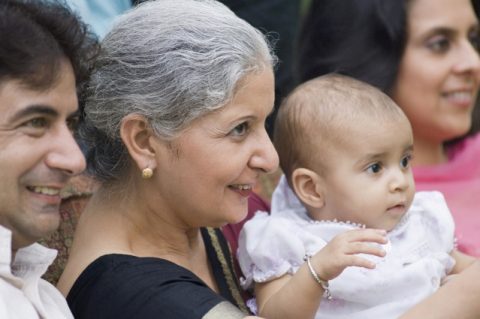
Today the U.S. House Committee on the Judiciary is hosting a hearing on “The Separation of Nuclear Families under U.S. Immigration Law”. The issue to be addressed relates specifically to the obstacles that many legal permanent residents (LPR) currently living in the United States face when they try to bring their immediate relatives to the country. While there are neither country nor yearly caps for immediate relatives (currently defined as opposite-sex spouses and minor children) of U.S. citizens who want to immigrate to the United States, there are only 87,900 immigrant visas available each year for immediate relatives of LPRs. In addition, no country can receive more than 7 percent of the visas available for all immigration categories in a fiscal year. In 2012, for example, the maximum number of visas available per country was 47,250. And because the demand for visas in some countries is much larger than the number of visas available, some LPRs have to wait several years to be able to bring their spouses and unmarried children. Read More

Recognizing Immigrant Women’s Needs in Immigration Reform
While the recent debate over reauthorization of the Violence Against Women Act and the Trafficking Victims Protection Act may have reminded the nation that there are “women’s issues” in immigration law, it doesn’t necessarily follow that most people regard immigration reform as a woman’s issue. Despite the fact that immigrant women make up a growing share of workers, entrepreneurs, single heads of households, and new voters—while remaining primary caregivers in families—the laws we craft to reform our broken immigration system have often been insensitive to the obstacles and challenges immigrant women face in applying for immigration status. Read More
America's story is an immigrant story.