Economic Impact
Immigrants are essential to the U.S. economy, filling roles from high-skilled tech sectors to agricultural labor and driving economic growth. They also contribute to the tax base and consumer spending. We champion reform that will maximize this effect and create a more diverse and competitive workforce.
Why Making E-Verify Mandatory Doesn’t Solve Anything
As the national debate over E-Verify continues to heat up, some members of Congress seem intent on pushing for mass deportation strategies without taking into account the harm they will cause for American businesses and workers, and without acknowledging that making E-Verify mandatory will not resolve any underlying problems. Read More

Administration Uses Executive Authority to Keep Educated Grads in U.S. Longer
By H. BOB SAKANIWA, AMERICAN IMMIGRATION LAWYER'S ASSOCIATION As President Obama indicated in an immigration speech in El Paso, Texas, earlier this month, in a global marketplace, the United States needs the best and brightest to stay in our country to work, innovate and help create jobs for the benefit of all Americans. Well-educated, foreign-born professionals have made enormous contributions to our country, and we should do all we can to retain the next generation of these types of contributors. Just two days after President Obama put the topic of immigration reform back into the national debate, the administration exercised its executive authority to expand the number of science, technology, engineering, and math degree (STEM) programs that can be used to qualify foreign graduates to extend their post-graduate training. Read More

Research Shows Immigrant Entrepreneurs Leaving the U.S. to Become Our Competition
Restrictionists often perpetuate the myth that immigrants are not needed in our current economy—that they take jobs and hurt American workers. But research has shown that immigrants not only grow the economy, but help create jobs and are part of the solution to our economic woes. However, while immigrants can create jobs and start new businesses here in the U.S., they’re choosing to do it somewhere else in recent years due to our complicated and dysfunctional immigration system. Read More

How U.S. Integration Policies Stack up Against Other Countries
Today, immigration policy analysts discussed the Migrant Integration Policy Index (MIPEX)—a survey which measures the immigration and integration policies of 31 nations—as well as the survey’s implications for integration policy in the U.S. Overall, the U.S ranked 9th out of the 31 countries surveyed, but first in terms of its strong anti-discrimination laws and protections. Compared with other countries, legal immigrants in the U.S. enjoy employment opportunities, educational opportunities, and the opportunity to reunite with close family members. However, MIPEX also acknowledges that the U.S.’s complex immigration laws, limited visa availability, high fees, and long backlogs may make it challenging for immigrants to integrate into the fabric of American life—a challenge best tackled by comprehensive reform. Read More

Are SSA No-Match Letters Putting American Jobs at Risk?
BY TYLER MORAN, NATIONAL IMMIGRATION LAW CENTER The Social Security Administration (SSA) just announced it will resume its practice of notifying employers of discrepancies in employee paperwork through “no-match letters”—a mechanism which threatens countless American jobs. Despite the Administration’s clear assertion that the letter “makes no statement” about a worker’s immigration status, employer confusion over the letters has led to erroneous firings and lost wages in the past, and threatens to be the case now. It is anticipated that over 1 million workers will be the subject of these letters. Read More

By the Numbers: How the FY 2011 Budget Impacts Immigration
After the threat of a government shutdown last week, Congress finally managed to approve a budget that will keep the government running through the 2011 fiscal year. Included in that budget, however, are a host of cuts that will impact immigrants and immigration programming in the fiscal year to come. As policy experts and economists continue to pour over the 175 page document, here are a few program areas impacted by the FY 2011 budget. Read More

Restrictionist Group Blames the Children of Immigrants for America’s Budget Woes
The Center for Immigration Studies (CIS) released another report today attempting to blame our economic woes and budget shortfalls on immigrants—this time using the children of immigrants, most of whom are U.S. citizens, as scapegoats for benefits usage (here Medicaid, food assistance, cash assistance, and housing programs). As are most restrictionists’ attempts to blame immigrants for all of America’s problems, the report is rife with methodological problems. Despite the headline that 57 percent of households headed by an immigrant with children used at least one benefits program, compared to 39 percent for native households, the results actually show that when controlled for income, immigrant households use benefits at the same rate as native born households. Read More

House Subcommittee Continues Assault on All Forms of Immigration
Washington D.C. – Opponents of immigration reform are often quick to differentiate their disdain for unauthorized immigration from their alleged support of legal immigration. However, finding any evidence of that support has always been elusive and, over the past several months, the House Subcommittee on Immigration Policy and Enforcement has… Read More
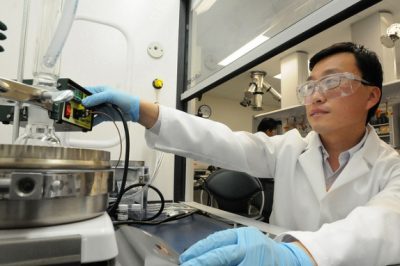
House Subcommittee Hearing Highlights U.S. Need for Foreign Scientists and Engineers
Today, a House Immigration Subcommittee hearing underscored the U.S. economy’s reliance on scientists and engineers from abroad. The hearing, entitled “H-1B Visas: Designing a Program to Meet the Needs of the U.S. Economy and U.S. Workers,” was characterized by considerable disagreement among witnesses and subcommittee members as to how the H-1B program for highly skilled foreign professionals should best be structured in terms of wage protections and job portability. But virtually everyone, including Subcommittee Chairman Elton Gallegly (R-24th/CA) and Judiciary Committee Chairman Lamar Smith (R-21st/TX), agreed that foreign-born scientists and engineers, including many who come to the United States on H-1B visas, make critical contributions to the U.S. economy. Read More
A Rising Tide or a Shrinking Pie
Washington, D.C. – As Arizona approaches the one-year anniversary of the passage of SB 1070, the Immigration Policy Center and Center for American Progress release a new report, A Rising Tide or a Shrinking Pie: The Economic Impact of Legalization Versus Deportation in Arizona, by Raúl Hinojosa-Ojeda… Read More
All gifts are matched dollar for dollar
No one should face the immigration system alone