Economic Impact
Immigrants are essential to the U.S. economy, filling roles from high-skilled tech sectors to agricultural labor and driving economic growth. They also contribute to the tax base and consumer spending. We champion reform that will maximize this effect and create a more diverse and competitive workforce.

Children of Immigrant Entrepreneurs Excel Educationally, Report Finds
The contributions of immigrant entrepreneurs—innovation, job creation and economic growth—are often cited by economists as strong reasons to reform our outdated immigration system. However, the kids of immigrant entrepreneurs receive relatively little attention. Delving into the experiences of these adult children of immigrants provides a new lens through which to witness the struggles and triumphs of parents and their children as they pursue the American Dream. Read More

Report Debunks Myth that High-Skilled Immigrants Steal American Jobs
It is an article of faith among anti-immigrant activists that immigration results in fewer jobs and lower wages for native-born workers. For instance, the Federation for American Immigration Reform (FAIR) recently released a report in which it claims that native-born workers with science and engineering (S&E) degrees are being driven en masse into non-S&E occupations due to competition from foreign-born workers willing to accept lower wages. However, in its rush to blame immigrants, FAIR misses a highly salient detail: a growing number of jobs in non-S&E occupations require or reward S&E skills. In other words, native-born workers with S&E degrees aren’t being driven out of S&E occupations by immigrants; they are being lured into non-S&E occupations where their S&E skills are in high demand and command higher salaries. Read More

New Report Predicts Continuing Integration of Immigrants into U.S. Society
Anti-immigrant activists like to pretend that immigrants are destined to be poor and to never successfully integrate into U.S. society. However, a new report from the Center for American Progress (CAP) concludes that, in reality, “immigrants are integrating into American life, learning English, and becoming homeowners.” When socioeconomic advancement is tracked over time, it becomes clear that “far from a life in poverty, immigrants are exemplifying the American Dream.” The report, entitled Assimilation Tomorrow, was co-authored by renowned demographer Dowell Myers (a professor in the School of Policy, Planning, and Development at the University of Southern California) and by John Pitkin (president of Analysis and Forecasting, Inc., in Cambridge, Massachusetts). This report is the companion piece to another study which was released by CAP last year, entitled Assimilation Today. Read More

Non-Citizens Eager to Serve in U.S. Military Blocked by Government Bureaucracy
BY MARGARET D. STOCK, COUNSEL TO THE FIRM, LANE POWELL PC This Veterans Day, we celebrate those who have proudly served in the U.S. military, including immigrants. Immigrants have long served in all branches of the U.S. military as infantry soldiers, medics, foreign-language translators, and in every other job open to them. At last count, foreign-born service members made up about 8% of the 1.4 million military personnel on active duty. However, some highly qualified non-citizens have been blocked from serving due to the Obama Administration’s suspension of a recruiting program called the Military Accessions Vital to the National Interest (MAVNI). Frustrated by the government bureaucracy responsible for halting MAVNI, those non-citizen volunteers are petitioning the government in hopes of reopening the program. Read More

Even Facebook Feels Brunt of Broken U.S. Immigration Policy
You know things are bad when a company as popular as Facebook has problems finding qualified talent. In a recent interview, Facebook’s chief operating officer, Sheryl Sandberg, remarked that our outdated immigration policy is a big reason Silicon Valley tech companies are fighting each other for highly skilled workers. Current immigration policy limits high-skilled worker visas (H-1B) to only 65,000 per year—a number that hardly meets demand. Even technology giant Microsoft recently testified before Congress that current immigration policies make finding talent a serious challenge. Until lawmakers revamp our outdated immigration system, technology companies like Facebook and Microsoft will continue to lose out on the foreign talent they need to stay ahead of the curve. Read More

Congressional Members to Join Civil Rights Groups in Fight Against Alabama’s “Juan Crow” Law
In the days following passage of Alabama’s extreme immigration law (HB 56), many business, religious and civil rights leaders spoke out about the law’s damaging impact on immigrant communities, farms, businesses, and schools. Since then, many notable community and civil rights leaders have stepped forward to add their voice to those demanding a repeal of the law. The Alabama NAACP, for example, recently joined immigrant rights groups to call for an end to what one African American minister described as “Alabama’s worst times since the days of segregation and Jim Crow.” This week, Illinois Congressman Luis Gutierrez met with members of several congressional caucuses—Hispanic, Black, Asian Pacific American and Progressive—to address what he calls Alabama’s “civil rights emergency.” Read More

A Small Step Toward Reform: Bipartisan Bill Seeks to Raise Per Country Immigration Caps
An immigration bill introduced by Congressmen Lamar Smith and Jason Chaffetz and supported by Democrats may actually have a chance at passing in Congress. Scheduled for a mark up this week, the bill (H.R. 3012) would make small but significant changes to the way green cards are distributed by eliminating per country numerical limits on employment-based green cards and raising the limits on family-based green cards which go to immigrants from each country. Read More
Some Alabama Businesses Having Trouble Replacing Immigrant Workers
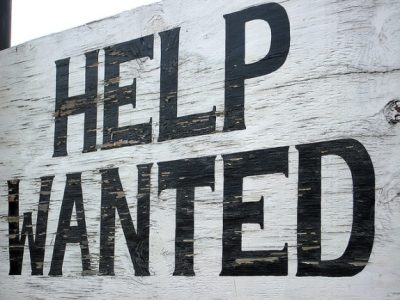
Just two weeks after Alabama’s extreme immigration law (HB 56) went into effect, many are reporting an exodus of immigrants, Latinos and their families from the state. While HB 56 supporters cheer the exodus as a victory, many Alabama businesses say they are left without an adequate workforce. Despite assurances from Governor Bentley that U.S. citizens will gladly take those jobs, Alabama farmers, meat processors and housing contractors are finding that U.S. citizen or legal workers are either not willing or able to take those jobs—leaving fruit to rot on the vine and home reconstructions projects unfinished. Not only will this hurt Alabama business in the short term, economists say, but will shrink the state’s economy and productivity over time. Read More

Dayton, Ohio Passes Plan to Revitalize Economy through Immigrant Integration
Shortly after Alabama began implementing their anti-immigration law (HB 56), Dayton, Ohio passed legislation that welcomes and integrates immigrants with the hope that they will revitalize their slowing economy. Faced with a declining population, Dayton’s City Commission voted unanimously last week to adopt the Welcome Dayton Plan—a plan that is tapping into the very economic stimulus that Alabama is driving out. Read More

DHS Needs to Target Violent Drug Cartels, Not Immigrants Trying to Reunite with Families
Times have changed along the U.S.-Mexico border. In just a few short years, Mexican drug cartels have taken over the people-smuggling business. Although U.S. border walls and fences have proliferated, they have done nothing to prevent the cartels from moving drugs, human beings, guns, and money back and forth across the border. The combination of heightened U.S. border enforcement and cartel violence has made crossing the border increasingly dangerous. Yet large numbers of unauthorized immigrants who were previously deported from the United States continue to risk their lives by crossing the border in order to reunite with their U.S. families. The Obama Administration’s current enforcement policies treat these family-bound migrants like hardened criminals, while failing to address the real threat to security—the cartels. Read More
All gifts are matched dollar for dollar
No one should face the immigration system alone