Immigration Reform

How the Immigration Reform Bill Could Help Undocumented Farmworkers and Growers
Approximately 11 million undocumented immigrants could become eligible for legal status under S. 744, the immigration reform bill the Senate is considering, including millions of undocumented farmworkers. The importance of finding a way to create a legal workforce within the agriculture industry is critical, as undocumented farmworkers make up an estimated 53 percent of agriculture workers. Read More

Experts from Left and Right Agree on Economic Power of Immigration Reform
In recent years, study after study has demonstrated a simple yet economically powerful truth about broad-based immigration reform: workers with legal status earn more than workers who are unauthorized—and these extra earnings generate more tax revenue, as well as more consumer spending, which creates more jobs. As a new report from the Center for American Progress (CAP) points out, this fact implies that states with appreciable unauthorized populations stand to gain economically from immigration reform that includes a legalization program for the unauthorized. Moreover, a new open letter to Congressional leaders released by the conservative American Action Forum illustrates that it is not only liberal advocacy groups like CAP which recognize the economic potential of immigration reform. Read More

Senate Judiciary Committee Votes to Pass Immigration Bill on to Full Senate
Today, on a bipartisan vote of 13 to 5, the Senate Judiciary Committee voted to pass Senate Bill 744, the Border Security, Economic Opportunity, and Immigration Modernization Act, out of the committee and on to the Senate floor for a full vote in the coming days. The Senate… Read More

How the Senate Bill Seeks to Deter Future Waves of Unauthorized Immigration
The Senate Judiciary Committee continues to consider amendments to Title II of the “Border Security, Economic Opportunity, and Immigration Modernization Act’’ (S.744) today. For many, Title II is the bill’s core as it deals with the legalization of the undocumented population already living here and lays out the rules concerning future immigration, among other issues. Read More
Day 4 of Senate Immigration Mark-up Goes Late into Night
Monday, the Senate Judiciary Committee began its fourth day—and likely last week—of the immigration reform bill’s mark-up. After spending most of the day finishing the Title 3 (interior enforcement) amendments, the senators began on the last part of the bill, Title 2 (legalization), which includes the path to citizenship. They considered 50 amendments and approved 30 of them; five were withdrawn. Read More

Will Due Process Protections Be Preserved in Senate Mark-Up?
On Thursday, the Senate Judiciary Committee began its mark-up of Title III of S.744, the Border Security, Economic Opportunity, and Immigration Modernization Act. When the mark-up continues on Monday, Senators are likely to vote on amendments addressing immigration courts. These amendments will be crucial in determining whether the full Senate receives a bill that provides due process protections to immigrants in removal proceedings. Read More

Subtle but Dramatic Progress on Immigration Reform
Yesterday was day 3 of the Senate Judiciary Committee’s mark-up on S. 744, the Gang of Eight’s immigration bill. While it wasn’t as exciting as the first two days—no dramatic speeches or vocal disagreement—several important votes were taken to modify the mandatory E-verify program, adding and subtracting protections, safeguards, and reporting requirements. This lack of drama was a good thing, however, because there was far less posturing and far more legislating going on. Read More
Day Two of Senate Immigration Mark-Up Continues With Temporary Employment Visas
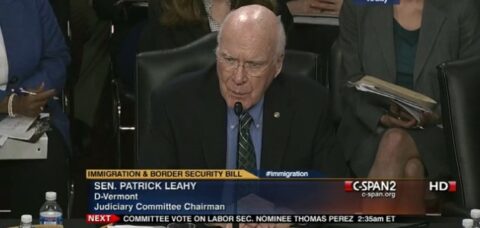
On the second day of the Senate Judiciary Committee’s mark-up of S. 744, the “Border Security, Economic Opportunity, and Immigration Modernization Act,” the senators tackled most of the amendments to Title IV after finishing debate on a few border security amendments. The fourth section addresses the majority of non-immigrant temporary visas including those for high and less- skilled immigrant workers, entrepreneurship and innovation programs, as well as a range of miscellaneous visitor visas. Read More

Facts About H-1B Workers and the Innovation Economy
While widespread research documents a critical need for skilled workers in the United States to maintain and strengthen our innovation industry, myths exist in opposition to programs designed to help alleviate that shortage. In particular, the H-1B visa program for high-skilled foreign-born workers, primarily used for science, technology, engineering, and mathematics (STEM) fields, is a routine recipient of critical ire. As the Senate Judiciary Committee discusses H-1B reforms in Title IV of S.744, here we dispel some of the common myths associated with the H-1B high-skilled visa program. Read More
The Important Role of Immigrants in America’s Innovation Economy
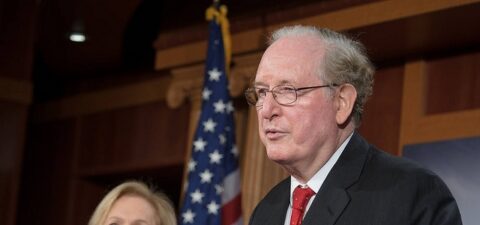
This week, the U.S. Senate Committee on Commerce, Science, and Transportation weighed in on immigration reform with a hearing on the role of immigrants in America’s innovation economy. Remarks from Sens. Rockefeller (D-WV) and Thune (R-SD) noted the contributions of immigrant innovators and entrepreneurs. Immigrants in the United States were named as inventors or co-inventors on 25.6 percent of international patent applications filed from the U.S. in 2006. Furthermore, temporary workers and permanent residents made contributions to over half of the international patents filed by several large, multi-national companies. Temporary and permanent foreign-born workers represent at least 24 percent of the nation’s scientists and 47 percent of engineers with doctoral degrees. Read More
All gifts are matched dollar for dollar
No one should face the immigration system alone