Economics

Guidance on ICE Detainers Sends Ripples Through California
Every year, local law enforcement agencies receive thousands of requests from U.S. Immigration and Customs Enforcement (ICE) to keep individuals in custody—even after they are entitled to release—while federal officers determine whether to initiate removal proceedings. Last Tuesday, California Attorney General Kamala Harris issued simple but groundbreaking guidance to all law enforcement agencies in the state, clarifying that they have no legal obligation to honor so-called immigration “detainers.” Although Harris’ guidance was consistent with existing policies in numerous California counties, it has prompted other state law enforcement officials to publicly reconsider their willingness to cooperate with ICE. Read More

It’s Time To Tackle Popular Immigration Reforms Today
The White Mountain Independent November 30, 2012 Following the results of the election, there appears to be a real window in Washington, D.C. to do something meaningful on immigration. The just reelected president has made immigration reform a first tier priority. And many Republicans believe that dealing with this… Read More
US House Votes To Give Residency To More Advanced-Degree Graduates, End Visa Lottery
The Province November 30, 2012 The U.S. House of Representatives voted Friday to make green cards accessible to foreign students graduating with advanced science and math degrees from U.S. universities, setting up what is expected to be a turbulent battle over immigration policy next year. Even this limited step,… Read More

Foreign Students Add Billions of Dollars to the U.S. Economy Each Year – And That’s Just the Beginning
Most people don’t think of foreign students as an economic resource, yet that is precisely what they are. Each year, students from other countries spend billions of dollars in the U.S. economy, pumping money not only into the colleges and universities they attend, but the surrounding businesses as well. In addition, many foreign students go on to become highly innovative scientists, engineers, and entrepreneurs who add value to the U.S. economy in myriad ways that are often difficult to quantify. Given the economic value of the education they receive in U.S. universities, it is unfortunate that so many foreign students are forced by our nonsensical immigration policies to return to their home countries rather than putting their knowledge to use in this country. Read More
Spirit of Compromise Could Help Solve Immigration, Boost U.S. Economy
KSL November 14, 2012 Less than a week after the 2012 election, our national debate has shifted from one where we choose between two candidates, to one where we discuss paths forward on issues that impact our lives. For that we can all be thankful. After such a long… Read More
DOL Proposal Will Hurt Venture-Funded Startup Companies
Forbes November 14, 2012 Startup companies, particularly those that receive venture capital, are major engines of growth and innovation in America. Research from the Ewing Marion Kauffman Foundation has shown that much of the job growth in America in recent years has come from startups. That is why a… Read More
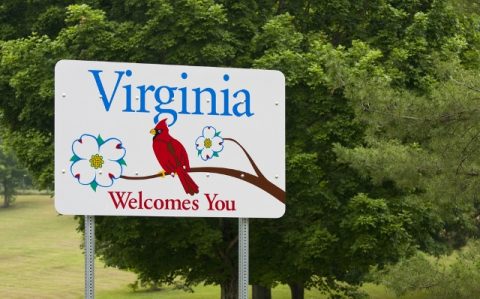
Immigrants Play Key Role in Virginia’s Economy
Recent state-level immigration battles are often characterized by a great deal of negative attention and not enough positive information about immigrants living in those states. Unfounded claims about the costs of immigration overlook the benefits and contributions immigrants make to American communities. Fortunately, some organizations are dedicated to pushing back on the negativity and publishing accurate data about the role immigrants play in state economies. Read More

New Research Casts Doubt Upon “Attrition Through Enforcement”
Contrary to the expectations of anti-immigrant activists, unauthorized immigrants are not leaving the United States and returning home en masse in response to the onslaught of federal, state, and local immigration-enforcement initiatives in recent years. In fact, preliminary evidence indicates that unauthorized immigration to the United States from Mexico may be inching its way upward again for the first time since the Great Recession. Why? Because unauthorized immigration responds far more to the state of the U.S. economy than it does to the intensity of U.S. immigration enforcement. This casts considerable doubt upon the nativist creed of “attrition through enforcement”—the belief that making life difficult enough for unauthorized immigrants will motivate them to “self-deport.” Read More

Arizona’s Immigration Policies are an Economic Disaster
Faced with a battered, post-recession economy, lawmakers in Arizona adopted a unique approach to fostering economic recovery; they passed a law that beat down or drove out tens of thousands of the state’s workers, consumers, and taxpayers. The rationale for this counterintuitive action was that the workers, consumers, and taxpayers in question were unauthorized immigrants, and therefore undeserving of support. Some of Arizona’s lawmakers even thought that an exodus of unauthorized immigrants from the state would magically create job openings for unemployed natives. But that’s not how an economy actually works. The unsurprising end result of the attack on unauthorized immigrants has not been recovery, but the shrinking of a state economy that was already contracting. Read More

Immigrant Integration is a Two-Way Street
The process by which immigrants integrate into the economic and social fabric of the United States is very much a two-way street. Naturally, immigrants must harbor the desire to climb the socioeconomic ladder of success. But there must be a ladder for them to climb. If the community within which immigrants live and work makes the collective decision to deprive them of opportunities, then their upward mobility is hindered—to the social and economic detriment of the entire community. Yet, if the community actually welcomes newcomers and helps to facilitate their upward mobility, then the community eventually reaps the rewards of having workers and neighbors who are more highly skilled, more integrated, and more heavily invested in the community itself. Read More
All gifts are matched dollar for dollar
No one should face the immigration system alone