Department of Homeland Security
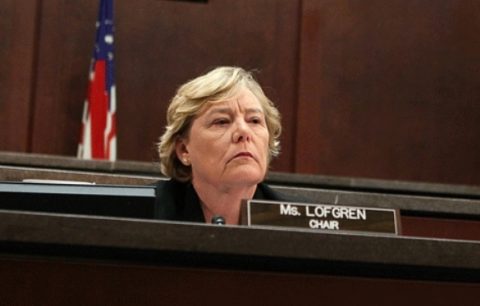
Congresswoman Zoe Lofgren Demands Investigation into ICE’s Secure Communities Program
Some would argue that ICE’s Secure Communities program has been fraught with problems ever since it launched in 2008—from concerns over the lack of federal oversight to questions regarding the criminality of immigrants targeted. But after months of back and forth over how and whether jurisdictions are able to opt-out of this immigration enforcement program (which shares the fingerprints of individuals booked into jails with federal databases), California Congresswoman Zoe Lofgren (D-CA) has had enough. This week, Rep. Lofgren called for an investigation into the actions of federal immigration officials whom she said lied about whether states and localities had the right to opt-out of the program. Read More
Immigration and North Carolina
Diversely skilled immigrants create North Carolinian wealth. Since the late 1950’s Research Triangle Park (RTP) at the center of the Durham, Chapel Hill, and Raleigh communities has played a critical role in diversifying the economy of North Carolina. A state economy that was once based on manufacturing and… Read More

Two Years Under the Obama Administration, How Does DHS Measure Up?
Nearly two years ago, expectations ran high as President Obama took office and Secretary Napolitano took the reins of the Department of Homeland Security (DHS). In review of DHS’s first year under the Obama Administration, the Immigration Policy Center (IPC) found that while many promising changes were initiated, few were successful due to limiting political constraints. Today, two years out, we find a department still struggling to balance priorities, entrenched in an enforcement-heavy debate, claiming that without Congressional action, its hands are tied on administrative reforms. That claim, however, is inconsistent with the wide range of executive branch authority available to DHS and the President. Read More

Are the Wheels Falling Off DHS’s Immigration Enforcement Wagon?
Over the last few weeks, DHS Secretary Janet Napolitano has been on an enforcement tour defending the Administration’s record on border enforcement while criticizing conservative lawmakers’ “enforcement-first” legislative strategy (Napolitano has repeated called on lawmakers to stop “moving the goal posts”). Calling out legislators for using the border as an excuse to stall immigration reform is important, but maybe Secretary Napolitano should take a serious look at the egregious enforcement actions taking place right under her nose. Yesterday in Michigan, ICE agents apparently followed immigrants from their homes to a nearby elementary school where they were dropping off their children. Read More

New “E-Verify Self Check” Pilot Program is Not a Cure-All
BY TYLER MORAN, NATIONAL IMMIGRATION LAW CENTER E-Verify has a problem: Washington politicians want to force American employers to use the electronic employment verification system, but the system is still not ready for prime time. On Monday, the Department of Homeland Security (DHS) took a step toward remedying the database error rates by announcing E-Verify “Self Check.” This pilot program will allow people in select states and the District of Columbia to go online and verify their identity and authorization to work in this country—and to fix any errors before applying for a job with an employer who uses E-Verify. While a positive step, the pilot program is only one piece of the puzzle in fixing E-Verify and will likely be inaccessible to many—including the low-income workers who most need it. Read More

Group Highlights Administrative Fixes to the Immigration System Absent Federal Reform
Virtually every time anyone proposes administrative reforms to the immigration system, someone in Congress calls it amnesty. The discussion at the Migration Policy Institute (MPI) today, in which immigration policy experts discussed six administrative fixes that the Obama team could implement without legislation, shows just how much can be done with executive branch authority. The report, Executive Action on Immigration: Six Ways to Make the System Work Better, authored by Donald Kerwin, Doris Meissner, and Margie McHugh, suggests specific policy measures which could, during a period of congressional inaction, help “improve and strengthen the performance of the nation’s immigration system.” The MPI authors recommend that the Obama administration: Read More

House Subcommittee Tries to Propagate Myth that Immigrants Steal Jobs
Today’s House Subcommittee hearing on Immigration Policy and Enforcement, clumsily entitled “New Jobs in Recession and Recovery: Who Are Getting Them and Who Are Not,” was clearly intended to sow fear. In his opening statement, Subcommittee Chairman Elton Gallegly (R-24th/CA) wasted no time in sounding the alarm that unemployed native-born workers are being left to twist in the wind as immigrants gobble up the few new jobs which have become available since the end of the Great Recession. Yet the preponderance of the evidence presented during the hearing failed to support that conclusion. Read More
New DHS Documents Highlight Internal Confusion Over Secure Communities Program
Since the Secure Communities program was announced in 2008, immigrant advocates have consistently asked whether the program is voluntary or mandatory. ICE’s response to the question has changed many times over the years. While ICE has said that the agency will eventually install Secure Communities in all state and local detention facilities nationwide (which makes it seem like a federal mandate), they have also indicated that the program is voluntary. After repeated questions about whether or not localities could opt-out of the program, ICE gave increasingly confusing and conflicting responses. This month, new documents recently released by DHS in response to a Freedom of Information Act (FOIA) only further highlight the internal confusion and shifting definition of the voluntary or mandatory nature of the Secure Communities program. Read More
President’s 2012 Budget Reveals Conflicted Priorities on Immigration
The President’s proposed FY 2012 budget for the Department of Homeland Security (DHS) illustrates the Obama administration’s conflicted priorities when it comes to immigration. On the one hand, the budget increases funding for worthy causes such as immigrant integration, alternatives to detention, and civil-liberties oversight of enforcement programs. On the other hand, these funding increases are dwarfed by the size of the budget for border and interior immigration enforcement. In other words, despite some good intentions, and an effort to balance the impact of enforcement programs, ultimately the budget reflects a commitment to the enforcement-without-reform policies that have failed so miserably over the past two decades. Read More

Some States Applying Brakes to Legislation Denying Citizenship to U.S.-Born Children
Yesterday, a panel in South Dakota’s legislature voted to halt legislation aimed at denying citizenship to U.S.-born children of undocumented immigrants. South Dakota’s bill—and others like it—propose measures which challenge the interpretation of the 14th Amendment, which states that, with very few exceptions, all persons born in the U.S. are U.S. citizens, regardless of the immigration status of their parents. While conservative lawmakers continue to introduce bills challenging the birthright citizenship clause, other states—like Arizona and Montana—are joining South Dakota's lead in deciding whether to move these bills forward. Read More
America's story is an immigrant story.