Department of Homeland Security

How Will DHS’s Prosecutorial Discretion Guidelines Impact Gay and Lesbian Bi-National Couples?
Yesterday, the Department of Homeland Security (DHS) announced that they would take concrete steps to implement existing guidance on prosecutorial discretion in an attempt to provide relief for low priority immigration cases. DHS also announced that a new committee will review 300,000 immigration cases currently in removal proceedings to determine which cases are low priority and can be administratively closed. Some of the factors used in determining low priority cases are family relationships and community ties—factors the Administration said yesterday may apply to gay and lesbian families. Read More

DHS Announces Expansion of Prosecutorial Discretion Guidelines
Today, the Department of Homeland Security (DHS) announced an agency-wide expansion of prosecutorial discretion guidelines that will hopefully allow immigration officials to focus their enforcement efforts on targeting dangerous criminals. DHS also announced the creation of a joint committee with the Department of Justice (DOJ) that will review nearly 300,000 immigration cases currently in removal proceedings to determine whether cases are low priority enough to be closed. The factors for determining low priority cases were outlined last June in a memo issued by Immigration and Customs Enforcement (ICE) Director John Morton. While many immigration groups applaud today’s announcement, many are still concerned about DHS's ability to successfully implement these guidelines. Read More

New Report Shows DHS Way Off Target, Going After Harmless Individuals
BY GREG CHEN, DIRECTOR OF ADVOCACY, AMERICAN IMMIGRATION LAWYERS ASSOCIATION For the last two years, the Department of Homeland Security (DHS) has been spinning a good yarn—that it’s keeping Americans more safe by pursuing those who are truly dangerous. Today, Immigration and Customs Enforcement (ICE) Director John Morton was quoted in the New York Times saying ICE has a “focus on deporting immigrants convicted of serious crimes.” To his credit he issued a series of memos dating back to summer 2010 explaining that immigration officers and prosecutors should prioritize finite enforcement resources on pursuing serious offenders only. But why then does the reality on the ground seem so far from the rhetoric? Read More

Religious Community Latest to Join Battle Against Alabama’s Extreme Anti-Immigrant Law
Bishop William H. Willimon, United Methodist Church of North Alabama. With only weeks until Alabama’s extreme anti-immigrant law, HB 56, is slated to take effect (September 1), the coalition of groups challenging the law continues to grow. Shortly after Alabama Governor Robert Bentley signed HB 56 in June, several civil rights groups—including the ACLU—filed a class action lawsuit against Alabama’s law. Earlier this month, the Department of Justice (DOJ) filed suit as well—much like it did against Arizona’s SB1070—in hopes of a receiving a preliminary injunction against key provisions of the law. This week, faith leaders in the state—who also filed suit against the law—added their voice to the chorus of civil rights, law enforcement, businesses, education, and international communities who vocally oppose the law. Read More

50 States Work on Immigration Legislation While Congress Refuses to Act
The National Conference of State Legislatures (NCSL) recently released an analysis of the number of immigration-related proposals introduced at the state level between January and June of 2011. NCSL found that more immigration-related bills (1,592) were introduced in the first half of 2011 than in the same time period in 2010 (1,374). While the bills weren’t all bad—representing both a mixed bag of punitive and progressive proposals—they tell a bigger story of 50 states grappling with a broken immigration system while Congress sits back and watches. Read More

Immigration Restrictionists Take SB 1070 to Supreme Court
More than a year after SB 1070 was initially enjoined in federal court, the immigration restrictionists behind Arizona’s misguided immigration law have brought their case to the Supreme Court. Proponents of SB 1070 are likely to hail the state’s petition, filed yesterday, as not only the first step toward reversing the injunction against the law’s most punitive provisions, but toward cementing states’ role as the primary enforcers of federal immigration law. While we won’t know whether the Justices will even hear the case until at least October, the petition already foretells an uphill climb for Paul Clement, the attorney representing Arizona and former Solicitor General under President Bush, to persuade the Court to overturn long established principles. Read More

ICE Clears Itself of Misconduct in Internal Investigation, Draws Ire from Immigrant Rights Groups
As if immigrant rights groups needed another reason to distrust the Department of Homeland Security (DHS) this week, Immigration and Customs Enforcement (ICE) cleared its agents of any wrongdoing in a recent internal investigation into reports of abuse. Earlier this year, ICE sparked controversy when federal agents allegedly followed immigrant parents to and from a Detroit elementary school as they dropped off their children, trapping the parents inside the school. After residents, advocates and state officials accused ICE of violating their own enforcement policies, ICE officials—including director John Morton—promised to investigate the matter. The results of that investigation, however, have left local community groups outraged and fearful of whether ICE is capable of holding itself accountable in the future. Read More

DHS Terminates Secure Communities Agreements with States, Continues to Implement Program
Late Friday afternoon, the Department of Homeland Security (DHS) provoked outrage from immigration groups when it announced the termination of Secure Communities Memorandum of Agreements (MOAs) with state and local governments. DHS initially entered into MOAs with state officials as a way to encourage voluntary participation in Secure Communities, an enforcement program which runs the fingerprints of individuals booked in local jails through federal databases. Last October, however, following attempts by local jurisdictions to terminate their MOAs, DHS Secretary Janet Napolitano announced that Secure Communities was not a voluntary program after all. DHS’s latest about-face this week has only further angered immigration activists, many of whom are calling on DHS to end the program. Read More
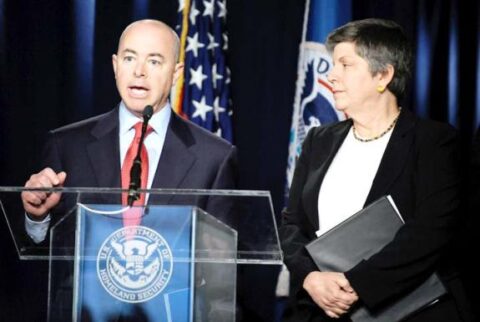
DHS Acknowledges that U.S. Immigration Policy Needs to Spark Economy and Attract Entrepreneurs
By PAUL ZULKIE, PRESIDENT OF THE AMERICAN IMMIGRATION COUNCIL Yesterday, Department of Homeland Security (DHS) Secretary Janet Napolitano and U.S. Citizenship and Immigration Services (USCIS) Director Alejandro Mayorkas announced a series of policy initiatives designed to “fuel the nation's economy and stimulate investment” by attracting foreign entrepreneurs who can invest in fields of high unemployment, create jobs, and form startup companies. It is encouraging that USCIS recognizes that immigrant entrepreneurs and innovators are a key to continued growth and to maintaining America’s competitive edge into the 21st century. It’s important that the agency keep this recognition in mind as it adjudicates visa petitions and applications. Read More

Department of Justice Seeks Injunction Against Alabama’s Anti-Immigrant Law
Yesterday, the Department of Justice (DOJ) filed yet another lawsuit against extreme state-level immigration laws—this time against Alabama’s HB 56. Already the subject of a class action lawsuit filed by the ACLU and other immigrants’ rights groups, Alabama’s HB 56 would require local law enforcement to verify the immigration status of those stopped for traffic violations, public schools to determine the immigration status of students, employers to use E-Verify and makes it a crime to knowingly rent to, transport or harbor undocumented immigrants. In its motion for a preliminary injunction, however, the DOJ argues that Alabama’s law, much like Arizona’s, interferes with the federal enforcement of immigration laws and places undue burdens on local schools and federal agencies. Alabama’s law was signed into law by Governor Robert Bentley in June and slated to take effect September 1. Read More
America's story is an immigrant story.