Children
In Arizona Case, Supreme Court Affirms Legality of Prosecutorial Discretion
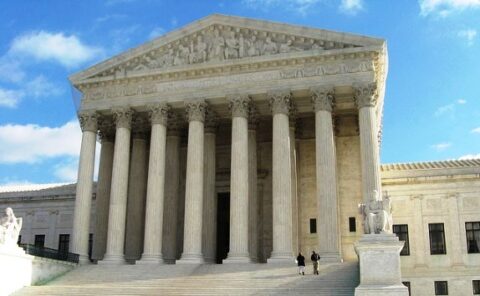
The Supreme Court dealt a blow to the restrictionist movement on Monday by striking down three provisions of Arizona SB 1070 and leaving a fourth vulnerable to future challenge. But in a lesser noticed development, the Court also undercut the arguments of critics who contend the President violated the Constitution by recently directing his administration not to deport otherwise removable immigrants who were brought to the country as children. As the majority opinion confirmed—and not even Justice Scalia denied—the President’s authority to set enforcement priorities is a valid and important aspect of the immigration system. Read More

A Breakdown of DHS’s Deferred Action for DREAMers
While today’s headlines assess the significance of President Obama’s deferred action announcement on Friday, many are still sorting through the news to get answers to basic questions about who is covered under the new program. Prior to President Obama’s statement that DHS would halt the deportation of immigrant youth who met criteria similar to the DREAM Act, DHS Secretary Janet Napolitano released a memo and a set of questions and answers that outline eligibility and a basic timeline for implementing the new directive . Read More

Even a Fifth Grader Realizes the Power of the American Dream
Shortly after President Obama announced that DHS will halt the deportations of eligible undocumented youth, a Chicago-area fifth grader delivered a speech of his own. Over the weekend, Alexander Tymouch was honored as the National 5th Grade Creative Writing Contest winner at the American Immigration Council’s Annual Benefit Dinner where he read his essay, “America, the Magical Land,” alongside Grammy-nominated musicians at the Gaylord Opryland Hotel in Nashville. Read More

After 30 Years, Plyler v. Doe Decision Survives but Remains Under Attack
Thirty years ago today, the Supreme Court issued its landmark decision in Plyler v. Doe, holding that states cannot deny a free public education to students for lack of valid immigration status. The decision has since opened the schoolhouse doors to untold numbers of children who might otherwise be deprived of a basic education. Yet today, the decision remains under continued attack from critics who—as part of an ongoing effort to put the issue back before the Justices—appear willing to sacrifice the welfare of U.S. citizens. Read More
After 30 Years, Plyler v. Doe Decision Survives but Remains Under Attack
Thirty years ago today, the Supreme Court issued its landmark decision in Plyler v. Doe, holding that states cannot deny a free public education to students for lack of valid immigration status. The decision has since opened the schoolhouse doors to untold numbers of children who might otherwise be deprived of a basic education. Yet today, the decision remains under continued attack from critics who—as part of an ongoing effort to put the issue back before the Justices—appear willing to sacrifice the welfare of U.S. citizens. Read More

Law Professors Push White House to Grant Administrative Relief to DREAMers
In the absence of Congressional action on the DREAM Act, advocates and DREAMers have increasingly turned to the White House to help them secure temporary protection from removal. This week, DREAMERS got a huge boost from 96 law professors who sent a letter to President Obama outlining the extensive authority under law that his administration holds to halt deportations of DREAMers. Read More
National Congress’s Duh Moment: The U.S. Wants Smart Immigrants!
The Philly Post May 30, 2012 My freshman year calculus class had about 500 people in it, and we attended our lectures in a large auditorium three times a week. It’s been more than 25 years, and I don’t remember the professor who did these lectures, but I definitely… Read More

Standardizing Guidelines Would Improve USCIS’s Proposed Family Unity Waiver Rule
Earlier this year, USCIS proposed a new waiver rule that would allow some unauthorized immigrants (mostly direct family members of U.S. citizens) who are applying for a green card to apply for a waiver to the 3 and 10 year bar from within the United States, minimizing the amount of time they would have to be away from their families. While many welcome this proposed rule change, there are ways in which USCIS could streamline this process. In addition to previously suggested improvements, USCIS could provide training and guidelines on the extreme hardship standard to ensure that the standard is applied consistently. The “comment period,” which is open to the public and can be used to suggest improvements to the rule, end this Friday, June 1. Read More

Still No Resolution on VAWA, Protections for Immigrants at Risk
Despite the recent controversy over amendments to the Violence Against Women Act (VAWA), there is still no resolution on its reauthorization. The bill remains stalled in Congress due to conflicting versions passed by the House and Senate. As one source put it, while the current impasse is technically procedural (due to a revenue-related procedural rule), the source of frustration is certainly political. The House version passed this month strips VAWA of critical protections for immigrants—protections that have been part of the law since its inception. Read More

Anti-Immigration Group Blames Students for Maryland’s Budget Gap
In a case of very creative accounting, the nativist Federation for American Immigration Reform (FAIR) is blaming students for Maryland’s fiscal woes. In a new report, FAIR lumps together students who are unauthorized immigrants with U.S.-born students who have unauthorized parents and claims that they are all costing Maryland taxpayers astronomical sums in educational expenditures. However, the report (entitled The Cost of Illegal Immigration to Marylanders) mistakenly treats the education of these students as nothing more than a “cost” attributable to unauthorized immigration. In reality, the educational expenses targeted by FAIR are an investment in the future U.S. workforce and tax base; an investment that will pay off later as students become taxpayingattr workers. Read More
America's story is an immigrant story.