Visas
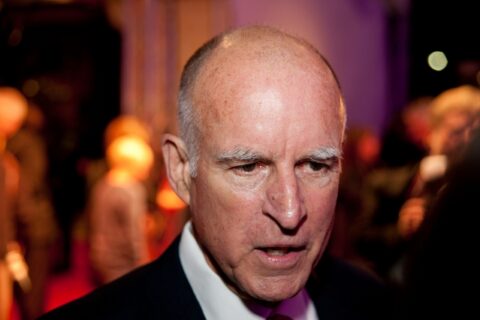
Will the Third Time Be the Charm for the TRUST Act in California?
For the third time in three years, lawmakers in California will seek passage of the TRUST Act, a so-called “anti-Arizona” bill that would limit the ability of local authorities to honor requests from immigration authorities to continue detaining individuals on behalf of the federal government. Although Gov. Jerry Brown vetoed a similar version of the bill in September, supporters hope the third time for the bill will be the charm. Read More
STEM Bill Still Plagued by Politics
In 2010, the lame duck session of Congress was dominated by debate over the DREAM Act, which passed the House of Representatives before succumbing to a conservative-led filibuster in the Senate. Congress will again tackle a significant immigration measure during the current lame duck session, with the House expected to vote on Friday on a bill that would create additional visas for advanced degree holders and shorten the time that many permanent residents are separated from members of their immediate family. Yet despite these laudable provisions, the bill in question contains numerous flaws. Read More

Foreign Students Add Billions of Dollars to the U.S. Economy Each Year – And That’s Just the Beginning
Most people don’t think of foreign students as an economic resource, yet that is precisely what they are. Each year, students from other countries spend billions of dollars in the U.S. economy, pumping money not only into the colleges and universities they attend, but the surrounding businesses as well. In addition, many foreign students go on to become highly innovative scientists, engineers, and entrepreneurs who add value to the U.S. economy in myriad ways that are often difficult to quantify. Given the economic value of the education they receive in U.S. universities, it is unfortunate that so many foreign students are forced by our nonsensical immigration policies to return to their home countries rather than putting their knowledge to use in this country. Read More
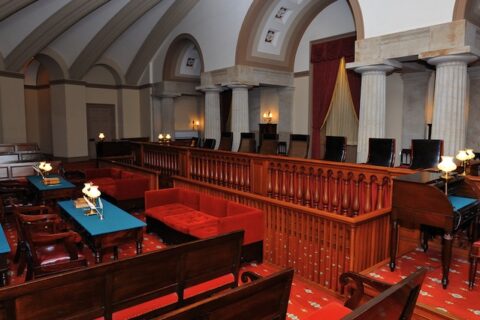
Supreme Court to Consider Reach of Padilla v. Kentucky
In its landmark decision in Padilla v. Kentucky, the Supreme Court confirmed that criminal defense attorneys have a constitutional obligation to advise their clients if pleading guilty to a particular offense could lead to deportation. On Thursday,* the Justices will consider a follow-up question of critical importance for many immigrants placed in removal proceedings on account of bad legal advice: whether the ruling applies to cases that became final before the decision was issued. Read More

Supreme Court Case Highlights Cruel Intersection of Immigration and Drug Laws
Tomorrow morning, the Supreme Court will hear arguments in a complicated immigration case involving how courts should determine whether a crime qualifies as an “aggravated felony.” Once the legal clutter is set aside, however, the case provides a clear example of how our nation’s immigration laws often fail to account for the most basic considerations of fairness and proportionality. If the Justices rule in the government’s favor, a lawful permanent resident with two U.S. citizen children could be deported from the country—and permanently barred from returning—for possessing less than $30 worth of marijuana. Read More

Naturalized Citizens Have the Power to Swing Elections
There is no doubt that immigrants are a force to be reckoned with in this year’s presidential race. After all, the Obama administration unveiled its Deferred Action for Childhood Arrivals (DACA) program in June, just a couple of months before the official start of the campaign. And Republican presidential nominee Mitt Romney has said that, if elected, he will not deport DACA beneficiaries (although he says he will discontinue the program). In other words, both candidates are going out of their way to woo immigrant voters—that is, naturalized U.S. citizens who are eligible to vote—as well as those second and third generation Americans for whom immigration is still a highly personal issue. This is smart politics. Given that the presidential election could be decided by the most razor-thin of margins, the ballots cast by naturalized citizens could prove decisive, especially in the handful of swing states upon which the election will probably hinge. Read More
Congress Pits One Form of Legal Immigration Against Another
We recently noted that the only point of agreement in the Republican and Democratic platforms on immigration was on the need for an infusion of green cards for STEM (science, technology, engineering, and math) graduates with advanced degrees from American colleges and universities. A recent poll conducted for the Partnership for a New American Economy and Compete America shows that 76 percent of Americans support the idea as well. If only Congress could draft legislation that simply sought to put that idea into practice. Read More

Immigration Law Curbs Foreign Student Entrepreneurship
Nearly everyone agrees that the U.S. immigration system should provide visas for entrepreneurs who want to start businesses in the U.S. and employ American workers. However, convoluted immigration laws make it difficult for some entrepreneurs to launch their business while they’re in school and remain lawfully in the U.S. after they graduate in order to run them. A new report by the Kauffman Foundation entitled Reforming Immigration Law to Allow More Foreign Student Entrepreneurs to Launch Job-Creating Ventures in the United States describes the obstacles student entrepreneurs’ face. Read More

Administration Releases Details on Deferred Action for Childhood Arrivals
The Department of Homeland Security today released details on its plan to grant “deferred action” to immigrant youths who were brought to the country as children. The announcement, which was accompanied by an updated FAQ and other materials on how to apply, comes eight weeks after DHS Secretary Janet Napolitano revealed the initiative, which could immediately benefit more than 900,000 immigrants. The new guidance from DHS addresses many questions about the application process—the answers to which appear below—but leaves others unresolved. Read More

New Brookings Report Examines Demand for H-1B High Skilled Worker Visas
Who uses H-1Bs and for what types of jobs is a topic of constant debate in Congress and in communities across the country. The Brookings Institute recently released a new report mapping H-1B workers in the U.S which addresses some of these questions and sheds new light on the topic. The H-1B program allows employers to hire foreign workers in specialty occupations for a temporary period of time. Currently, H-1Bs for for-profit employers are capped at 65,000 per year, with an additional 20,000 visas for workers with advanced degrees from U.S. universities. Research, non-profit, and government organizations can also request H-1B workers, and those visas are uncapped. Read More
America's story is an immigrant story.
