Undocumented Immigration

DHS Needs to Target Violent Drug Cartels, Not Immigrants Trying to Reunite with Families
Times have changed along the U.S.-Mexico border. In just a few short years, Mexican drug cartels have taken over the people-smuggling business. Although U.S. border walls and fences have proliferated, they have done nothing to prevent the cartels from moving drugs, human beings, guns, and money back and forth across the border. The combination of heightened U.S. border enforcement and cartel violence has made crossing the border increasingly dangerous. Yet large numbers of unauthorized immigrants who were previously deported from the United States continue to risk their lives by crossing the border in order to reunite with their U.S. families. The Obama Administration’s current enforcement policies treat these family-bound migrants like hardened criminals, while failing to address the real threat to security—the cartels. Read More

Declining Cities Look to Immigrants to Revitalize Economies and Increase University Enrollment
In a recent speech to the U.S. Chamber of Commerce, New York City Mayor Michael Bloomberg highlighted the vital role immigrants play in stimulating economic growth. Bloomberg called for immigration policies that “spur innovation, increase the number of entrepreneurs who start businesses here, and create jobs for Americans on every rung of the economic ladder." With U.S. unemployment still hovering around 9%, some declining U.S. cities are also looking to harness the economic and entrepreneurial power of immigrants. Small towns, particularly in America’s rust belt, are contemplating programs that attract immigrant growth in hopes of revitalizing their towns and universities. Read More

Can Alabama Afford to Enforce their New Restrictive Immigration Law?
This week, U.S. District Judge Sharon Blackburn failed to enjoin major provisions of Alabama’s extreme immigration law, HB 56, a law designed to drive unauthorized immigrants from the state. Under the law, police officers are now required to demand proof of legal status from anyone who seems foreign. School administrators are required to ask children about their immigration status and that of their parents. People and businesses—including utilities companies—are encouraged not to enter into contracts with anyone who cannot prove their legal status. While some anti-immigrant groups are celebrating the judge’s decision, Alabama businesses and state agencies may ultimately bear the economic brunt of this damaging law. Read More

What You Should Know About Initial Rulings on Alabama’s Immigration Law
Yesterday’s initial rulings from Judge Sharon Blackburn over Alabama’s new anti-immigrant legislation are disturbing and disappointing on many fronts. Absent a reversal of her decision based on an emergency appeal, many provisions of the law that mirror those struck down in every other jurisdiction will go into effect. If so, everyone in Alabama will pay the price of the law’s implementation—and there can be no doubt that residents of Alabama with dark skin, a foreign sounding name, or an accent will face more questions, intrusions, and humiliations. From a legal perspective, however, declarations of a “victory” for Alabama by media outlets and anti-immigrants’ rights groups are premature. The truth is much more complicated. Read More

Federal Judge Rules to Keeps Key Provisions of Alabama’s Restrictive Immigration Law
Today, U.S. District Judge Sharon Blackburn ruled to keep many of the key provisions in HB 56, Alabama’s restrictive immigration law recently challenged by the Department of Justice (DOJ) and civil and immigrant rights groups. While Judge Blackburn ruled to enjoin some provisions of HB 56, she found that the DOJ and civil and immigrant rights groups did not meet “the requirements for a preliminary injunction” in its claim that major provisions—such as the section requiring schools to determine the immigration status of students’ and their parents’—are preempted by federal law. Signed by Governor Robert Bentley in June, HB 56 was challenged by civil rights groups, religious leaders and the DOJ on the basis that the law interferes with the federal enforcement of immigration laws and places undue burdens on local schools and federal agencies. Read More

GOP Candidates Distort Truth on In-State Tuition for Unauthorized Students
Texas Governor Rick Perry, a candidate in the Republican presidential primaries, has been taking a lot of conservative heat lately over his support for the “Texas DREAM Act.” That bill, which Perry signed into law in 2001, allows young unauthorized Texans who came to this country as children to qualify for in-state tuition in state colleges and universities in the same way as their lawfully present peers. Perry says that supporting the bill was an act of mercy towards unauthorized youth who had no say in the decision of their parents to come to the United States without permission. He also says that it is in the best interest of the state to educate unauthorized children rather than consigning them to the margins of society. Read More

Next Stop, Napolitano: DHS Committee Approves Task Force Recommendations on Secure Communities
Last week, a task force created to study DHS’ controversial “Secure Communities” initiative issued a report listing a series of recommendations to improve the program. Among other proposals, the task force recommended that federal authorities standardize the use of prosecutorial discretion around the country, make the program more transparent, and decline to initiate deportation proceedings against immigrants who have not been convicted of serious crimes or otherwise pose a threat to public safety. As of yesterday, those recommendations are one step closer actual implementation as the Homeland Security Advisory Council (HSAC) voted to approve the task force’s findings and submit them for further consideration to DHS leadership, including Secretary Janet Napolitano. While HSAC agreed (almost) unanimously to submit the recommendations to DHS, the committee was careful to characterize the findings as a good first step rather than a cure to problems with Secure Communities. Read More

Task Force Submits Recommendations on DHS’s Flawed Secure Communities Program
Anyone following the saga surrounding Secure Communities—DHS’s flawed enforcement program that runs fingerprints through federal databases—can tell you that the program has been rife with controversy since its inception in 2008. As DHS began to stray from the program’s original focus on criminal aliens—state and city leaders, police chiefs, immigration advocates, and congressional members blasted the agency for casting too broad a net and for its dubious implementation process. After tensions reached a boiling point in June, ICE Director John Morton created a 20-member task force to address growing concerns. This week, that task force submitted its final recommendations in a report to the Homeland Security Advisory Council (HSAC)—recommendations that some former task force members say don’t go far enough. Read More
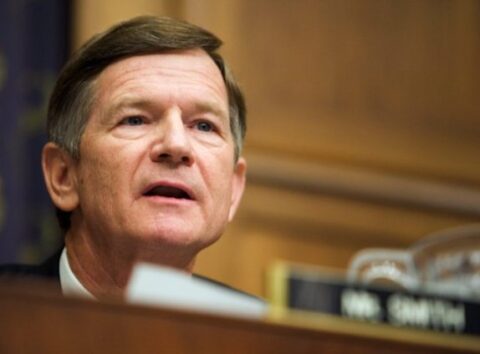
Lamar Smith’s E-Verify Arguments Defy Logic and Lack Evidence
Facing opposition from the left and the right, Rep. Lamar Smith appears to be willing to do and say just about anything to pass his “Legal Workforce Act,” (H.R. 2885), which would make E-Verify mandatory for all U.S. businesses. Smith continues to tout E-Verify as a magic bullet that will create jobs for millions of American workers despite all evidence to the contrary. Read More

Lamar Smith Introduces New Agricultural Twist to His Anti-Immigrant Agenda
Rep. Lamar Smith (R-TX), Chairman of the House Judiciary Committee, has added a novel new twist to his anti-immigrant agenda: letting more immigrant workers into the country. In defiance of logic, the man who believes that immigrants merely steal jobs from U.S. citizens now wants to import migrant agricultural workers. At a hearing today of the House Subcommittee on Immigration Policy and Enforcement, Rep. Smith rolled out his latest legislative proposal, called the “American Specialty Agriculture Act” (H.R. 2847). The bill would create a new “H-2C” visa for temporary agricultural workers to replace the existing H-2A program, and would allow growers to bring in up to 500,000 of these workers each year. Read More
All gifts are matched dollar for dollar
No one should face the immigration system alone