Undocumented Immigration

New Report Challenges Notion that Harsh Enforcement Measures Drive Unauthorized Immigrants Out
Last week, a new report released by the Pew Hispanic Center found that nearly two-thirds of all unauthorized adult immigrants currently living in the U.S. (10.2 million) have been here for at least 10 years and nearly half of them (4.7 million) are parents of minor children. The longevity of their U.S. residency and pattern of parenthood suggest that these unauthorized immigrants are integrated into American society, challenging the notion that ramped-up enforcement measures like Arizona’s SB 1070 and Alabama’s HB 56 are effectively driving unauthorized immigrants back to their countries of origin. Read More

American Heritage Dictionary Redefines “Anchor Baby” Term as “Offensive” and “Disparaging”
The firestorm around the inclusion of the term “anchor baby” in the new edition of the American Heritage Dictionary has led to a dramatic reversal in the definition. Not only did the executive editor, Steven Kleinelder, emphatically apologize for the initial definition, he promised swift action to change it. By Monday morning, the term was labeled as “offensive.” By Monday afternoon, a new definition appeared online, one that was crafted to reflect more accurately just how artificial a term it really is: Read More

American Innovation Takes on Broken U.S. Immigration System
In the past several days news reports have depicted good old American ingenuity taking on our broken and outdated immigration system. CNN ran a story last week from Georgia about a handful of educators who have taken matters into their own hands after the state’s Board of Regents passed an extreme law in 2010 banning undocumented immigrant children from attending Georgia’s top public colleges and universities—banned despite the fact that these kids pay three times the rate of other in-state students due to their immigration status. Read More

UPDATE: American Heritage Dictionary Responds to “Anchor Baby” Definition Criticism
In response to ImmigrationImpact.com’s critique of the definition of “anchor baby” included in the latest edition of the American Heritage Dictionary of the English Language, the executive editor of the dictionary has agreed to revise the definition of to reflect the derogatory nature of the term. In conversations… Read More

“Anchor Baby” Added to New American Heritage Dictionary
The degree to which the immigration debate has coarsened over the last few years is no more evident than in the pages of the recently released fifth edition of the New American Heritage Dictionary. Among the new entries is the term “anchor baby.” You might think that the definition would read something like: slang, a pejorative description of a child born in the United States to parents without legal status, implying that the parents intend to leverage the child’s citizenship to “anchor” their own presence in the U.S.” You would be wrong. Read More

Alabama’s Immigration Law Digs Deeper Hole for State Economy
Although some Alabama lawmakers credit the state’s overall drop in unemployment to their new immigration law (HB 56), the reality is that many industries and sectors in the state are losing workers and jobs. This week, the Birmingham News reported that Alabama’s construction industry is losing jobs faster than nearly any other state—a loss experts say is due in part to HB 56’s draconian provisions. To make matters worse, Alabama’s crackdown on those who look or sound foreign (a Honda employee stopped this week and the arrest of a Mercedes executive last week) is causing many to fear Alabama’s anti-immigrant reputation will detract foreign investors from doing business in the state. In fact, according to the Tuscaloosa News, “the law is becoming the greatest threat to the state’s economy and job creation, overshadowing even the record-setting bankruptcy of Jefferson County.” Read More

House Subcommittee Hearing Underscores Problems with Secure Communities Program
Congressman Steve King (R-IA), Subcommittee on Immigration Policy & Enforcement. Today, the House Immigration Subcommittee held a hearing on the Secure Communities program (S-Comm)—an enforcement program that has been rife with controversy since its inception in 2008. Today’s hearing featured statements from a variety of witnesses and members of Congress which further underscored the problems inherent with the program and immigration enforcement in general. S-Comm is currently active in more than 1,700 jurisdictions and is on target to be nationwide by 2013. Read More

Children of Immigrant Entrepreneurs Excel Educationally, Report Finds
The contributions of immigrant entrepreneurs—innovation, job creation and economic growth—are often cited by economists as strong reasons to reform our outdated immigration system. However, the kids of immigrant entrepreneurs receive relatively little attention. Delving into the experiences of these adult children of immigrants provides a new lens through which to witness the struggles and triumphs of parents and their children as they pursue the American Dream. Read More

Report Debunks Myth that High-Skilled Immigrants Steal American Jobs
It is an article of faith among anti-immigrant activists that immigration results in fewer jobs and lower wages for native-born workers. For instance, the Federation for American Immigration Reform (FAIR) recently released a report in which it claims that native-born workers with science and engineering (S&E) degrees are being driven en masse into non-S&E occupations due to competition from foreign-born workers willing to accept lower wages. However, in its rush to blame immigrants, FAIR misses a highly salient detail: a growing number of jobs in non-S&E occupations require or reward S&E skills. In other words, native-born workers with S&E degrees aren’t being driven out of S&E occupations by immigrants; they are being lured into non-S&E occupations where their S&E skills are in high demand and command higher salaries. Read More
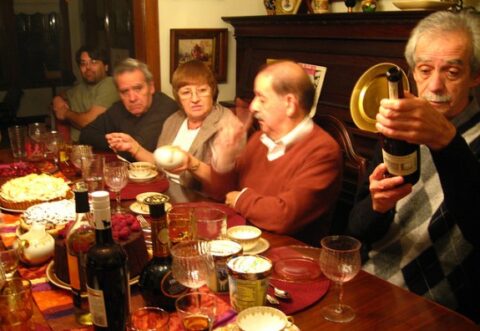
How to Talk Turkey on Immigration: Redux
Washington, D.C. area schools participate in the Urban Debate program, which gives middle school children the opportunity to learn the art of debate. My sixth grader signed up right away. She was surprised to learn, however, at her first tournament that many people have no qualms debating either side of an issue, no matter how they personally feel about it. She also discovered that a few kids had no problems saying whatever they had to say to win. She was in tears because another twelve year old insisted that American lives were more valuable than others in a debate over U.S. military involvement abroad. Read More
All gifts are matched dollar for dollar
No one should face the immigration system alone