Students

Will USCIS Develop Fair, Humane Travel Policies for DACA Recipients?
For many young immigrants who are now lawfully present under the Deferred Action for Childhood Arrivals (DACA) initiative—which grants them the right to work and live in the United States for at least two years—the next question may be, when will they be able to travel outside of the United States? Depending on what guidance they reference, the answer could vary, adding confusion to what has been a reasonably straightforward implementation process. Read More

Immigrants Add Billions to the Arkansas Economy
A perennial question in the immigration debate is whether or not immigrants contribute more to the economy than they cost. That is, do they add more economically as workers, taxpayers, consumers, and entrepreneurs than they “consume” in public education, public healthcare, and public benefits? In some ways, this question is misleading. Education and healthcare are social investments that pay future dividends; they are not merely fiscal expenses. Nevertheless, it is a useful exercise to take the question at face value and do the math. The result, contrary to the convoluted arithmetic of anti-immigrant activists, is overwhelmingly positive. Immigrants add far more to the economy than they take away. And given the aging of the native-born population, the contributions of immigrants (and their children) will only increase over time. Read More

Illinois Legislature Votes to License all Drivers in the State
On Tuesday, the Illinois legislature passed a bill to allow state residents without legal status to obtain a three-year renewable driver’s license. The law will create tens if not hundreds of thousands of newly licensed drivers. The bill, which awaits the Governor’s promised signature, will make Illinois the third state after New Mexico and Washington to allow unauthorized immigrants to obtain driver’s licenses. (Utah allows undocumented immigrants to apply for driving privilege cards.) Read More

Boston Globe Series Exposes Pitfalls of Immigration Detention
Last week, the Boston Globe ran an important series of articles on a topic that receives far too little attention: the vast network of civil detention centers that last year held more than 400,000 immigrants in the United States. The product of a year-long investigation, the series shines a spotlight on a system in which detainees often have no right to a bail hearing, are not given attorneys if they cannot afford one, and are transferred between facilities at the whim of federal immigration officials. Although one article misleadingly faults immigration officials for releasing certain detainees, the series as a whole is worth reading. Read More

Guidance on ICE Detainers Sends Ripples Through California
Every year, local law enforcement agencies receive thousands of requests from U.S. Immigration and Customs Enforcement (ICE) to keep individuals in custody—even after they are entitled to release—while federal officers determine whether to initiate removal proceedings. Last Tuesday, California Attorney General Kamala Harris issued simple but groundbreaking guidance to all law enforcement agencies in the state, clarifying that they have no legal obligation to honor so-called immigration “detainers.” Although Harris’ guidance was consistent with existing policies in numerous California counties, it has prompted other state law enforcement officials to publicly reconsider their willingness to cooperate with ICE. Read More

Bibles, Badges, Business and Bush + DREAMers Make Immigration Reform Demands Known
While some thought the immigration reform talk immediately after the election was just chatter, a series of convenings and speeches this week demonstrate that the topic of broad immigration reform is on plenty of tables. From DREAMers to President Bush, the call for reform goes on. Read More

Arizona Faces Lawsuit over DACA Driver’s License Policy
Less than six months after it received a stinging rebuke from the Supreme Court, Arizona today was hit with another major lawsuit over its punitive immigration policies—this time challenging its practice of denying driver’s licenses to beneficiaries of the Deferred Action for Childhood Arrivals (DACA) program. Filed in federal court in Phoenix, the class-action suit challenges an executive order issued by Gov. Jan Brewer making DACA recipients ineligible for all public benefits. Although the suit is limited to Arizona’s policy, the outcome could affect DACA recipients’ ability to obtain driver’s licenses in other states as well. Read More

This Week’s Immigration Proposals: Old News, Old Ideas
If you follow immigration, but are returning from a month-long, news-free vacation, there’s only one conclusion you would draw from the legislation Republicans offered up this week in Congress: Mitt Romney must have won the presidential election. After all, the ACHIEVE Act, introduced yesterday by retiring Senators Jon Kyl (R-AZ) and Kay Bailey Hutchison (R-TX), which offers temporary legal status but no path to citizenship to DREAMers, is surely the bill they were preparing to offer in the event that a Romney Administration was in the wings. And on the House side, a slightly revised version of the STEM Jobs Act—which failed on the suspension calendar before the election—is back on the floor at the end of this week without changing any of the problems that led to its defeat before. Surely, this suggests that the predictions that immigration would play a decisive role in the presidential election didn’t pan out and that self-deportation as an immigration reform strategy worked. Except, none of this is true. Read More

Foreign Students Add Billions of Dollars to the U.S. Economy Each Year – And That’s Just the Beginning
Most people don’t think of foreign students as an economic resource, yet that is precisely what they are. Each year, students from other countries spend billions of dollars in the U.S. economy, pumping money not only into the colleges and universities they attend, but the surrounding businesses as well. In addition, many foreign students go on to become highly innovative scientists, engineers, and entrepreneurs who add value to the U.S. economy in myriad ways that are often difficult to quantify. Given the economic value of the education they receive in U.S. universities, it is unfortunate that so many foreign students are forced by our nonsensical immigration policies to return to their home countries rather than putting their knowledge to use in this country. Read More
Understanding the Important Symbolism of the Maryland DREAM Act Victory
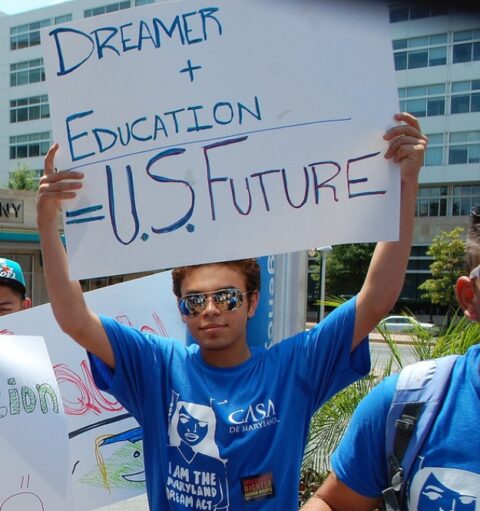
While much of last week’s energy was focused on Latino voter turnout in the Presidential race— and the subsequent recognition that immigration reform was all but inevitable—there was another major victory for immigration policy that came out of Maryland. Voters in the state supported through referendum their legislature’s decision to provide in-state tuition to undocumented students. This was the first vote of its kind in the nation and one where African-American voters were an important voting bloc in support of the measure. Read More
America's story is an immigrant story.