Senate
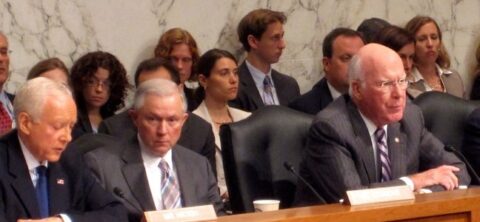
Senate Committee Mark-up Of Immigration Bill Begins With Border Security Amendments
The Senate Judiciary Committee’s mark-up of S. 744, the “Border Security, Economic Opportunity, and Immigration Modernization Act” put forward by the bipartisan Gang of 8 group of senators, began on Thursday in front of a packed hearing room and with all 18 committee members in attendance. Senators offered 32 amendments (out of the 300 filed), all relating to issues in the introduction and Title 1 of the bill. Of the amendments considered, the committee accepted 21 of them, with bipartisan support for all but one, while four were withdrawn. The primary change was to broaden the scope of the border security provisions. And as they had previously indicated, the four “Gang of Eight” members on the committee—Democratic Sens. Dick Durbin (IL) and Chuck Schumer (NY) and GOP Sens. Jeff Flake (AZ) and Lindsey Graham (SC)—voted together against any amendment that undermined the bill’s core goals. Read More
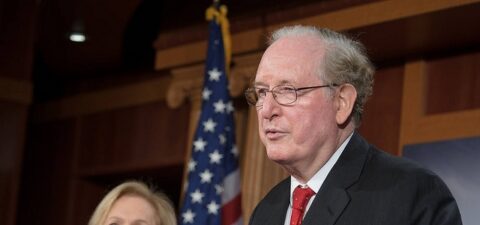
The Important Role of Immigrants in America’s Innovation Economy
This week, the U.S. Senate Committee on Commerce, Science, and Transportation weighed in on immigration reform with a hearing on the role of immigrants in America’s innovation economy. Remarks from Sens. Rockefeller (D-WV) and Thune (R-SD) noted the contributions of immigrant innovators and entrepreneurs. Immigrants in the United States were named as inventors or co-inventors on 25.6 percent of international patent applications filed from the U.S. in 2006. Furthermore, temporary workers and permanent residents made contributions to over half of the international patents filed by several large, multi-national companies. Temporary and permanent foreign-born workers represent at least 24 percent of the nation’s scientists and 47 percent of engineers with doctoral degrees. Read More

How to Accurately Estimate the Economic Impact of the Senate Immigration Reform Bill
One of the most important questions being asked about the Senate immigration reform bill (S. 744) is how it will impact the economy. There is already a broad consensus among economic experts that immigration reform would be a net economic benefit in terms of jobs, wage levels, tax revenue, and Gross Domestic Product (GDP). As reported in Politico on May 8, for instance, a new study by the Social Security Administration estimates that “by 2024, the immigration bill will have created 3.22 million jobs, and boost GDP by 1.63 percent.” However, the most widely awaited estimate is that of the Congressional Budget Office (CBO), which will soon be “scoring” the bill in terms of its fiscal consequences. Read More

Senate Immigration Bill Mark-Up: What to Expect
Tomorrow, the Senate Judiciary Committee will begin the long awaited mark-up of S. 744, the “Border Security, Economic Opportunity, and Immigration Modernization Act,” the 844 page bill designed to overhaul our broken immigration system. We can expect some genuine efforts to improve the bill from both sides, but we can also expect a lot of theatrics and grandstanding. That’s the nature of a big committee mark-up, especially on an issue that hasn’t had this kind of exposure in the Senate since the mark-up of the 2006 bill. What can we expect? Read More

President Obama’ Trip to Latin America Highlights Important Mutual Economic and Security Ties
President Obama spent three days last week traveling to Mexico as well as Costa Rica—his first second-term trip to Latin America. Mexico is the United States’ third largest trading partner, behind Canada and China, in terms of total goods, and the U.S. is Mexico’s largest trading partner. In addition, the largest share of immigrants who come to the U.S. are from Mexico. The President’s trip is a reminder of what an important partner Mexico, and much of Latin America, is to the U.S. Keeping these dynamics in mind is key particularly at a time when some in Congress want to spend more and more at the southern border in an attempt to seal the U.S. off completely from one of our largest economic partners. It’s no wonder then that the President used the trip to discuss both the economic and immigration ties between our nations. Read More

Keeping U.S. High-Skilled Temporary Worker Visa Programs Workable
When analyzing higher-skilled guest worker visa programs, such as the H-1B and L-1 programs, critics often fail to acknowledge the very different and important purposes that these programs were designed to serve, and the complicated requirements already in place to protect against abuse or exploitation. There is no denying that we can and should improve these programs and the strategies used to enforce them. However, given the well-established economic benefits of these programs, and the challenges employers face finding highly skilled workers, particularly in technical fields, it is essential that any proposed reforms not impose restrictions that may make these programs completely unworkable. Read More

Can We Afford Not to Include 11 Million People in Health Care Reform?
By Sonal Ambegaokar, Health Policy Attorney at the National Immigration Law Center. To date, policy discussions regarding immigrants and health care and other benefits primarily focus on negative stereotypes and myths. As a result, the default policy solution to any issue involving immigrants and benefits is to simply deny the benefits, even when the immigrants are in the U.S. lawfully. Yet this solution is counter-productive for three main reasons: first, it is not cost-effective; second, it fails to actually address the systemic failures in our national health care and immigration policies; and third, it legally sanctions the exclusion and ostracizing of immigrants as the “other.” Read More

High-Skilled Immigration and Entrepreneurship in the Senate’s Immigration Bill
On the road to reform, the Senate’s Border Security, Economic Opportunity, and Immigration Modernization Act contains several changes and new provisions for skilled immigration and entrepreneurship. Specifically, the bill provides balanced reforms to the H-1B nonimmigrant visa for high-skilled individuals, various provisions for highly skilled individuals through permanent employment-based immigration, and a new INVEST visa for entrepreneurs. Read More
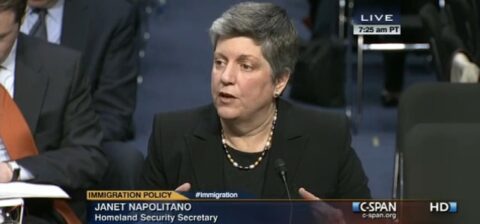
Napolitano Hearing Points the Way Forward on Immigration Reform
At an April 23rd hearing of the Senate Judiciary Committee, Homeland Security Secretary Janet Napolitano delivered two messages on behalf of the Obama administration. First, the administration strongly supports the Senate immigration reform bill—S.744, “The Border Security, Economic Opportunity, and Immigration Modernization Act.” Secondly, the administration has, contrary to the claims of its critics, significantly ramped up border security in particular and immigration enforcement in general. In other words, the administration has proven that it can be tough on enforcement even as it advocates the formulation of new immigration laws that are more effective and just than those currently on the books. Read More
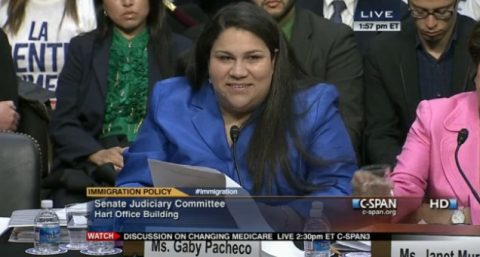
Senate Hearing Reinforces Why Congress Needs To Pass Comprehensive Immigration Reform
For more than seven hours on Monday, the Senate Judiciary Committee listened to testimony from almost two dozen people about the immigration reform bill a bipartisan group of senators introduced last week. From visas for farm workers and other foreign workers to the mandatory E-Verify system included in the bill, senators debated and questioned the witnesses about all aspects of immigration reform. Read More
All gifts are matched dollar for dollar
No one should face the immigration system alone