SB 1070
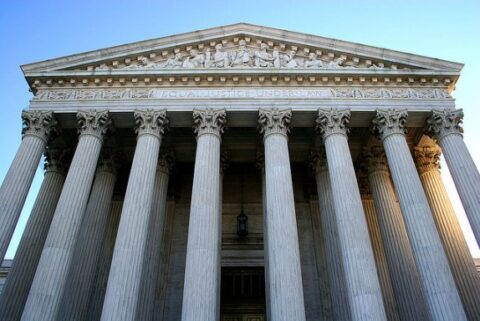
Immigration Restrictionists Take SB 1070 to Supreme Court
More than a year after SB 1070 was initially enjoined in federal court, the immigration restrictionists behind Arizona’s misguided immigration law have brought their case to the Supreme Court. Proponents of SB 1070 are likely to hail the state’s petition, filed yesterday, as not only the first step toward reversing the injunction against the law’s most punitive provisions, but toward cementing states’ role as the primary enforcers of federal immigration law. While we won’t know whether the Justices will even hear the case until at least October, the petition already foretells an uphill climb for Paul Clement, the attorney representing Arizona and former Solicitor General under President Bush, to persuade the Court to overturn long established principles. Read More
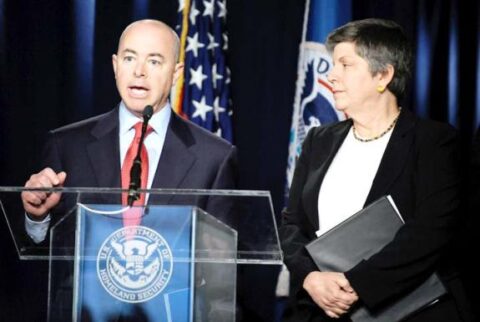
DHS Acknowledges that U.S. Immigration Policy Needs to Spark Economy and Attract Entrepreneurs
By PAUL ZULKIE, PRESIDENT OF THE AMERICAN IMMIGRATION COUNCIL Yesterday, Department of Homeland Security (DHS) Secretary Janet Napolitano and U.S. Citizenship and Immigration Services (USCIS) Director Alejandro Mayorkas announced a series of policy initiatives designed to “fuel the nation's economy and stimulate investment” by attracting foreign entrepreneurs who can invest in fields of high unemployment, create jobs, and form startup companies. It is encouraging that USCIS recognizes that immigrant entrepreneurs and innovators are a key to continued growth and to maintaining America’s competitive edge into the 21st century. It’s important that the agency keep this recognition in mind as it adjudicates visa petitions and applications. Read More
Department of Justice Seeks Injunction Against Alabama’s Anti-Immigrant Law
Yesterday, the Department of Justice (DOJ) filed yet another lawsuit against extreme state-level immigration laws—this time against Alabama’s HB 56. Already the subject of a class action lawsuit filed by the ACLU and other immigrants’ rights groups, Alabama’s HB 56 would require local law enforcement to verify the immigration status of those stopped for traffic violations, public schools to determine the immigration status of students, employers to use E-Verify and makes it a crime to knowingly rent to, transport or harbor undocumented immigrants. In its motion for a preliminary injunction, however, the DOJ argues that Alabama’s law, much like Arizona’s, interferes with the federal enforcement of immigration laws and places undue burdens on local schools and federal agencies. Alabama’s law was signed into law by Governor Robert Bentley in June and slated to take effect September 1. Read More

The Cost of Doing Anti-Immigrant Business: Russell Pearce to Face Recall Election
While the authors and proponents of state level anti-immigrant legislation received some measure of notoriety initially, one could also predict that there would be a corresponding price to pay for pursuing such costly and divisive immigration measures. Aside from the immediate lawsuits filed in nearly every state that passed Arizona copycats, there are now additional political and fiscal costs that states and supporters of these restrictive laws must pay. Read More
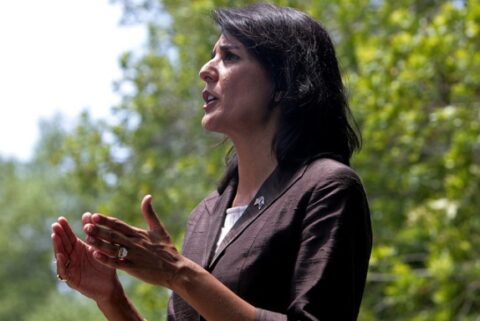
South Carolina Governor Signs $1.3 Million Immigration Enforcement Law
This week, on the same day that a federal judge enjoined key provisions of Georgia’s immigration law, South Carolina Governor Nikki Haley signed an Arizona-style immigration bill into law. To date, federal judges in four states (Arizona, Utah, Indiana and Georgia) have blocked key provisions of their Arizona-inspired immigration laws, arguing that these laws unlawfully interfere with federal authority over immigration matters. So what makes South Carolina any different? Nothing, except for the $1.3 million price tag in addition to the cost of implementation and legal fees incurred from defending the law. Read More
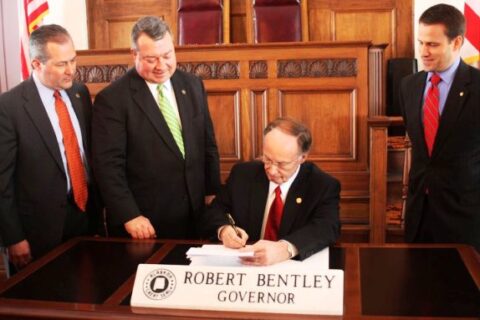
Alabama Governor Signs Costly Immigration Bill, ACLU to File Suit
Yesterday, Alabama Governor Robert Bentley signed a restrictive immigration bill (HB 56) into law, making Alabama the fourth state to sign “get tough” Arizona-style immigration legislation. Among the restrictive provisions, HB 56 requires local law enforcement, in some instances, to verify the immigration status of those stopped for traffic violations, public schools to determine the immigration status of students, employers to use E-Verify and makes it a crime to knowingly rent to, transport or harbor undocumented immigrants. Although Gov. Bentley touts the law as the nation’s toughest, he might also consider mounting a similarly tough legal defense as civil rights groups have declared their intention to file suit. Read More

Alabama Passes “Get Tough” Immigration Enforcement Law
Like Arizona, Utah and Georgia before it, Alabama became the fourth state to pass Arizona-style immigration enforcement legislation—legislation that in some aspects goes beyond Arizona’s immigration law. Last week, Alabama’s Republican-controlled House and Senate passed HB 56, a bill which, among other things, authorizes local police to inquire about the immigration status of anyone they “reasonably suspect” is not authorized to be in the country during a stop. Who is “reasonably suspicious?” Apparently those without driver’s licenses, those who “act nervously,” and those whose vehicle tags don’t match registration records. Read More

States that Passed Arizona-style Immigration Laws Now Face Costly, Uphill Legal Battles
Despite repeated warnings from business groups, tourism and industry boards and advocates about the hefty price tag attached to Arizona-style legislation, state lawmakers continued to push “get tough” copycat proposals. Many ultimately rejected SB1070-style legislation (26, to date) due to high costs and political backlash, while others severely watered down, altered or put on hold legislation targeting undocumented immigrants. But states that did pass anti-immigrant legislation, like Georgia and Indiana, now face costly, uphill legal battles. Read More

State Lawmakers Continue to Push Immigration Enforcement Measures, Despite Warnings
Although state lawmakers have heavily revised their immigration measures—stripping away provisions they believe will meet fierce opposition—they nevertheless continue to push forward, determined to put anything resembling “get-tough” legislation on the books. In fact, a number of measures targeting undocumented immigrants moved through state legislatures in recent weeks, including Florida, Indiana, Oklahoma and Alabama—despite warnings from lawmakers, advocates and business groups about the costly impact of these laws on their state. Read More

New Report Underscores Economic Folly of S.B. 1070-Type Laws in California
Fans of Arizona’s SB 1070 and its many imitators fail to mention one critical feature of their beloved legislation: its economic destructiveness. A dramatic example of just how destructive an SB 1070 clone could be is detailed in a new report from the Center for American Progress (CAP) and the Immigration Policy Center (IPC). The report, entitled Revitalizing the Golden State: What Legalization Over Deportation Could Mean to California and Los Angeles County, spells out the economic losses that would result from the removal of all unauthorized immigrants from California as a whole and Los Angeles County in particular. The report then compares this to the economic gains which would flow from legalizing the unauthorized population. CAP and the IPC released a similar report about Arizona last month. Read More
America's story is an immigrant story.
