SB 1070

Sore Loser, Jan Brewer, Continues Anti-Immigrant Crusade
Despite losing both the legal and public relations battles in the fight over SB 1070, Arizona’s Governor Jan Brewer was anxious to put Arizona back in the spotlight this week. Although she can’t prevent people from requesting or receiving deferred action, she issued an executive order that attempts to prevent Arizona recipients of Deferred Action for Childhood Arrivals (DACA) from obtaining driver’s licenses in her state. The order, which also banned access to public benefits (something DACA recipients are ineligible for, anyway) has been characterized as mean-spirited and belligerent, but it is also just wrong on the facts Read More

States Apply Brakes on Immigration Legislation in 2012
The National Conference on State Legislatures (NCSL) released its annual review of immigration legislation moving in statehouses around the country. NCSL found a significant, 40% decrease in the introduction of immigration legislation and a 20% decrease in states enacting immigration-related laws when compared to 2011. This decline is the first in years, and is reportedly due to two factors: lawmakers being too busy dealing with budget issues and redistricting, and waiting to see how the Supreme Court would rule in Arizona v. United States. Read More

Using SAVE to Verify Voter Eligibility Comes with Unexplored Risks
The lack of evidence of immigrant voter fraud hasn’t stopped some states from pushing efforts to require photo ID at the polls, purge voter rolls of ineligible voters, and other measures that may result in voter suppression and the disenfranchisement of racial and ethnic minorities or other social groups. Some states have asked the federal government for access to immigration data in order to determine whether non-citizens are on the voter registration rolls. After initial refusals, in July 2012, the Director of USCIS advised the Florida Secretary of State that states, under limited circumstances, may use the Systematic Alien Verification for Entitlements (SAVE) program for verification of the citizenship status of registered voters. Since then, other states have expressed an interest in using SAVE for this purpose. However, the status of SAVE is unclear because the Department of Justice is again challenging Florida’s efforts, claiming they violate the Voting Rights Act of 1965. Read More
Restrictionists Misrepresent Data on Immigration Enforcement
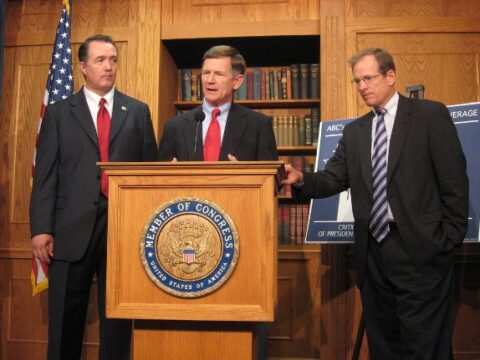
Some members of Congress are intent on portraying the Obama administration as “weak” on immigration enforcement, and they aren’t going to let facts get in their way. Yesterday, for example, the Congressional Research Service (CRS) released new data on individuals who had been identified through Secure Communities (S-Comm) but against whom ICE had not taken enforcement action. House Judiciary Chair Lamar Smith characterized the data as proof that the Obama administration has used prosecutorial discretion “recklessly and to the detriment of the American people.” However, a close look at the data reveals that Smith’s sweeping allegations do not hold water. By misusing terms like “recidivism,” and by failing to distinguish between arrests and convictions, Smith intends to paint immigrants as criminals—a link that has been disproven over and over again. Read More

New Americans Represent Team USA at the London Olympics
Today, the 2012 Olympics formally kick off in London where the best athletes from around the world are meeting to compete. The United States is well-represented, not only by our native born-athletes but by many “New Americans.” In fact, approximately 38 of those competing on Team USA are naturalized U.S. citizens. These athletes remind us that Americans come from all over the world. Read More

New Injunction Sought in Challenge to Arizona SB 1070
Late Tuesday night, opponents of Arizona SB 1070 filed new papers in court seeking to block Section 2(B) from taking effect, arguing that state legislators were driven by anti-Latino bias and that the provision will inevitably result in constitutional violations. The motion, filed by civil rights groups, cited numerous previously undisclosed emails from former State Sen. Russell Pearce, the main sponsor of SB 1070, containing inflammatory comments about Mexico and unauthorized immigrants. The filing, submitted in federal district court in Phoenix, also sought an injunction against a separate provision of SB 1070 that attorneys argue is invalid under the Supreme Court’s recent decision in Arizona v. United States. Read More

Why the Administration Should Avoid a Fight Over Anti-Detainer Laws
Yesterday’s TIME Magazine carried a story on what it billed as the Obama administration’s “next immigration battle”—the spread of state and local laws around the country preventing jails from holding immigrant detainees on behalf of the federal government. California and Chicago appear poised to join the list, and federal officials have floated the possibility of taking legal action to block such measures. This battle, however, pits states and localities trying to limit inappropriate detention against the federal government’s desire to cast a wide net for potential immigration violators. It’s a fight the federal government should think twice about taking on. Read More
Some States Attempt to Move Forward on Immigration Laws Following Supreme Court Decision
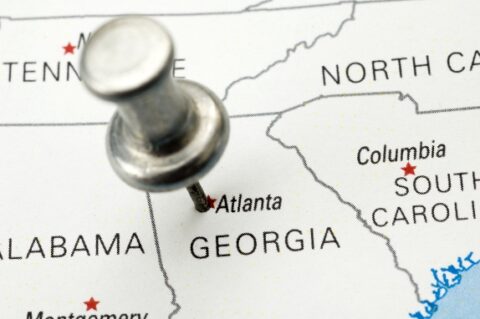
Prior to the Supreme Court’s recent decision on Arizona SB 1070, other states that passed immigration laws were also embroiled in complicated legal battles. Alabama, Georgia, South Carolina, and Utah all passed restrictive immigration laws, parts of which were challenged in court and subsequently enjoined pending the Supreme Court’s ruling on Arizona. Now that the Supreme Court has ruled, however, each state is now attempting to interpret that ruling in an effort to implement its immigration law. Read More

Civil Rights Groups Resume Legal Challenges to Alabama’s Immigration Law
Less than three weeks after the Supreme Court’s landmark decision in Arizona v. United States—which struck down three provisions of SB 1070 and invited future challenges to a fourth—civil rights groups are back in court resuming their challenges to copycat laws in other states. Going forward, the lawsuits will focus more on how to interpret the Justices’ decision and less on theoretical legal questions about states’ rights. While the cases in Alabama and other states may take years to resolve, it is already clear that parts of the laws will be immediately struck down. Read More
In Arizona Case, Supreme Court Affirms Legality of Prosecutorial Discretion
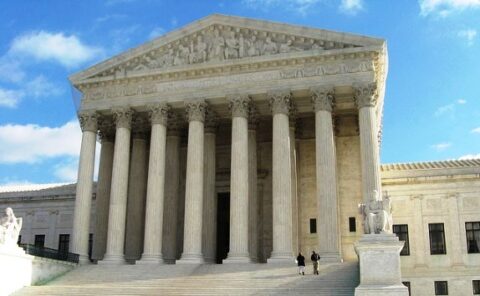
The Supreme Court dealt a blow to the restrictionist movement on Monday by striking down three provisions of Arizona SB 1070 and leaving a fourth vulnerable to future challenge. But in a lesser noticed development, the Court also undercut the arguments of critics who contend the President violated the Constitution by recently directing his administration not to deport otherwise removable immigrants who were brought to the country as children. As the majority opinion confirmed—and not even Justice Scalia denied—the President’s authority to set enforcement priorities is a valid and important aspect of the immigration system. Read More
All gifts are matched dollar for dollar
No one should face the immigration system alone