Republicans

Pressure Mounts on House To Tackle Immigration Reform
As July comes to a close and August recess begins, prospects for immigration reform in the House of Representatives are looking up. While some saw the pronouncements from House Judiciary Chairman Bob Goodlatte (R-VA) and Speaker John Boehner (R-OH) that the House would not take up the Senate bill as a death knell, it looked more like a bargaining position by the end of the month. “We’re doing it differently in the House,” Goodlatte told Fox Business. Members are still divided about what immigration measure they should consider. Options range from several piecemeal bills—possibly including a limited version of the DREAM Act that House Majority Leader Eric Cantor (R-VA) is crafting with Goodlatte—or a comprehensive measure on which seven members are still working. So while the House is not going to meet Boehner’s original goal of passing some form of immigration reform by the end of July, the issue is far from dead. Read More

Immigration Reform an Imperative for Cities and Metropolitan Areas
Metropolitan leaders from around the country made the case for immigration reform at an event hosted by the Brookings Institution’s Metropolitan Policy Program today. Over 80 percent of the U.S. population, including 95 percent of immigrants, now live in metropolitan areas; cities and towns across the country therefore have a huge stake in passing immigration reform. In fact, panelists agreed that comprehensive immigration reform is an imperative for metropolitan areas. “We need an immigration system that is keeping with the times,” stated Audrey Singer, a Senior Fellow with Brookings. Read More

Former Attorney General Gets it Wrong on DOMA and Same Sex Immigration Benefits
Former Attorney General Alberto R. Gonzales is advocating in the New York Times that the Supreme Court decision in U.S. v. Windsor, which invalidated Section 3 of the Defense of Marriage Act (DOMA), should not allow the Obama administration to afford immigration benefits to married, same-sex bi-national couples. Rather, he argues, the administration is bound by a disturbing, 30-year-old Ninth Circuit case, Adams v. Howerton, which rested on discriminatory and outdated law and facts. Essentially, Mr. Gonzales is urging that the administration ignore 30 years of social progress and legal developments and return to a 20th century mentality and jurisprudence. He is mistaken. Read More
Spotlight Moves to House After Senate Approves Immigration Bill
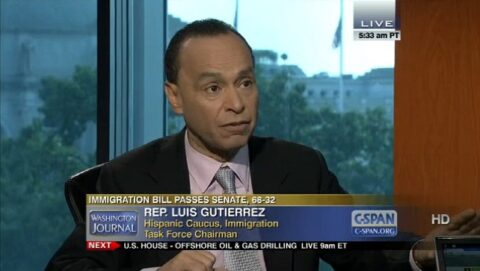
Now that the Senate has passed a sweeping measure to improve U.S. immigration policies, the attention turns to the House of Representatives, where it is unclear exactly when or how they will take up an immigration bill. The Associated Press reported that President Obama called House Speaker John Boehner (R-OH) and House Minority Leader Nancy Pelosi (D-CA) after the Senate vote to urge them to have the House act on an immigration bill. Earlier this week, Boehner said the House would not take up S. 744 and would do its own bill instead. If the House passed a separate immigration measure, then a conference committee with members from both chambers would meet to reconcile the differences. Read More

Is a Border Surge the Only Way to Pass Immigration Reform and Ensure Legalization?
During the second full week of debate on S. 744, momentum towards passage increased with a positive CBO score, the defeat of several poison-pill amendments, and the announcement of a Republican border amendment that is thought to bring ten to fifteen Republicans to “yes” on final passage. A series of critical cloture votes is likely to be filed over the next few days, paving the way for a final vote next Friday. Despite this news, the mood is not jubilant, as good policy seems to be losing to pragmatic politics. Read More
Border Security Amendments To Delay Legalization Harm Immigration Bill Efforts
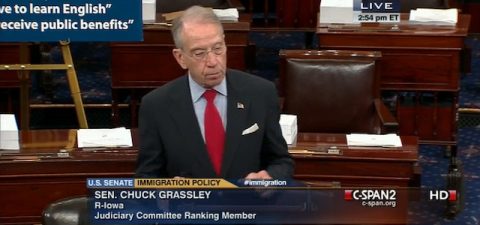
During The first full day of debate after the Senate approved a motion to proceed to S. 744, the Border Security, Economic Opportunity, and Immigration Modernization Act, several Senators sought to make the debate all about border security. In the process, they proposed amendments that tie border security increases to the start of the legalization program in ways that make legalization a virtually unattainable goal. One of these amendments is from Sen. John Cornyn (R-TX). His RESULTS amendment ties the fate of unauthorized immigrants who are already living in the United States, and who have applied for legalization, to the success of highly stringent border-enforcement measures in deterring future unauthorized immigration. However, applicants for legalization have no control over the ability of the federal government to maintain the integrity of U.S. borders, so there is no logical reason to link their legal status to border-enforcement metrics. The RESULTS amendment also mistakenly views immigration reform as a two-step process: enforcement, followed by legalization. However, the various components of immigration reform must be implemented simultaneously to maximize their effectiveness. The amendment breaks apart what should by a single, integrated revamping of U.S. immigration policy. Finally, the RESULTS amendment contains no mechanism for judging the feasibility or cost-effectiveness of the border-security measures and metrics that it would mandate. Read More

Congressional Opponents of Immigration Reform Demand Endless Increases in Border Security
Not surprisingly, the issue of border security is emerging as the biggest stumbling block to passage of the immigration reform bill now moving through the Senate. Conservative opponents of reform are refusing to support any measure that would grant legal status to unauthorized immigrants already in the country without first achieving that most nebulous of goals: “securing the border.” Yet the calls of these critics for “enforcement first” conveniently overlook the fact that the United States has been pursuing an “enforcement first” approach to border security for more than 20 years—and it has yet to work. Read More

How the Immigration Reform Bill Could Help Undocumented Farmworkers and Growers
Approximately 11 million undocumented immigrants could become eligible for legal status under S. 744, the immigration reform bill the Senate is considering, including millions of undocumented farmworkers. The importance of finding a way to create a legal workforce within the agriculture industry is critical, as undocumented farmworkers make up an estimated 53 percent of agriculture workers. Read More

Experts from Left and Right Agree on Economic Power of Immigration Reform
In recent years, study after study has demonstrated a simple yet economically powerful truth about broad-based immigration reform: workers with legal status earn more than workers who are unauthorized—and these extra earnings generate more tax revenue, as well as more consumer spending, which creates more jobs. As a new report from the Center for American Progress (CAP) points out, this fact implies that states with appreciable unauthorized populations stand to gain economically from immigration reform that includes a legalization program for the unauthorized. Moreover, a new open letter to Congressional leaders released by the conservative American Action Forum illustrates that it is not only liberal advocacy groups like CAP which recognize the economic potential of immigration reform. Read More
What Does the Success of the Mark-Up Tell us About the Coming Full Senate Vote on Immigration?
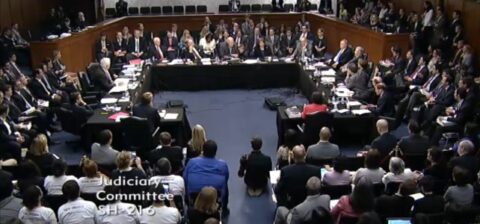
One year ago, with the presidential race in full swing and proponents of self-deportation making the headlines, it would have been difficult to predict the extraordinary vote that took place Tuesday in the Senate Judiciary Committee. Ten Democrats and three Republicans voted to pass S. 744 out of committee and send a comprehensive immigration bill to the Senate floor. This could never have happened without the overwhelming support for immigration reform that the public has shown, particularly since the November 2012 election. Even with that support, however, there was no guarantee that the long, slow process of negotiating and drafting a bipartisan bill that could succeed in committee (and then the Senate floor) would ever come to fruition. And once a bill is introduced, getting it through committee requires a mix of political acumen to keep the bill alive. Read More
All gifts are matched dollar for dollar
No one should face the immigration system alone