Janet Napolitano

More States Question Participation in ICE’s Secure Communities Program
Colorado Gov. John Hickenlooper questions state's participation in Secure Communities program Earlier this week, Massachusetts Governor Deval Patrick announced that the state of Massachusetts would not sign an agreement with the Department of Homeland Security to participate in the Secure Communities program, making it the third state in recent weeks to question participation in the controversial enforcement program. That chorus of concern, however, grew louder this week as Colorado Governor John Hickenlooper questioned whether the program—which shares the fingerprints of individuals booked into local jails with federal immigration databases—is being implemented properly in Colorado. Also this week, the Los Angeles City Council voted to support a resolution that allows communities to opt-out of Secure Communities, which many argue is targeting a broader swath of people than the dangerous criminals the program states as its intended target. Read More

DHS Announces Extension and Re-Designation of Temporary Protective Status for Haitians
Today, Department of Homeland Security (DHS) Secretary Janet Napolitano announced the extension and re-designation of Temporary Protective Status (TPS) for Haitians currently in the United States. The extension would allow approximately 48,000 Haitian nationals—whose homeland was devastated by an earthquake in 2010 and is still plagued by disease and instability—to extend their TPS for an additional 18 months. Additionally, the re-designation would allow Haitian nationals who have continuously resided in the United States through January 12, 2011 (that is, who arrived up to a year after the earthquake) to obtain TPS. The 18-month extension and re-designation would begin in July, allowing Haitian nationals to live and work in the U.S. until January 2013. Read More
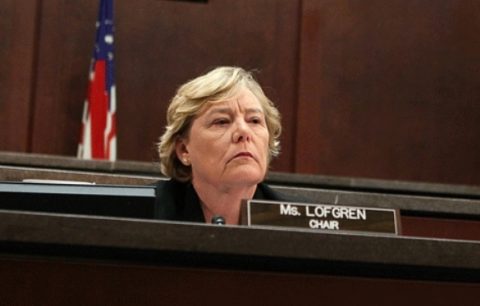
Congresswoman Zoe Lofgren Demands Investigation into ICE’s Secure Communities Program
Some would argue that ICE’s Secure Communities program has been fraught with problems ever since it launched in 2008—from concerns over the lack of federal oversight to questions regarding the criminality of immigrants targeted. But after months of back and forth over how and whether jurisdictions are able to opt-out of this immigration enforcement program (which shares the fingerprints of individuals booked into jails with federal databases), California Congresswoman Zoe Lofgren (D-CA) has had enough. This week, Rep. Lofgren called for an investigation into the actions of federal immigration officials whom she said lied about whether states and localities had the right to opt-out of the program. Read More
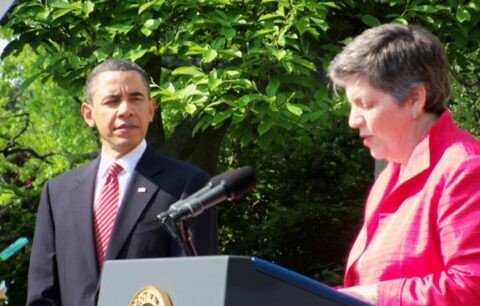
Two Years Under the Obama Administration, How Does DHS Measure Up?
Nearly two years ago, expectations ran high as President Obama took office and Secretary Napolitano took the reins of the Department of Homeland Security (DHS). In review of DHS’s first year under the Obama Administration, the Immigration Policy Center (IPC) found that while many promising changes were initiated, few were successful due to limiting political constraints. Today, two years out, we find a department still struggling to balance priorities, entrenched in an enforcement-heavy debate, claiming that without Congressional action, its hands are tied on administrative reforms. That claim, however, is inconsistent with the wide range of executive branch authority available to DHS and the President. Read More

Secure Communities Program Continues to Take Heat for Targeting Non-Criminals
At a conference last week, DHS Secretary Janet Napolitano raised a few eyebrows when she implied those who are fingerprinted through ICE’s Secure Communities program are presumably guilty of a crime—a particular sticking point considering the program’s reputation for sweeping up non-criminals. Although ICE officials claim the program targets criminal aliens, nearly 28% of people deported through the Secure Communities program are actually non-criminals. But that’s just one of the many problems immigrant advocate and community groups are voicing over this rapidly expanding program. Read More

House Subcommittee Hearing Highlights U.S. Need for Foreign Scientists and Engineers
Today, a House Immigration Subcommittee hearing underscored the U.S. economy’s reliance on scientists and engineers from abroad. The hearing, entitled “H-1B Visas: Designing a Program to Meet the Needs of the U.S. Economy and U.S. Workers,” was characterized by considerable disagreement among witnesses and subcommittee members as to how the H-1B program for highly skilled foreign professionals should best be structured in terms of wage protections and job portability. But virtually everyone, including Subcommittee Chairman Elton Gallegly (R-24th/CA) and Judiciary Committee Chairman Lamar Smith (R-21st/TX), agreed that foreign-born scientists and engineers, including many who come to the United States on H-1B visas, make critical contributions to the U.S. economy. Read More

White House Continues Drumbeat for DREAM
Amidst the steady stream of action by DREAM Act supporters over the last few weeks—candlelight vigils, hunger strikes, Hill visits—the White House has also upped its game, turning out its political heavyweights to emphasize the importance of DREAM. This morning, Under Secretary of Defense for Personnel and Readiness Dr. Clifford Stanley joined White House Director of Intergovernmental Affairs, Cecilia Munoz, to discuss how passage of the DREAM Act would benefit military readiness. This marks yet another showing of support by the Obama Administration in recent weeks as Secretary of Education Arne Duncan, Secretary of Commerce Gary Locke, Defense Secretary Robert Gates and Secretary of Homeland Security Janet Napolitano have all spoken publically on the benfits of DREAM. Although President Obama has always been a supporter of the bill, this heightened push is only the most recent evidence that immigration remains a priority for the White House—both on its merits and as a potent political symbol in 2012. The Senate is likely to vote on whether to invoke cloture on the DREAM Act tomorrow. Read More
Will Local Lawmakers Take the Immigration Enforcement Bait?
As local lawmakers begin to lay the groundwork for next year’s legislative agenda, some are attempting to prioritize immigration enforcement ahead of efforts to jump-start flagging economies. In Oklahoma, for example, an internal storm is brewing between a House Republican and the Speaker-elect about where the party’s “social agenda” (read: immigration enforcement) fits on the legislative priority list. Similar battles over whether to pursue Arizona-esque immigration enforcement legislation are abound in Virginia, Nevada, Florida, Colorado and California. While the actual enforcement legislation may differ from state to state, legislators are weighing the same questions—cost of implementation, lengthy court battles, divisiveness, public safety concerns and economic priorities. The question remains, however, given the federal challenge to Arizona’s SB1070 and economic loss due to boycotts, whether other state legislators will take the immigration enforcement bait? Read More
Kafka Revisited: Ninth Circuit Decision Protects Due Process Rights for Noncitizens
The basic tenet that you can’t be sued without knowing the charges against you and having a meaningful opportunity to defend yourself is a cornerstone of the U.S. judicial system. This concept of fundamental fairness ensures that people in courtrooms across the country have access to a discovery process that enables them to see the other side’s evidence. Plaintiffs and prosecutors are routinely required to produce documents that will be used to prove their cases so that defendants have a chance to respond. For too long, however, these kinds of procedures and protections have been denied to noncitizens in immigration court. Read More
U.S. Border Czar Calls on Congress to Get Serious about Immigration Reform
While some candidates continue to make political fodder out of immigration and border security on the campaign trail, administration officials are pushing Congress to get real about overhauling our broken immigration system. Customs and Border Protection (CBP) Commissioner, Alan Bersin, recently commented that Congress needs to ‘get serious about a post-election immigration overhaul if the nation is to deal with the duality of enforcing border security while facilitating trade.’ In the wake of the nation’s SB1070-inspired border frenzy, some may be surprised to learn that there’s more to immigration than targeting undocumented immigrants and securing the border. A big part of Bersin’s job also involves regulating the flow of trade and commerce across the border, as well as expediting travel—priorities that tend to get lost in empty debate over who's the toughest on undocumented immigration. Read More
All gifts are matched dollar for dollar
No one should face the immigration system alone