Rhetoric

Nativist Group Recycles Discredited Economic Arguments About Immigration
In a report released late last month, the Federation for American Immigration Reform (FAIR) rehashes a number of tired, discredited arguments about the impact of immigration on wages and job opportunities for native-born workers. The report, entitled Poverty and Low-Wage Earners, tries to discount the findings of numerous studies in recent years which have found that immigrants tend to complement rather than compete with native-born workers in the labor market, and that immigrant workers do not undermine wages for their native-born counterparts. FAIR pretends to refute these studies by misrepresenting their findings and their methodologies; creating caricatured “straw men” that can easily be knocked down. Behind that charade, however, a growing body of economic and demographic literature remains which demonstrates that immigrants do not “steal” jobs from natives, and do not create ruinous labor-market competition that drives down wages. Read More

New Americans Are Among the Nation’s Top Entrepreneurs, Report Says
Anyone who fails to recognize that immigration fuels a sizable chunk of the U.S. economy would be well-advised to read the report released this week by the Partnership for a New American Economy, entitled The “New American” Fortune 500. According to the report, two in five Fortune 500 companies (41%) “had at least one founder who was either an immigrant or raised by someone who immigrated to the United States.” Collectively, these companies had $4.2 trillion in annual revenues and employed 10.9 million people worldwide. This is compelling evidence, argues the report, that “immigrants and their children create American jobs and drive our economy.” Yet, the report concludes, our immigration laws all too often force immigrant workers and entrepreneurs away, rather than welcoming them. As New York City Mayor Michael Bloomberg recently put it, that amounts to “national suicide.” Read More

More Immigrants are Educated, Skilled Than Ever Before, Report Finds
A new report released by the Brookings Institution dispels the myth that all immigrants are unskilled, uneducated, and illegal. The report, entitled The Geography of Immigrant Skills: Educational Profiles of Metropolitan Areas, finds that the share of working-age immigrants in the United States who have at least a bachelor’s degree is greater than the share who lack a high-school diploma. Moreover, immigrants with college degrees outnumber immigrants without high-school diplomas by wide margins in more than two-fifths of the nation’s 100 largest metropolitan areas. Read More

CIS Report Marred by ‘Deception and Disorder’
By Anam Rahman In a report issued earlier today, the restrictionist Center for Immigration Studies (CIS) took aim at problems facing the U.S. immigration court system—a topic worthy of serious discussion. Unfortunately, as with many of CIS’ publications, today’s report combines dramatic rhetoric and unsubstantiated data with ill-conceived solutions. While it is unlikely the report will gain traction in Congress or the media, a few of its—and its author’s—shortcomings remain worth pointing out. Read More

The Wrong Side of History: Why the Anti-Immigrant Movement Will Always Lose
The anti-immigrant movement’s current motto could be “Desperate times call for desperate measures.” As evidence mounts that the demographic makeup of the country is changing, the current crop of immigration restrictionists know that they are gradually losing their committed base. Thus, they are pulling out every trick in the book to motivate that base to scream even louder. Most recently, House leaders of the movement tried to pit minorities, including Latinos, against immigrants by claiming that they are stealing all the low wage jobs. They are also trying to sell the point that America’s health care, public education and even environmental problems would all go away if we just deported 12 million people—desperate arguments, from a desperate group. Read More
Republicans Attempt to Change Outgoing Message on Immigration, Again
This week, the conflicting messaging on immigration from Republican politicians is particularly hard to follow. Voters can “press one” for Senator Lindsay Graham’s message that immigration reform is reality if we just pass a border bill; “press two” for Senator Orrin Hatch’s message that Utah voters want to welcome immigrants by stopping them from coming; or “press three” for House Republicans’ message that DHS shouldn’t spend any money on immigrant integration. While the first option at least acknowledges the importance of the growing immigrant voting bloc, the other two options do not. Read More
The Aftermath of the Ellensburg, WA Immigration Raid and Lessons from Past ICE Enforcement Efforts
BY JUAN PEDROZA, THE URBAN INSTITUTE* On Thursday morning, January 20, ICE agents descended on mobile homes in the Ellensburg area, east of Seattle, WA. Federal agents drove in with 11 search warrants and a helicopter search light, making simultaneous arrests at 22 different locations. The coordinated effort followed an investigation involving eight federal, county, and local law enforcement entities. ICE agents arrested 14 Mexican immigrants for criminal charges (for instance, using false documents or falsely claiming U.S. citizenship) and then 16 others for non-criminal "administrative" violations. But the aftermath of the recent raid in Ellensburg replayed familiar scenes of trauma from past enforcement efforts—enforcement efforts upon which ICE can and should improve upon. Read More
The Rally Against State Immigration Legislation Continues
A Washington Post article this week highlighted what many state business groups, law enforcement officers and concerned legislatures have been cautioning for months—at a time of economic uncertainty, states simply cannot afford the costly legal battles and political backlash caused by Arizona-style immigration legislation. Over the past month, SB1070 copycat bills in Colorado, Florida, Georgia, Indiana, Kentucky, Nebraska, Pennsylvania, South Carolina, South Dakota, Tennessee, Texas, and Utah, have been met with considerable hesitation and criticism from constituents worried about the social and economic impact on their state. Some states, like Mississippi and Wyoming, have even rejected initial versions of copycat bills due to high costs. But as other states consider enforcement legislation (California joined the fray this week, as did Georgia’s state Senate), those worried about how enforcement legislation will cost their state feel they can no longer afford to be quiet. Read More
Can Republican Group Convince GOP that their Current Strategy Spells Doom?
Retired Florida Rep., Lincoln Diaz-Balart. Over the weekend, a group of concerned Republican leaders gathered in Florida to discuss ways in which the GOP can repair their party’s muddied image among Hispanic voters. Participants at the Hispanic Leadership Network’s inaugural conference identified issues such as education, job creation and social values that could re-engage Hispanic voters who have been drifting away from the Republican Party at alarming rates. Other speakers, however, such as former Republican governor Jeb Bush and former Rep. Lincoln Diaz-Balart, argued that softening the harsh rhetoric on immigration and supporting positive immigration reform could help restore Hispanics voters’ faith. This message runs counter to the plans of immigration hardliners like Rep. Lamar Smith (R-TX), who by all reports plans to keep the focus on tough immigration enforcement in the House. And it’s not clear how well this “kinder, gentler” message will play with the nativist movement proposing restrictive enforcement legislation in the states. Unless there’s a hard stop to those strategies, it’s difficult to imagine how Republican can reestablish their party’s line of credit with Hispanic voters. Read More
Living the Legacy: MLK Day in 2011
Monday, Martin Luther King Jr. Day, is a day that provides Americans with the opportunity to reflect on our ongoing struggle for social justice and equality and a chance to renew our vision of what kind of country and people we want to be. This year, MLK Day falls in the middle of a profound period of grieving—not just for the victims of last weekend’s tragedy in Tucson, but for the entire country. Americans want to believe this nation has moved beyond the violence that seems common in many other countries around the world. We like to think of ourselves as a peaceful society that solves our political disagreements with civic solutions rather than violence and angry rhetoric. Yet many public voices fell short this week as politicians and pundits continued pointing fingers and putting each other on the defense. However, a few remarkable and unsuspected voices did emerge this week, giving us hope and reason to believe that we can rise above our worst instincts and learn from our mistakes. Read More
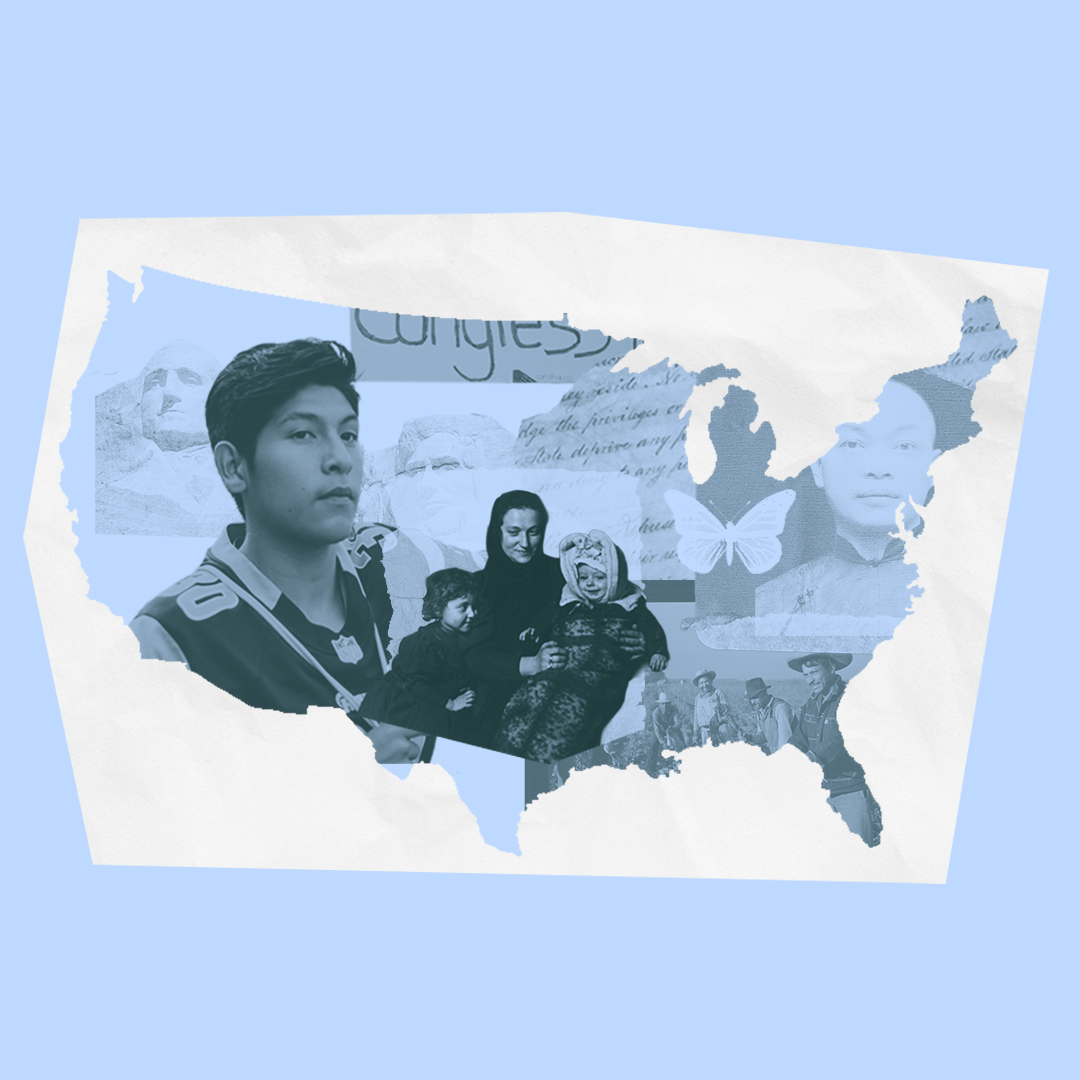
America's story is an immigrant story.