Immigration Reform

Republican Party Officially Backs Immigration Reform
Today, the Republican National Committee formally endorsed comprehensive immigration reform, bringing its position back in line with the Republican Party platform of 2004. Championing immigration reform was among the suggestions offered in a report released today about how the RNC can reinvent itself as part of a $10 million plan to reach out to minority groups. "We must embrace and champion comprehensive immigration reform," says one recommendation in the 100-page report, according to the Associated Press. "If we do not, our party's appeal will continue to shrink." Read More

Cato Report Finds Poor Immigrants Use Fewer Public Benefits than Natives
Among the most contentious debates surrounding national immigration reform concerns immigrant use of welfare programs. Opponents of immigration routinely assert low-skilled immigrants consume more public resources than natives, thereby imposing an unfair fiscal burden on U.S. taxpayers. Read More

Recognizing Immigrant Women’s Needs in Immigration Reform
While the recent debate over reauthorization of the Violence Against Women Act and the Trafficking Victims Protection Act may have reminded the nation that there are “women’s issues” in immigration law, it doesn’t necessarily follow that most people regard immigration reform as a woman’s issue. Despite the fact that immigrant women make up a growing share of workers, entrepreneurs, single heads of households, and new voters—while remaining primary caregivers in families—the laws we craft to reform our broken immigration system have often been insensitive to the obstacles and challenges immigrant women face in applying for immigration status. Read More

State Level Immigration Legislation and the Essential Economy
We often take for granted the important role “behind the scenes” workers – farm labor, restaurant work, and home health care – play in driving our economy. That’s one of the many conclusions of a new report from the Essential Economy Council, which studied the economic and social value of industries that make up what they have coined the “essential economy.” The report identifies six industrial sectors important to our daily way of life, including: agriculture and poultry; hospitality and restaurants; light construction and landscaping; personal care and assisted living; building maintenance and facilities service; and distribution and logistics. For the state of Georgia, the essential economy is a significant component of the state’s overall economy. In particular, the essential economy contributed 12 percent ($49 billion) to Georgia’s GDP in 2010; contributed over $114 million in sales tax in 2011; employed just under one million out of 3.7 million workers in Georgia in 2011; and is present in every country in the state. Read More

Jeb Bush Backs Away From Mainstream With His Opposition To A Path To Citizenship
Former Florida Gov. Jeb Bush (R) has been a longtime supporter of comprehensive immigration reform, so it caught many off guard this week when, in his new book, Bush came out against a path to citizenship for the 11 million undocumented immigrants living in the U.S. “It is absolutely vital to the integrity of our immigration system that actions have consequences -- in this case, that those who violated the law can remain but cannot obtain the cherished fruits of citizenship," Bush argues in the book, Immigration Wars: Forging an American Solution, which was co-authored with lawyer Clint Bolick. “To do otherwise would signal once again that people who circumvent the system can still obtain the full benefits of American citizenship.” Instead, Bush and Bolick write, undocumented immigrants should not be allowed to apply for citizenship until they return to their countries of origins. Read More

Reaching the Six-Month Mark on Deferred Action for Childhood Arrivals (DACA)
The Department of Homeland Security has issued its latest data on the Obama Administration’s initiative that offers deferment from deportation and temporary work permits to young undocumented immigrants under the Deferred Action for Childhood Arrivals (DACA) initiative. In the first six months of the program (August 15–February 14), 423,634 out of the roughly 936,933 immigrants between the ages of 15 and 30 who might immediately meet the requirements, have had their applications accepted for processing. In other words, approximately 45% of those potentially eligible for the program have applied in the first six months. In addition, since February, 199,460 individuals have been approved for DACA and will receive two-year temporary work permits. Read More
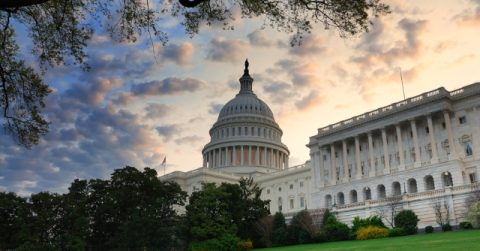
Bipartisan Signals Show Lawmakers Are Seizing The Opportunity On Immigration Reform
After more than a decade of being overshadowed by other events and political causes, there is a distinct opportunity now for Congress to reform our nation’s immigration laws. Voters signaled in the 2012 federal elections that they were tired of enforcement-only immigration policies, record-setting deportations, and the senseless pain they caused by separating families. Now, it seems that lawmakers from both sides of the aisle are coming together to figure out how to fix the broken immigration system. Read More

Can A Nation Have Too Many Smart People?
A February 8 op-ed in the New York Times entitled “America’s Genius Glut” argues that America already has too many high-tech workers, and thus does not need more scientists and engineers from abroad. It is a surprising claim that is at odds not only with the empirical evidence, but is out of touch with the dramatic shift in recent years towards a knowledge-based global economy. The United States is not actually suffering from a surplus of intelligent people, nor is it being economically drained by the presence of intelligent people who were born in other countries. In fact, the U.S. high-tech economy would not exist in its present form if not for the contributions of innovators and entrepreneurs from every corner of the globe. Despite arguments to the contrary, scientists and engineers who come to this country on H-1B visas are an integral part of that high-tech economy. Read More

Senators Unveil Framework for Effective Immigration Reform
Eight Senators today released a “Bipartisan Framework for Comprehensive Immigration Reform” which proposes an overhaul of our legal immigration system while expanding border security measures and hardening current employment verification procedures. Most notably, the proposal would give unauthorized immigrants already in the country a chance to earn U.S. citizenship. Although the framework is only a very rough outline of what comprehensive immigration reform legislation might look like, the principles it espouses constitute an excellent starting point for the legislative negotiations that will now being in earnest. The Senators involved in the negotiations—Democrats Chuck Schumer (NY), Dick Durbin (IL), Bob Menendez (NJ), and Michael Bennet (CO); and Republicans John McCain (AZ), Marco Rubio (FL), Lindsey Graham (SC), and Jeff Flake (AZ)—outlined four “legislative pillars” for immigration reform: Read More

A Clash of Conservatives in Kansas
Anti-tax crusader Grover Norquist came to Topeka this week to serve as a counterweight to Kansas Secretary of State Kris Kobach in the national debate over immigration reform. Norquist, the president of Americans for Tax Reform, is best known for persuading congressional Republicans to sign his anti-tax pledge. However, he is also an opponent of restrictive and punitive immigration policies. Kobach, on the other hand, has used his perch as Kansas Secretary of State to travel the country touting the evils of unauthorized immigration and drafting various and sundry state laws that crack down on anyone who looks like an unauthorized immigrant. Read More
America's story is an immigrant story.