Immigration Raids

New Yorker Profile of Joe Arpaio is Not a Pretty Picture
The July 20th issue of The New Yorker paints a detailed portrait of Maricopa County, Arizona’s Sheriff Joe Arpaio—and it is not a pretty picture. The profile of “Sheriff Joe” that emerges from the story by journalist William Finnegan is that of a man obsessed with publicity and self-promotion, who has a deep streak of sadism and little regard for the U.S. Constitution, civil rights, actual crime-fighting, or protecting the safety of the public he ostensibly serves. While Arpaio persists in his personal crusade against unauthorized immigrants, serious crimes go unsolved, emergency-response times climb, and the rights of native-born Americans and immigrants alike are routinely trampled in the process. The most remarkable aspect of this story is that Arpaio is still legally permitted to carry a badge and a gun after more than a decade and a half of egregiously abusing his power. Read More
New Yorker Profile of Joe Arpaio is Not a Pretty Picture
Photo by TheRagBlog. The July 20th issue of The New Yorker paints a detailed portrait of Maricopa County, Arizona’s Sheriff Joe Arpaio—and it is not a pretty picture. The profile of “Sheriff Joe” that emerges from the story by journalist William Finnegan is that of a man obsessed with publicity and self-promotion, who has a deep streak of sadism and little regard for the U.S. Constitution, civil rights, actual crime-fighting, or protecting the safety of the public he ostensibly serves. While Arpaio persists in his personal crusade against unauthorized immigrants, serious crimes go unsolved, emergency-response times climb, and the rights of native-born Americans and immigrants alike are routinely trampled in the process. The most remarkable aspect of this story is that Arpaio is still legally permitted to carry a badge and a gun after more than a decade and a half of egregiously abusing his power. Read More
Rise in Latino and Asian Voters Marks Significant Change in Political Landscape
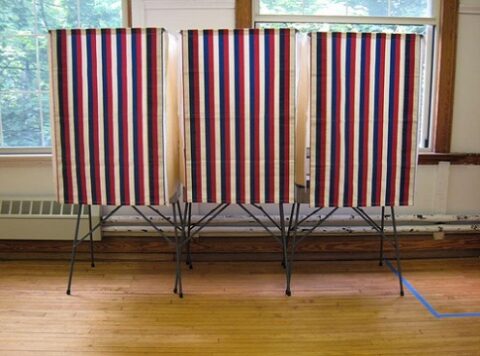
Today, the U.S. Census Bureau published new data, Voting and Registration in the Election of 2008, which tracks demographic characteristics of the 131 million U.S. citizens who reported that they voted in the 2008 presidential election. The Census Bureau’s new data set shows a significant increase of about 5 million voters from the 2004 presidential election—including 2 million more Latino voters and 600,000 more Asian voters. Relative to the presidential election of 2004, the voting rates for blacks, Asians, and Latinos each increased by about 4 percentage points. The voting rate for non-Latino whites decreased by 1 percentage point. Read More
CIS Proposes Unique Approach to Union Organizing
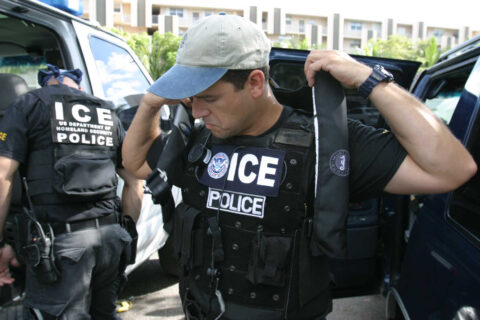
What’s the best way to help workers form a union in a workplace where managers have spent years wantonly violating labor laws by threatening and intimidating workers into resisting unionization? If you’re the Center for Immigration Studies (CIS), the answer would seem to be “get rid of the workers.” At least, that is one of the main recommendations contained within a rather confusing new CIS report on the aftermath of the January 2007 immigration raids conducted by Immigration and Customs Enforcement (ICE) agents at the Smithfield pork plant in Tar Heel, North Carolina. Holding up Smithfield as a prototype for the nation, the CIS report vaguely suggests that destructive immigration raids and a flawed electronic employment-verification system will not only succeed in draining millions of unauthorized immigrants from the United States, but bolster unionization for American workers, too. These are fanciful notions at best. Read More

Bridging the Black Brown “Divide” with Facts
Anti-immigrant groups have repeatedly tried to drive a wedge between African Americans and immigrants by capitalizing on the myth that immigrants take American jobs—particularly jobs that would otherwise go to African Americans. That myth, as anti-immigrant groups present it, is simply not true, says Gerald Jaynes, a professor of Economics and African American Studies at Yale University. In a new Perspectives piece for the Immigration Policy Center, A Conversation about the Economic Effects of Immigration on African Americans, Jaynes dispels the myth that immigrants take “black jobs” and instead suggests we find solutions on how to lift up all low-wage American workers. Read More

Policy or Politics? DHS Changes and Expands 287(g) Program
Last Friday, Department of Homeland Security (DHS) Secretary Janet Napolitano announced changes to the controversial 287(g) program—a program which allows state and local police agencies to partner with ICE to enforce federal immigration laws. DHS also announced that, rather than waiting for the new policies to be implemented and tested, it has expanded the problematic 287(g) program with 11 new Memoranda of Agreement (MOAs). The 287(g) program has been broadly criticized by immigrant and civil rights advocates, religious leaders, elected officials and the police themselves. Numerous reports from think tanks, academics, community organizations and police associations have shown that the 287(g) program costs valuable resources, results in mistakes and racial profiling, does not effectively control illegal immigration, and makes it more difficult for the police to serve and protect their communities. Even the government found fault with how the program was being implemented. A March 2009 report by the Government Accountability Office (GAO) found the 287(g) program did not have clear goals and objectives and lacked consistent supervision. Read More

Politics as Usual: Senate Amendments Make Bad Policy, but Great Theater
It’s time to take a deep breath and recognize that you can rarely take Senate votes at face value when it comes to immigration. The amount of posturing and political preening that goes on is directly proportionate to how close we really are to pushing a substantive immigration proposal. So, what have we seen this week? Senator Schumer announces that there will be a comprehensive immigration reform bill by Labor Day. That’s good policy. The Council on Foreign Relations says comprehensive immigration reform is vital to our nation’s interests. Also good policy. Enforcement only amendments win on the Senate floor—bad policy, but great political theater. Unfortunately, political theater is often hard for politician to resist when they are dealing with complex issues that defy simple solutions. Read More

Obama Administration Begins Rolling Back Midnight Regulations Left by Bush Administration
While a bill that would reform our immigration system waits in queue behind other issues, like healthcare and climate change, the new Administration has begun a good faith effort to right some of the most egregious wrongs left by the former White House. For example, last week Secretary Napolitano suspended the Bush administration’s policy of deporting widows of fallen U.S. soldiers. The Wall Street Journal reported: Only a few hundred people were at risk of deportation under the policy, but critics viewed it as one of the most painful consequences of President George W. Bush's immigration crackdown. Under the current interpretation of federal law, some immigrants whose American spouses had died faced possible deportation because their legal status was in limbo. The clause, known as the "widow penalty," had resulted in a spate of lawsuits. Read More
Administration Begins Rolling Back Midnight Regulations Left by Bush Administration
Photo by lombardi. While a bill that would reform our immigration system waits in queue behind other issues, like healthcare and climate change, the new Administration has begun a good faith effort to right some of the most egregious wrongs left by the former White House. For example, last week Secretary Napolitano suspended the Bush administration’s policy of deporting widows of fallen U.S. soldiers. The Wall Street Journal reported: Only a few hundred people were at risk of deportation under the policy, but critics viewed it as one of the most painful consequences of President George W. Bush's immigration crackdown. Under the current interpretation of federal law, some immigrants whose American spouses had died faced possible deportation because their legal status was in limbo. The clause, known as the "widow penalty," had resulted in a spate of lawsuits. Read More

Anti-immigrant Bills Fail at the State and Local Level
One result of Congress’s failure to pass comprehensive immigration reform is an increased focus on immigration by state legislatures. The federal government has been unable to legalize the undocumented population, enact smart enforcement, and deal with the future immigration of workers and family members. States and localities, then, are left in the position of trying to deal with their new immigrant communities. While some states and localities have pushed measures to integrate newcomers into their communities, others have tried to enact harsh immigration-control measures such as deputizing police to enforce immigration laws, requiring employers to verify employment authorization through the flawed E-Verify program, and denying public benefits to immigrants. Read More
America's story is an immigrant story.