Hearings

Will New USCIS Memos Confuse House Judiciary Committee Again?
One of the significant lessons of 2013 is that good immigration policy matters to the American public. It’s unfortunate, then, that the House Judiciary Committee is choosing to end its year focusing not on immigration reform, but on how best to take the President to task for making use of executive authority. Read More

House Judiciary Chairman Says Immigration Bills Are ‘Ready To Go’
House Judiciary Committee Chairman Bob Goodlatte (R-VA) has proven what a difference a few weeks can make for immigration reform. As Congress returns this week to a packed schedule, Goodlatte told WAMU’s Kojo Nnamdi on Tuesday that congressional fights over Syria and the debt limit “should not deter us from getting to [immigration] as soon as possible.” He said his committee and others have already passed smaller immigration bills relating to border security, internal enforcement, guest workers, and high-tech visas, and there could be votes on these measures as soon as October. “Those bills are ready to go to the floor of the House and it’s my hope they come to the floor of the House as soon as possible,” he said on the Kojo Nnamdi Show. Read More

Hearing Highlights Similarities Between Senate Immigration Bill and House Border Bill
Ostensibly, the July 23rd hearing of the House Homeland Security Subcommittee on Border and Maritime Security was about the many differences between the Senate’s immigration-reform bill and the House’s border-enforcement bill. The hearing was even titled “A Study in Contrasts: House and Senate Approaches to Border Security.” However, while highlighting very real differences between the House and Senate approaches to immigration reform, the hearing inadvertently shed light on the many similarities between the two when it comes to border security. Both pieces of legislation embrace possibly unworkable border-enforcement goals that have more to do with unauthorized immigration than with the primary threats to border security: the transnational “cartels” that smuggle people, drugs, guns, and money in both directions across the border. Read More

The Civics Lessons Many Undocumented Immigrants Have Already Learned
If the Senate’s comprehensive immigration reform bill becomes law, many undocumented immigrants who apply for and become Registered Provisional Immigrants (RPIs) would have to pass an English and civics test before becoming Lawful Permanent Residents (LPRs). These tests are administered so New Americans can show their commitment to this country by demonstrating that they speak English and understand the basic tenets of our democracy. Although the test is a formal set of questions about American democracy—How many branches of government? Who was the first President? What is the Declaration of Independence?—the work leading up to passage of the Senate bill was itself a lesson in democracy. For many immigrants who may one day be RPIs, their participation in efforts to pass legislation shows that they have already participated in their first civics lesson. Read More
Spotlight Moves to House After Senate Approves Immigration Bill
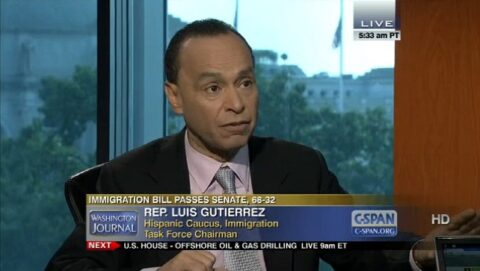
Now that the Senate has passed a sweeping measure to improve U.S. immigration policies, the attention turns to the House of Representatives, where it is unclear exactly when or how they will take up an immigration bill. The Associated Press reported that President Obama called House Speaker John Boehner (R-OH) and House Minority Leader Nancy Pelosi (D-CA) after the Senate vote to urge them to have the House act on an immigration bill. Earlier this week, Boehner said the House would not take up S. 744 and would do its own bill instead. If the House passed a separate immigration measure, then a conference committee with members from both chambers would meet to reconcile the differences. Read More

House Immigration Bill Promotes Old Model Immigration Solutions
Today the House held a hearing on H.R. 2278, the "Strengthen and Fortify Enforcement Act" (the SAFE Act), which is designed, as its name suggests, to be a lopsided, enforcement-only bill that imposes additional criminal penalties, border security, and detention and deportation, while encouraging discredited policies such as self-deportation and state interference with immigration law. Instead of these old enforcement-only policies, which do not work, what is needed is a comprehensive solution that fixes our broken legal immigration system and provides a path to earned legalization. Read More
Procedural Path Of The Senate Immigration Bill
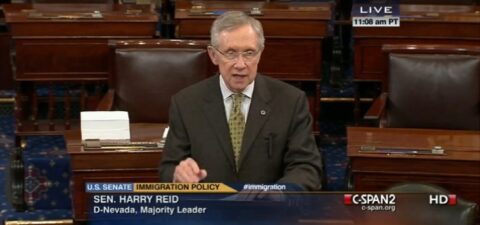
The Senate immigration reform debate has officially begun. Senate Majority Leader Harry Reid (D-NV) filed cloture on the motion to proceed Thursday on S. 744, the “Border Security, Economic Opportunity, and Immigration Modernization Act,” the first step to having the full Senate debate the measure after the Senate Judiciary Committee approved it a few weeks ago. Senators started to make their cases for and against the bill during floor speeches on Friday. On Tuesday, the Senate will vote to end debate on the motion to proceed to the immigration bill at 2:15 p.m. Tuesday and then vote to proceed at 4 p.m. Read More

Congressional Opponents of Immigration Reform Demand Endless Increases in Border Security
Not surprisingly, the issue of border security is emerging as the biggest stumbling block to passage of the immigration reform bill now moving through the Senate. Conservative opponents of reform are refusing to support any measure that would grant legal status to unauthorized immigrants already in the country without first achieving that most nebulous of goals: “securing the border.” Yet the calls of these critics for “enforcement first” conveniently overlook the fact that the United States has been pursuing an “enforcement first” approach to border security for more than 20 years—and it has yet to work. Read More

How the Immigration Reform Bill Could Help Undocumented Farmworkers and Growers
Approximately 11 million undocumented immigrants could become eligible for legal status under S. 744, the immigration reform bill the Senate is considering, including millions of undocumented farmworkers. The importance of finding a way to create a legal workforce within the agriculture industry is critical, as undocumented farmworkers make up an estimated 53 percent of agriculture workers. Read More
What Does the Success of the Mark-Up Tell us About the Coming Full Senate Vote on Immigration?
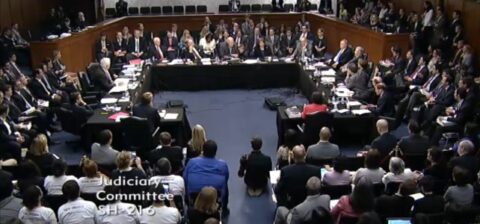
One year ago, with the presidential race in full swing and proponents of self-deportation making the headlines, it would have been difficult to predict the extraordinary vote that took place Tuesday in the Senate Judiciary Committee. Ten Democrats and three Republicans voted to pass S. 744 out of committee and send a comprehensive immigration bill to the Senate floor. This could never have happened without the overwhelming support for immigration reform that the public has shown, particularly since the November 2012 election. Even with that support, however, there was no guarantee that the long, slow process of negotiating and drafting a bipartisan bill that could succeed in committee (and then the Senate floor) would ever come to fruition. And once a bill is introduced, getting it through committee requires a mix of political acumen to keep the bill alive. Read More
America's story is an immigrant story.