Healthcare

Annual Review of State-Level Immigration Policy Still Trending Pro-Immigrant
After long legal battles over punitive, state anti-immigration laws like Arizona’s SB1070 and Alabama’s HB56, state governments learned the limits on what types of immigration policies they can set at the local level. Since then, states have begun moving in a new direction by more generally enacting state immigration laws… Read More

Without Legalization, State Policies Remain Crucial to Healthy Communities
In the absence of meaningful immigration reform to address the situation of the millions of undocumented individuals living in the United States, state policies have become more and more important. One of the areas in which that is especially true is public health. It is unquestionable that healthy communities require broad access… Read More
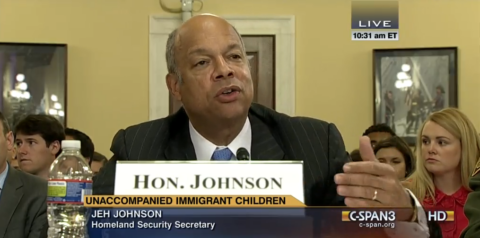
Not All Members of Congress Recognize the Nation’s Role in Protecting Unaccompanied Minors
The House Committee on Homeland Security held a hearing today entitled, “Dangerous Passage: The Growing Problem of Unaccompanied Children Crossing the Border.” Committee members questioned the Department of Homeland Security (DHS) Secretary Jeh Johnson on the growing humanitarian crisis at our southern border. Thousands of children from Central America… Read More

Mission Not Yet Accomplished: The Affordable Care Act and Immigrants
By Jenny Rejeske, Health Policy Analyst at the National Immigration Law Center. In the fall, Jirayut Latthivongskorn—known as “New” to friends and family—will make history. He’ll get one step closer to achieving his educational dreams by becoming the first DACAmented student at the renowned University of California-San… Read More

Why 2013 Was the Year of Positive State Immigration Measures
States took the lead on immigration reform in 2013, and compared to previous years, the majority were positive measures to help integrate and improve the day-to-day lives of immigrants in their respective states. According to the National Conference of State Legislatures’ (NCSL) 2013 Immigration Report, 45 states passed 184 immigration-related laws in 2013 and adopted 253 resolutions. The number of immigration measures in 2013 is a 64 percent increase over 2012, a year when many states were waiting to see the Supreme Court’s decision on Arizona’s SB 1070. Also in 2012, the Department of Homeland Security began offering temporary legal status to young undocumented immigrants under the Deferred Action for Childhood Arrivals policy sending a message to states that the federal government was serious about finding ways to normalize the status of the nation’s undocumented population. Read More

New Legal Analysis Shows State Compliance with ICE Detainers May Violate the Constitution
Chicago, New York, and San Francisco now prevent local jails from honoring immigration detainers—requests from federal immigration officials for state and local jails to hold a person so that Immigration and Customs Enforcement (ICE) agents can investigate the person’s immigration status—unless an arrestee has been charged with or convicted of certain criminal offenses. And California’s Trust Act, which does virtually the same thing, will go into effect early next year. Yet, while these states have limited who can be subject to an immigration detainer, there are legal questions surrounding this selective enforcement that call into question whether detainers are legal at all. Read More

Licensing Barriers Leave Immigrant Doctors Driving Cabs Instead of Practicing Medicine
Instead of putting foreign medical and other advanced degrees to use in the United States, it is common among immigrant doctors and other professionals to work less skilled jobs, such as a taxi driver or waiter, because the complicated licensing process keeps them from applying their training in the U.S. market. According to a recent Migration Policy Institute (MPI) series of reports on improving credential recognition, the United States is experiencing a “brain waste” by preventing immigrants living in the country from efficiently transferring their foreign credentials. MPI’s most recent report concludes their series by exploring prospects for international recognition of foreign qualifications. Read More

Keeping CBP In Line With Proposed Reforms
In May 2010, Congress submitted a request to the Department of Homeland Security (DHS) for a review of U.S. Customs and Border Protection’s (CBP) policy on the use of force by border patrol agents. Drawing on recommendations from a hard-hitting report by DHS’s Office of Inspector General, as well as an internal review and an independent evaluation by the Police Executive Research Forum (PERF), CBP announced compliance with a handful of proposed reforms to its use of force policy. Read More

Report: ICE Officers Fail to Report Some Sex Abuse Claims
Immigration and Customs Enforcement (ICE) officers failed to report numerous allegations of sexual abuse over the last four years, according to a recent report from the Government Accountability Office (GAO). Between October 2009 to March 2013, ICE headquarters received reports of 215 allegations of sexual abuse and assault, but a GAO audit of 10 of those facilities found an additional 28 allegations—40 percent more than the 70 allegations reported by these facilities. Read More

ICE Will Not Use Health Care Application Information for Immigration Enforcement Purposes
Last Friday U.S. Immigration and Customs Enforcement (ICE) issued a clarification stressing that information provided by those applying for insurance under the Affordable Care Act will not trigger immigration enforcement. Undocumented immigrants are not eligible for health care under the Affordable Care Act (ACA); however, this clarification should bring peace of mind to mixed-status families. Eligible members of those families will now be able to seek coverage under the ACA without fear of placing some family member at risk of deportation. Read More
America's story is an immigrant story.