Executive Branch
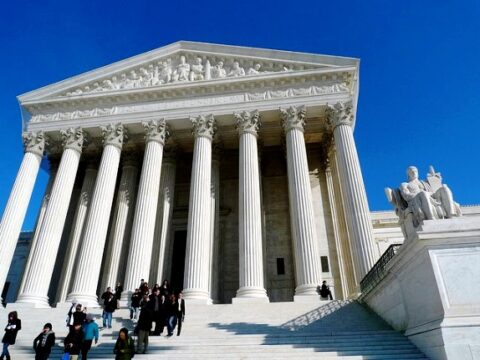
Supreme Court to Weigh in on Injunctions Against Arizona SB 1070
Earlier today, the Supreme Court announced what many supporters and opponents of Arizona SB 1070 long expected: that the Justices will themselves have the final word on the validity of the injunctions entered shortly after the law was enacted last year. Technically, the question before the Justices is simply whether four of the law’s provisions should be temporarily blocked pending resolution of a larger legal challenge. In addition, the Court will not consider claims raised in a separate lawsuit by numerous immigrants’ and civil rights groups. But in the decision it ultimately issues, the Supreme Court may well provide broad guidance about what role, if any, local police may play in enforcing federal immigration law—which could in turn affect legal challenges to copycat laws in other states, such as Alabama. Read More

New Report Shows Immigrant Women Entrepreneurs Create Jobs and Contribute to Economy
Economists readily acknowledge the economic contributions of immigrant entrepreneurs to the U.S. After all, we wouldn’t have one-quarter of all public companies in the U.S.—companies like Google, Yahoo!, and Intel which employed 220,000 people and generated more than $500 billion in one year—without them. But lost in that acknowledgement are the contributions of immigrant women entrepreneurs who last year made up 40% (or 980,575) of all immigrant business owners in the U.S. This week, a new report, Our American Immigrant Entrepreneurs: The Women, takes a closer look at these women and examines the obstacles and pathways to establishing successful businesses—businesses that have created American jobs and generated millions in taxable revenue. Read More

House Subcommittee Hearing Underscores Problems with Secure Communities Program
Congressman Steve King (R-IA), Subcommittee on Immigration Policy & Enforcement. Today, the House Immigration Subcommittee held a hearing on the Secure Communities program (S-Comm)—an enforcement program that has been rife with controversy since its inception in 2008. Today’s hearing featured statements from a variety of witnesses and members of Congress which further underscored the problems inherent with the program and immigration enforcement in general. S-Comm is currently active in more than 1,700 jurisdictions and is on target to be nationwide by 2013. Read More

Thousands Rally for Repeal of Alabama’s Extreme Anti-Immigrant Law
Thousands gathered outside the historic 16th Street Baptist Church in Birmingham, Alabama yesterday to demand the repeal of the state’s harsh anti-immigration law, HB 56. Religious, community and civil rights leaders, as well as a special Congressional delegation, urged state legislators to bring an end to Alabama’s immigration law—a law which continues to slow state businesses, separate families and drive immigrants from the state. The Congressional delegation also held an ad hoc hearing at Birmingham City Hall to hear how the controversial law is effecting state residents, especially the Latino and immigrant communities where, according to Rep. Luis Gutierrez, “the feeling of danger and despair is palpable.” One Congressional member, Rep. Al Green of Texas, commented that the law "deserves to be placed on the trash heap of history." Read More

DHS Begins Review of Deportation Cases, Issues Awaited Prosecutorial Discretion Guidelines
Today, the Department of Homeland Security (DHS) directed ICE attorneys to begin a review process of current immigration cases pending before immigration courts in order to close or dismiss those cases warranting prosecutorial discretion. The attorneys also received additional guidance on how to apply discretion in certain low priority cases. At the same time, DHS announced new training modules for all ICE field agents on prosecutorial discretion. The package of initiatives are a follow up to ICE Director John Morton’s June 17th memo which describes how, when, and why ICE officials should exercise prosecutorial discretion in immigration cases. Read More
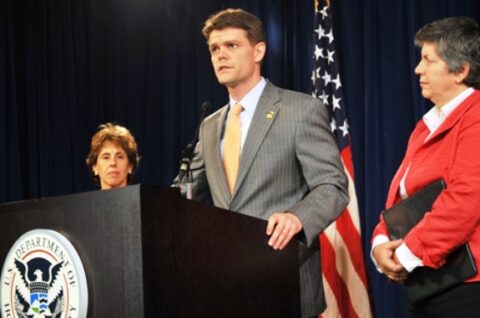
Prosecutorial Discretion Survey Demonstrates Need for More Training, Consistency Across ICE Field Offices
It’s been almost six months since ICE Director John Morton issued new guidelines on prosecutorial discretion to help ICE agents, attorneys and other officials distinguish between high priority cases (national security threats and serious criminals) and low priority cases (DREAM Act students). A recent survey released by the American Immigration Lawyers Association (AILA) and the American Immigration Council takes a look at how well those guidelines are translating into actual practice at ICE offices around the country. While the results show that prosecutorial discretion was applied in some cases, the majority of cases show that ICE field offices are confused and hesitant to make decisions, demonstrating the need for more guidance and training from DHS headquarters. Read More

Non-Citizens Eager to Serve in U.S. Military Blocked by Government Bureaucracy
BY MARGARET D. STOCK, COUNSEL TO THE FIRM, LANE POWELL PC This Veterans Day, we celebrate those who have proudly served in the U.S. military, including immigrants. Immigrants have long served in all branches of the U.S. military as infantry soldiers, medics, foreign-language translators, and in every other job open to them. At last count, foreign-born service members made up about 8% of the 1.4 million military personnel on active duty. However, some highly qualified non-citizens have been blocked from serving due to the Obama Administration’s suspension of a recruiting program called the Military Accessions Vital to the National Interest (MAVNI). Frustrated by the government bureaucracy responsible for halting MAVNI, those non-citizen volunteers are petitioning the government in hopes of reopening the program. Read More

Remembering the Benefits of IRCA, 25 Years Later
Twenty five years ago this week, President Ronald Reagan signed the Immigration Reform and Control Act (IRCA), an immigration reform bill which, despite a contentious debate, managed to pass a Republican Senate and a Democratic House. In fact, Reagan called the immigration bill one of the “most difficult legislative undertakings of recent memory” but one that “further generations of Americans” would “be thankful for.” And Reagan wasn’t wrong. Despite criticisms from both restrictionists and advocates that IRCA failed to address future waves of immigration, the benefits of IRCA—as well as the bipartisan support needed to pass it—should give our current congressional leaders something to think about. Read More

Thousands of Children Stuck in Foster Care after Parents Deported, Report Finds
A report released this week reveals yet another devastating consequence of the enforcement-only approach to immigration—a startling number of children whose parents have been detained and deported are placed in foster care and face enormous barriers reuniting with their families. According to the Applied Research Center, 1 in 4 people deported in FY 2011 (nearly 100,000 people) left behind a U.S. citizen child. The report found that the odds of reuniting the families are so low that the parents “basically fall off the face of the earth when it comes to the child welfare system.” Sadly, because of the regular increase in the number of annual deportations, this number is expected to triple in the next five years. Read More

How Will DHS Continue to Partner on Existing State Enforcement Programs Given Legal Challenge to Alabama’s Law?
Today, several newspapers reported on DHS Secretary Janet Napolitano’s statement that the federal government is not going to help Alabama implement its new immigration law, leaving many to wonder how the federal government will continue running existing state and local immigration enforcement programs like Secure Communities. On one hand, the federal government has sued Alabama claiming that its immigration law (HB 56) is unconstitutional. On the other, the federal government regularly partners with state and local police agencies to identify unauthorized immigrants for potential deportation. Secretary Napolitano now faces the difficult decision of what DHS will do with unauthorized immigrants in Alabama who may have been picked up under the new law. Read More
America's story is an immigrant story.