Department of Justice

Obama Administration Files Suit Against Arizona Sheriff Joe Arpaio
Earlier today, the Department of Justice filed suit against Sheriff Joe Arpaio and the Maricopa County (AZ) Sheriff’s Office alleging a pattern and practice of discriminatory behavior against Latinos. According to the complaint, officers under Arpaio’s command targeted Latino drivers during traffic stops and neighborhood sweeps, and used ethnic slurs against Latino inmates with limited English proficiency in county jails. The suit, which was filed in federal court in Arizona, comes five months after the Department’s Civil Rights Division issued a report based on an extensive investigation that contained similar findings. Read More

Justice Department Says Alabama Immigration Law Disrupts Access to Public Education
While eyes remain fixed on the Alabama legislature’s effort to revise their immigration enforcement law, HB 56, the U.S. Department of Justice informed state officials in a letter last week that the state’s immigration law has resulted in significantly higher absence rates among Latino students. According to the letter, more than 13 percent of Latino schoolchildren in Alabama withdrew from classes between the start of the school year and February 2012. While the Department’s investigation is still ongoing, the letter said Alabama could lose federal funding and face additional litigation if it fails to revoke a provision of HB 56 that requires administrators to determine the immigration status of newly enrolling students. Read More

Supreme Court Asks Hard Questions at Oral Arguments Over Arizona SB 1070
Almost two years to the day after Arizona enacted the notorious immigration law known as SB 1070, the Supreme Court heard arguments in what could be the first of many cases over the validity of the measure. Although most critics of the law have focused on its potential for civil rights violations, the only question before the Justices was whether federal immigration laws “preempt” four provisions of SB 1070 that were blocked by lower courts. While the ultimate fate of those provisions will not be known until a ruling is announced, a few preliminary observations can be made based on the questions posed by the Justices. Read More

Does the Punishment Fit the Crime? Experts Examine “Proportionality” and “Discretion” in Our Immigration System
As immigration becomes an ever more controversial part of the American debate, conversations often turn to details about legislation and court battles rather than questioning whether fundamental principles of justice are being applied throughout our immigration system. Two new reports released today, however, address some of these key principles, such as the idea of proportionality (whether the punishment fits the crime in immigration court) and the idea of discretion (how and when immigration law is applied). While these reports probe different areas of immigration law, they both represent a new way of thinking about how our immigration system functions, or at least should be functioning, today. Read More
In Fight Over SB 1070, Arizona Makes an All-Too-Familiar Case to the Supreme Court
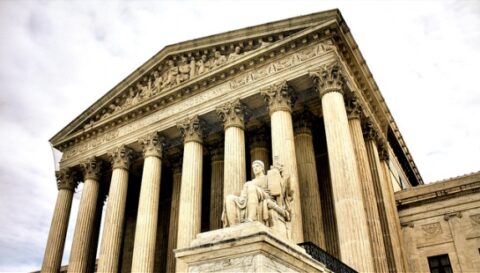
The Supreme Court case involving Arizona SB 1070 has officially entered the home stretch. On Friday, the Justices announced that oral arguments will take place on the fourth Wednesday in April, making it the final case to be heard this term. Yesterday, Arizona filed its much-anticipated brief at the Supreme Court, laying out its legal defense of the four provisions currently blocked by a preliminary injunction. To make its case to the Court, Arizona retained renowned attorney Paul Clement, a former Solicitor General who is simultaneously handling the legal challenge to the Affordable Care Act. But while the state may have brought in new lawyers, much of its brief reads like an all-too-familiar “study” from an anti-immigration organization. Read More
DHS Shuts Down 287(g) Agreement with Maricopa County Following DOJ Investigation, Restricts Secure Communities
Today, the Secretary of the Department of Homeland Security (DHS), Janet Napolitano, announced that DHS will terminate its 287(g) agreement with the Maricopa County Sheriff’s Office and restrict access to the Secure Communities program, following damaging findings released by the Department of Justice (DOJ). After a three year long civil rights investigation into the Maricopa County Sheriff’s Office (MCSO)—an office led by America’s “toughest sheriff” Joe Arpaio—the DOJ announced today that it had “reasonable cause” to believe the Sheriff’s Office has “engaged in a pattern or practice of misconduct that violates the Constitution and federal law.” Read More
Supreme Court to Weigh in on Injunctions Against Arizona SB 1070
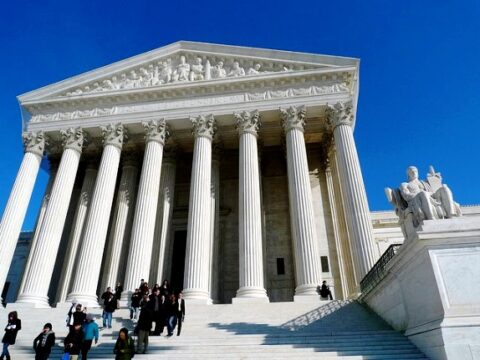
Earlier today, the Supreme Court announced what many supporters and opponents of Arizona SB 1070 long expected: that the Justices will themselves have the final word on the validity of the injunctions entered shortly after the law was enacted last year. Technically, the question before the Justices is simply whether four of the law’s provisions should be temporarily blocked pending resolution of a larger legal challenge. In addition, the Court will not consider claims raised in a separate lawsuit by numerous immigrants’ and civil rights groups. But in the decision it ultimately issues, the Supreme Court may well provide broad guidance about what role, if any, local police may play in enforcing federal immigration law—which could in turn affect legal challenges to copycat laws in other states, such as Alabama. Read More

New Report Shows Immigrant Women Entrepreneurs Create Jobs and Contribute to Economy
Economists readily acknowledge the economic contributions of immigrant entrepreneurs to the U.S. After all, we wouldn’t have one-quarter of all public companies in the U.S.—companies like Google, Yahoo!, and Intel which employed 220,000 people and generated more than $500 billion in one year—without them. But lost in that acknowledgement are the contributions of immigrant women entrepreneurs who last year made up 40% (or 980,575) of all immigrant business owners in the U.S. This week, a new report, Our American Immigrant Entrepreneurs: The Women, takes a closer look at these women and examines the obstacles and pathways to establishing successful businesses—businesses that have created American jobs and generated millions in taxable revenue. Read More
DOJ’s Lawsuit Against South Carolina Latest Legal Challenge to State Immigration Laws
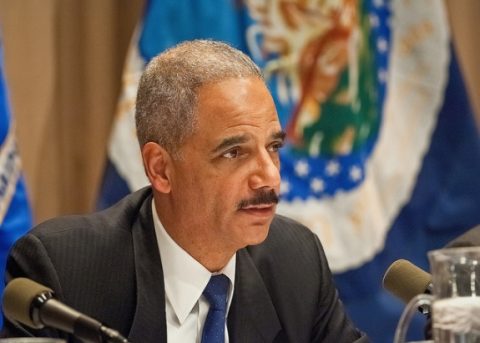
BY KAREN TUMLIN, MANAGING ATTORNEY, NATIONAL IMMIGRATION LAW CENTER Yesterday, the U.S. Department of Justice (DOJ) filed suit against South Carolina, challenging the state’s extreme anti-immigration law (SB 20). With this action, the Department of Justice charges that South Carolina, like Arizona and Alabama, have passed unconstitutional immigration laws. Civil rights groups (including the National Immigration Law Center) agree. Coalitions have filed suit in five states—Utah, Indiana, Georgia, Alabama, and South Carolina—that passed their own Arizona-inspired laws in 2011. Fortunately, most of these states have seen their new, misguided laws lose much of their bite through civil rights coalition-led legal challenges. Here’s a round-up of the status of these legal cases. Read More
Federal Appeals Court Enjoins Two Provisions of Alabama’s Extreme Immigration Law
Today, the U.S. Court of Appeals for the 11th Circuit temporarily blocked two controversial provisions of Alabama’s extreme immigration law, HB 56. A federal appeals court enjoined the provision requiring public school to determine the immigration status of enrolling students and the status of their parents as… Read More
All gifts are matched dollar for dollar
No one should face the immigration system alone