Department of Homeland Security

What the President’s 2013 Budget Means for the Administration’s Immigration Priorities
This month, President Obama released his FY2013 budget proposal, estimating $3.8 trillion in total spending in 2013. This budget proposal signals the beginning of the annual federal budget process. Congressional budget and appropriations committees will now spend months deliberating over the appropriations bills, which are unlikely to look anything like the president’s budget proposal. However, the president’s budget request does provide a window into the administration’s immigration priorities and plans. Read More

ICE’s New Public Advocate Office a Step in the Right Direction
Immigration and Customs Enforcement (ICE) recently announced creation of its first Public Advocate’s office, designed to serve as a point of contact for people trying to cut through the bureaucracy to get questions answered and concerns heard. While immigration hardliner Rep. Lamar Smith was quick to call the new office a “lobbying firm for illegal immigrants,” the actual job description is more like an extension of current public engagement functions, but with the possibility of more specific intervention on individual cases. Read More
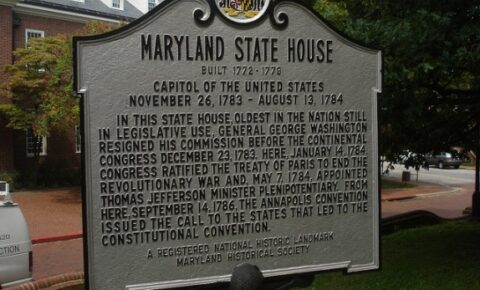
Report by Maryland State Panel Details Positive Approach to Immigration
A new report from the Commission to Study the Impact of Immigrants in Maryland concludes that immigrants bring a plethora of economic, social, and cultural contributions to the state of Maryland. The commission, which was created by the Maryland General Assembly, also warns against attempts to deal with unauthorized immigration through enforcement-only policies that needlessly sow fear and distrust in immigrant communities. Rather, the commission admonishes, “Maryland must remain welcoming to immigrants, and the state and its local jurisdictions should further strengthen its efforts to integrate immigrants into the economy and the community.” Read More

New Report Analyzes Fatal Flaws of U.S. Border-Enforcement Strategy
The federal government’s current approach to border security is dangerously misguided. Border-enforcement resources are directed at what gets smuggled across the border—people, drugs, guns, money—rather than who is doing the smuggling; namely, the transnational criminal organizations based in Mexico which are commonly referred to as the “cartels.” If the U.S. government wants to get serious about enhancing border security, it will begin to systematically dismantle the cartels rather than just seizing the unauthorized immigrants and the contraband they smuggle and arresting a few low-level cartel operatives in the process. Read More

Romney Uses Restrictionist Code Words to Describe Immigration Policy
GOP presidential candidate Mitt Romney stole a page from the restrictionists’ playbook this week when he promoted the idea of “self-deportation” during a presidential debate. "If people don't get work here,” Romney stated, “they're going to self-deport to a place where they can get work." Rather than initiate a constructive solution to our nation’s immigration problems, Romney is jumping in bed with immigration restrictionist groups who support policies that tear American families and communities apart, devastate local economies, and place unnecessary burdens on U.S. citizens and lawful immigrants. Read More

It’s Time to Improve Noncitizens’ Access to Counsel
In the United States, most immigration decisions impacting noncitizens are made by immigration officials in informal proceedings far from a courtroom. While the right to an attorney (at the noncitizens’ own expense) in immigration court proceedings is widely recognized, the right to counsel in administrative settings outside of a courtroom is often overlooked or explicitly not recognized. As a result, many noncitizens are forced to navigate the immigration process alone. For those noncitizens that are represented, the Department of Homeland Security (DHS) often restricts their access to their lawyers. Read More

ICE Releases Memo Outlining Justification for Making Secure Communities Mandatory
An October 2010 ICE memo from ICE Deputy Legal Advisor Riah Ramlogan to ICE Assistant Deputy Director Beth Gibson has finally been made public after a protracted legal battle. The nine page memo, obtained through Freedom of Information Act (FOIA) litigation, presents ICE’s legal arguments for making the Secure Communities Program mandatory for all jurisdictions in 2013. This memo overrides and contradicts an earlier ICE memo that argued that S-Comm was not mandatory. Read More

USCIS Seeks to Unify Families Facing Separation through Revised Waiver Process
Today, the administration took another important step toward fixing one of the most notorious problems with our broken immigration system—the 3 and 10 year bars. The U.S. Citizenship and Immigration Services (USCIS) announced today that it was filing a notice of intent to change a rule which would streamline the application process for many relatives of U.S. citizens currently eligible for permanent resident status, thereby minimizing the amount of time that applicants would have to be away from their families before being admitted into the United States. Read More
DHS Shuts Down 287(g) Agreement with Maricopa County Following DOJ Investigation, Restricts Secure Communities
Today, the Secretary of the Department of Homeland Security (DHS), Janet Napolitano, announced that DHS will terminate its 287(g) agreement with the Maricopa County Sheriff’s Office and restrict access to the Secure Communities program, following damaging findings released by the Department of Justice (DOJ). After a three year long civil rights investigation into the Maricopa County Sheriff’s Office (MCSO)—an office led by America’s “toughest sheriff” Joe Arpaio—the DOJ announced today that it had “reasonable cause” to believe the Sheriff’s Office has “engaged in a pattern or practice of misconduct that violates the Constitution and federal law.” Read More

New Report Shows Immigrant Women Entrepreneurs Create Jobs and Contribute to Economy
Economists readily acknowledge the economic contributions of immigrant entrepreneurs to the U.S. After all, we wouldn’t have one-quarter of all public companies in the U.S.—companies like Google, Yahoo!, and Intel which employed 220,000 people and generated more than $500 billion in one year—without them. But lost in that acknowledgement are the contributions of immigrant women entrepreneurs who last year made up 40% (or 980,575) of all immigrant business owners in the U.S. This week, a new report, Our American Immigrant Entrepreneurs: The Women, takes a closer look at these women and examines the obstacles and pathways to establishing successful businesses—businesses that have created American jobs and generated millions in taxable revenue. Read More
America's story is an immigrant story.