Border
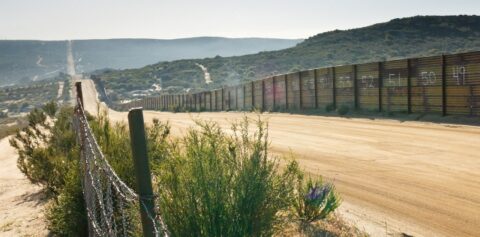
True Border Security and Legalization Go Hand in Hand
A sticking point in current and past immigration reform proposals has been the misguided belief that a legalization program for unauthorized immigrants cannot proceed until the border is “secure.” The immigration framework developed by the Senate “Group of 8” introduces that same sticky framework by proposing to create certain border-security benchmarks that must be met before a legalization program can begin. Not only has this not worked in the past, given that benchmarks from multiple past proposals have actually already been met, but creating a truly “secure border” actually requires a new understanding of what the problems are at the border. Read More

New Report Shows That Border Benchmarks Already Have Been Met
As the components of what should be included in an immigration reform bill take shape, border security, along with enforcement, is proving to be a key part of the framework. Eight senators released a bipartisan proposal earlier this week that included a path to citizenship for the 11 million unauthorized immigrants currently living in the United States. The catch is that implementation of this provision is “contingent upon our success in securing our borders and addressing visa overstays.” The day after the senators presented their framework, President Obama laid out his vision of what should be included in immigration reform legislation during a speech to labor leaders in Nevada. The president called for a clear path to citizenship that’s not contingent on securing the border, but he said the nation needs to stay focused on immigration enforcement. “That means continuing to strengthen security at our borders,” Obama said during his speech. “It means cracking down more forcefully on businesses that knowingly hire undocumented workers.” Read More

Why Should We Support a Legalization Program for Unauthorized Immigrants?
As the immigration debate heats up in Congress, the central question for much of the American public will be whether or not to create a pathway to legal status for the 11 million unauthorized immigrants now living in the United States. In formulating an answer to that question, however, it is necessary to ask two others. First, exactly who are the unauthorized immigrants who would be attaining legal status? Secondly, what would the impact be on the U.S. economy were so many unauthorized immigrants to be legalized? The answer to the first question is relatively simple: unauthorized immigrants are just like everybody else; they are adults and children, mothers and fathers, homeowners and churchgoers. The short answer to the second question is that legalization would be a stimulus to the U.S. economy. Workers with legal status earn higher wages, and these extra earnings generate more tax revenue for federal, state, and local governments, as well as more consumer spending, which sustains more jobs in U.S. businesses. Read More
Reasons for Cautious Optimism on Immigration Reform
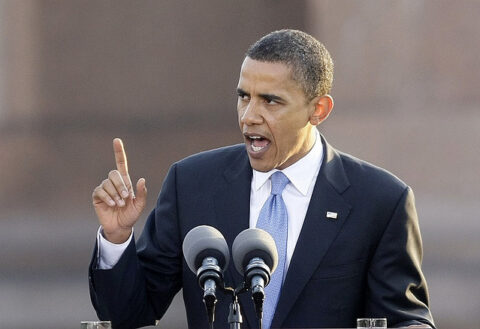
There is considerable debate at the moment over the prospects for immigration reform this year. On the one hand, an electorally chastened Republican Party seems to be reevaluating its long-standing support for deportation-only immigration policies. On the other hand, it looks as though the White House and Congress are embarking upon lengthy debates over gun control and tax-and-spending policies; debates which might leave little room for a rational discussion of U.S. immigration laws. Nevertheless, reports from the White House indicate that President Obama is ready to forge ahead on immigration reform. It remains to be seen, however, what form that will take. Will the President opt for a truly comprehensive solution, or will he adopt a more piecemeal type of reform that targets only some subsets of the immigrant population? Let us hope that the comprehensive approach prevails. The fates of millions of people have been hanging in the balance for far too long. Read More
Conservatives Who Support Immigration Reform Need to Rethink Border Security
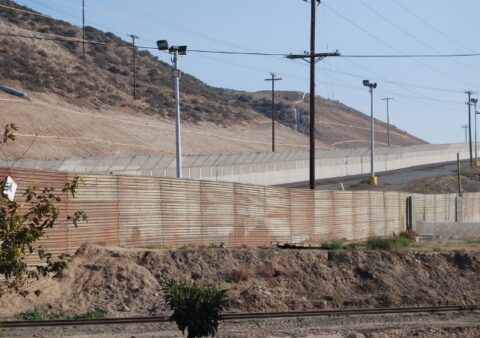
The elections have produced nothing short of an immigration epiphany among some conservative commentators and politicians. Spurred by the electoral beating that Republican candidates suffered at the hands of Latino voters, pundits and lawmakers who once advocated an enforcement-only solution to the problem of unauthorized immigration are now talking about a pathway to legalization. While this new-found pro-legalization stance is highly commendable, it is being coupled with distinctly old-fashioned notions of border security. Legalization programs are being proposed along with border walls as the solution for our border-security weaknesses. However, walls which try (and fail) to keep people out of the country won’t make us safer. The real target of border-security measures should be the cartels that smuggle immigrants, money, drugs, and guns across the border—not the immigrants, money, drugs, and guns themselves. Read More
New Border Patrol Strategy Changes Rhetoric More than Substance
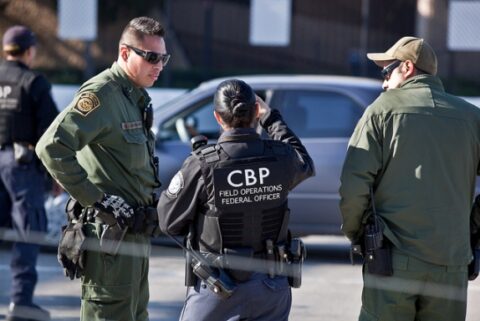
The U.S. Border Patrol’s newly released strategic plan is a decidedly mixed bag when it comes to border security—just like the Border Patrol’s last strategic plan, released in 2004. On the plus side, both documents advocate an intelligence-driven, risk-based approach to border security which focuses on the greatest security threats. Both plans also call for disruption of the smuggling networks which bring unauthorized immigrants, drugs, and other contraband into the United States. On the down side, each plan embraces the simplistic “prevention through deterrence” mentality in which it is believed—or hoped—that heightened border enforcement will scare off unauthorized immigrants and smugglers alike. More broadly, both documents are a reflection of the federal government’s continued misguided emphasis on securing the territory between ports of entry, even though most smuggling now occurs through ports of entry. Read More
DHS’s Current Southern Border Enforcement Strategy a Bust, Group Says
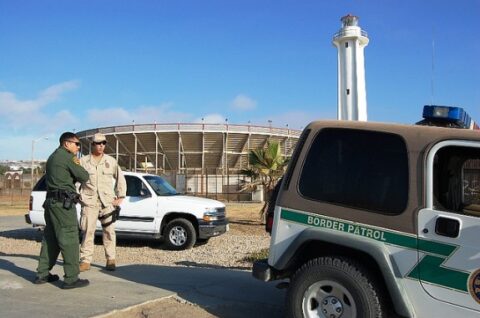
A comprehensive new report finds that the fortification of the U.S.-Mexico border which began two decades ago has reached the limits of its effectiveness, has produced severe negative side effects, and should be systematically re-evaluated. In Beyond the Border Buildup: Security and Migrants Along the U.S.-Mexico Border, the Washington Office on Latin America and the Colegio de la Frontera Norte argue that the U.S. border buildup has never been guided by a comprehensive security strategy. But now that unauthorized immigration has reached historic lows, says the report, the time is ripe to stop throwing money into fragmented enforcement efforts and determine precisely what those enforcement efforts are supposed to accomplish. Read More
Human Rights Abuses Along U.S.-Mexico Border Underscore Need for Reform
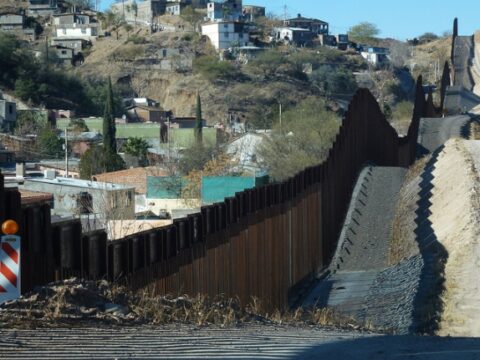
U.S. immigration and border-enforcement policies have precipitated a litany of human-rights abuses along the U.S.-Mexico border, from the needless deaths of border-crossers to inhumane conditions in immigration detention to the racial profiling of entire Latino and indigenous communities. That was the principal finding of the human rights groups which presented testimony at a recent hearing of the Inter-American Commission on Human Rights (IACHR). It was also the main conclusion of a recent report by Amnesty International. Both the hearing and the report underscore the urgent need for the U.S. government to abide by the human rights treaties to which it is a signatory. Read More
DHS Report Finds Inadequate Information Sharing, Mission Overlap Among Agencies
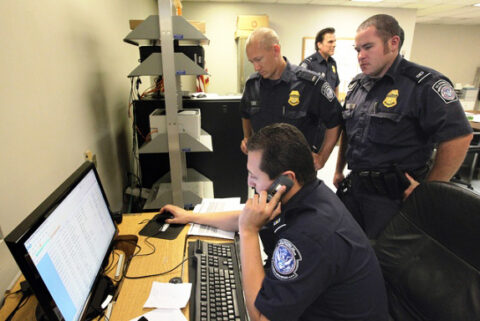
Nine years after its creation, the Department of Homeland Security (DHS) is still hampered by mission overlap and inadequate information sharing among the various agencies within the department. So concludes a recent report by the DHS Office of Inspector General, entitled Information Sharing on Foreign Nationals: Border Security. Highlights from the report include a recommendation to scrap the controversial NSEERS database, and a call for real department-wide coordination among DHS agencies. Read More

Why the Scott Gardner Act is Unconstitutional…and a Bad Idea
Immigration hardliners never hesitate to claim the mantle of “states’ rights” when defending laws like Arizona SB 1070. But those wanting local cops to double as federal immigration agents were conspicuously silent at a congressional hearing on Wednesday on the Scott Gardner Act, a bill that (among other things) would require police to run extra background checks on foreign nationals arrested for drunk driving. Instead, it was pro-immigrant members of Congress who had to remind the legislative sponsors that the Constitution prohibits the federal government from imposing unfunded mandates on states—all while explaining the many reasons why the bill would make bad policy. Read More
All gifts are matched dollar for dollar
No one should face the immigration system alone