Reports
An Assessment of DNA Testing for African Refugees
In March 2008, the Bureau of Population, Migration and Refugees (PRM)—the Department of State agency that processes refugees abroad—halted its family reunification program, known as Priority 3 (P3), because of concerns that there were high levels of fraud in the program. In September of… Read More
The New American Electorate (October 2010)
At a time when federal, state, and local elections are often decided by small voting margins—with candidates frequently locked in ferocious competition for the ballots of those “voting blocs” that might turn the electoral tide in their favor—one large and growing bloc of voters has been consistently overlooked and politically underestimated: New Americans. This group of voters and potential voters includes not only immigrants who have become U.S. citizens (Naturalized Americans), but also the U.S.-born children of immigrants who were raised during the current era of large-scale immigration from Latin America and Asia which began in 1965 (the Post-1965 Children of Immigrants). Read More
The Comprehensive Immigration Reform Act of 2010: A Summary
This following summary highlights key provisions of the Comprehensive Immigration Reform Act of 2010 introduced by Senators Menendez (D-NJ) and Leahy (D-VT): Read More
The Unwanted: Immigration and Nativism in America
It’s hardly news that the complaints of our latter-day nativists and immigration restrictionists—from Sam Huntington to Rush Limbaugh, from FAIR to V-DARE—resonate with the nativist arguments of some three centuries of American history. Often, as most of us should know, the immigrants who were demeaned by one generation were the parents and grandparents of the successes of the next generation. Perhaps, not paradoxically, many of them, or their children and grandchildren, later joined those who attacked and disparaged the next arrivals, or would-be arrivals, with the same vehemence that had been leveled against them or their forebears. Similarly, the sweeps and detentions of immigrants during the early decades of the last century were not terribly different from the heavy-handed federal, state, and local raids of recent years to round up, deport, and occasionally imprison illegal immigrants, and sometimes legal residents and U.S. citizens along with them. But it’s also well to remember that nativism, xenophobia, and racism are hardly uniquely American phenomena. What makes them significant in America is that they run counter to the nation’s founding ideals. At least since the enshrinement of Enlightenment ideas of equality and inclusiveness in the founding documents of the new nation, to be a nativist in this country was to be in conflict with its fundamental tenets. Read More
Explaining the Recent Decline in Unauthorized Migration
Immigration Enforcement in a Time of Recession Recent estimates from the Pew Hispanic Center indicate that the number of unauthorized immigrants in the United States has declined by roughly one million since 2007—bringing the total size of the unauthorized population to approximately 11.1 million. Coming after the release of similar estimates by the Department of Homeland Security (DHS) in January, these figures have provoked considerable speculation as to how much of the decline is attributable to the current recession, and how much is the result of heightened immigration enforcement. DHS, for instance, was quick to take credit for the drop, citing the money and manpower that have been poured into immigration enforcement by the Obama administration. However, immigration researchers were just as quick to point out that unauthorized immigration has always responded to the state of the U.S. economy, and that the downward trend captured by both Pew and DHS matches up closely with the beginning of the recession in December 2007. Read More
Back to the Border: A Historical Comparison of U.S. Border Politics
By Katherine Benton-Cohen and Geraldo Cadava During the spring and summer of 2010, America’s broken immigration system erupted into national news headlines as a result of the passage in Arizona of a sweeping anti-immigrant law (SB 1070), growing concerns over drug-related violence along the U.S.-Mexico border, and calls in some quarters for a repeal of the Fourteenth Amendment’s guarantee of birthright citizenship. While these events might seem new, the issues involved—unauthorized migration, labor disputes, violence, federalism, and constitutional rights—have played out over and over again, particularly along the border. Back to the Border provides analyses by two historians who situate today’s controversies within the context of the broader history of the border region. Understanding that history not only allows us to make sense of the complex issues behind the current rhetoric, but also demonstrates why it is necessary to go beyond the rhetoric and search for lasting solutions. The following “Perspectives” by historians Katherine Benton-Cohen and Geraldo Cadava compare and contrast conditions and incidents along the Arizona border in 1917, 1976, and 2010. The similarities between the three eras are startling. Read More
Truth Held Hostage: Dissecting the Lies about Kidnapping in Arizona
Arizona politicians who support the state’s sweeping anti-immigrant law (SB 1070) are not particularly fond of facts. For instance, Arizona Governor Jan Brewer (R) has made all manner of ludicrous statements about unauthorized immigrants typically carrying drugs, killing cops, and leaving headless bodies in the desert. But the most hypocritical of the anti-immigrant statements made by politicians such as Brewer concern kidnapping. Not only do Brewer and company pretend that kidnappers are lurking behind every corner in Arizona, but they usually neglect to mention that unauthorized immigrants are the primary victims of the kidnappings that do occur. In other words, the kidnapping of unauthorized immigrants is being used as a justification to crack down on unauthorized immigrants. This is a nonsensical policy that attacks the victims rather than the perpetrators of the crime. Read More
Immigrants in the U.S. Labor Force
New CBO Report Underscores Diverse Contributions of Foreign-Born Workers A recent report from the Congressional Budget Office (CBO) underscores not only the diversity of the foreign-born labor force in the United States, but also the myriad roles that immigrant workers play in the U.S. economy. The report, which analyzes data from the Current Population Survey, finds that 15.5 percent of the U.S. labor force was foreign-born in 2009, up slightly from 14.5 percent in 2004. Moreover, immigrant workers and their native-born counterparts differ significantly in terms of occupation and education, as well as where in the country they live. As other, more detailed analyses have confirmed, this suggests that immigrants and natives are filling different niches in the U.S. labor market and are therefore not in direct competition with each other for most jobs. Read More
Enforcing Arizona’s SB 1070: A State of Confusion
Arizona and the federal government await a decision from a Phoenix district judge on whether enforcement of SB 1070 will move forward on July 29th, or whether all or some parts of the law will be enjoined. Meanwhile, local law enforcement is struggling to interpret SB 1070 and provide training to officers, which could be further complicated if the judge allows only some parts of the law to go forward. In this new report released today by the Immigration Policy Center, journalist Jeffrey Kaye reveals that "instead of 'statewide and uniform practices' as directed by the governor, Arizona police agencies have developed a patchwork of guidelines based on varying interpretations of the law." Kaye's reporting includes interviews with police officials, who cite concerns with implementing the new law, and a review of training materials that suggest the implementation of SB 1070 will differ from one jurisdiction to another, and even within police agencies, and "will be burdensome, costly, and distort priorities." Read More
The Impact of SB 1070: Usurping the Federal Government’s Ability to Set Enforcement Priorities
What proponents of laws like Arizona’s SB 1070 fail to understand is that state and local enforcement of immigration law actually jeopardizes the federal government’s ability to set priorities for immigration enforcement. SB 1070 would divert scarce federal resources away from finding dangerous criminals throughout the United States, focusing instead on detaining and deporting non-violent immigrants in one state: Arizona. Read More
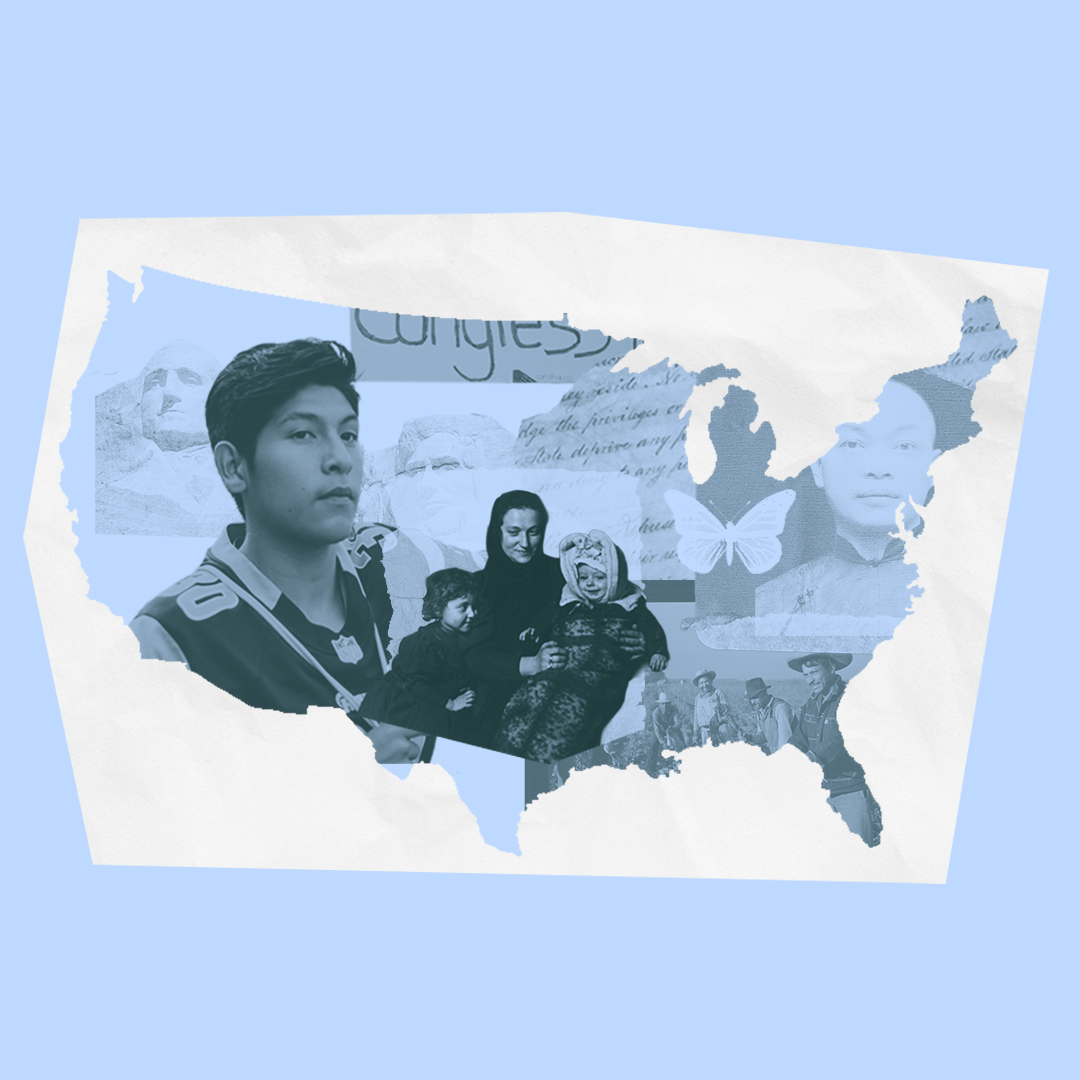
America's story is an immigrant story.