Special Report

The Politics of Skill: Rethinking the Value of “Low-Skilled” Immigrant Workers
The political discourse surrounding the incorporation of immigrants into the U.S. labor market tends to sort immigrant workers into two broad and mutually exclusive categories: high-skilled workers who are valued by many for their contribution to economic growth, and low-skilled workers who are viewed by some as causing a glut in the U.S. labor market and thereby displacing low and middle-income native-born workers. For the most part, these categories are structured around formal education. Workers possessing a level of formal education equal or superior to the median in the United States are on one side of this divide, while workers with less formal education than that threshold are on the other. Most current proposals favor expanding immigration opportunities for those immigrants with high levels of formal education. Read More
Q&A Guide to State Immigration Laws
What You Need to Know if Your State is Considering Anti-immigrant Legislation Updated 2012 - In April 2010, Arizona governor Jan Brewer signed the “Support Our Law Enforcement and Safe Neighborhoods Act,” or, as it is commonly known, SB1070. At the time of its passage, Arizona’s immigration law surpassed all previous state immigration-control efforts. While much of the law has been enjoined by the courts, its passage inspired legislators in other states to pass similar legislation. Since SB1070 passed, 36 other states have attempted to pass harsh immigration-control laws. Of those, 31 states have rejected or refused to advance their bills. However, five states—Utah, Indiana, South Carolina, Georgia, and Alabama—have passed laws that mirror or go beyond the Arizona law. It is likely that additional states will attempt to pass similar anti-immigrant legislation during the 2012 legislative session. SB1070 and other immigration-related state legislation represent, among other things, a growing frustration with our broken immigration system. The courts will decide the constitutionality of the various laws, and time will answer many questions about their impact. In the short term, much evidence suggests that an enforcement-only strategy—whether attempted at the federal or state level—will not solve the root causes of unauthorized immigration. Read More
Discrediting “Self Deportation” as Immigration Policy
By Michele Waslin The day that Alabama’s draconian anti-immigrant law went into effect in October of 2011, thousands of school children were reported absent from schools across the state, and workers did not show up for their jobs. In recent months, many immigrants living in the state have confined themselves to their homes, fearful of driving their kids to school, getting groceries, or seeking medical attention. The Alabama State Representative behind the law, Mickey Hammon, explicitly stated that this was the law’s intended effect. He said that the law, HB56, “attacks every aspect of an illegal alien’s life” and “is designed to make it difficult for them to live here so they will deport themselves.” Alabama provides a sterling example of the devastating impact of a strategic and systematic plan being promoted by anti-immigrant groups and lawmakers who have jumped on the bandwagon. The plan is called “attrition through enforcement” (sometimes called “self deportation”) and the groups behind it have created a web of federal and state legislative proposals that seek to reduce illegal immigration by making it difficult, if not impossible, for unauthorized immigrants to live in American society. While individual proposals may appear to be relatively benign, they are part of a larger systematic plan that undermines basic human rights, devastates local economies, and places unnecessary burdens on U.S. citizens and lawful immigrants. Read More
Immigrant Entrepreneurs: Creating Jobs and Strengthening the Economy
There is widespread agreement across a number of key economic planning groups that immigrant entrepreneurs create jobs and strengthen the economy. Yet, the U.S. immigration system often forces out immigrant entrepreneurs, driving them to other countries that are competing for international talent. Although many people recognize the giants of immigrant entrepreneurship, such as Sergey Brin of Google and Pierre Omidyar of eBay, thousands of other science and technology businesses are quietly making a difference by creating almost half a million jobs for Americans and generating revenue of more than $50 billion. The depth and breadth of immigrant entrepreneurs extend across the spectrum of enterprises, including neighborhood, growth, and transnational businesses. Expansion of employment-based visas would allow companies’ access to high-potential foreign individuals who are graduates of U.S. universities. Businesses, cities, and states across the country should support changes in visa policy and work to develop partnerships with immigrant entrepreneurs to create jobs and strengthen the economy. The report features profiles of immigrant entrepreneurs and shines a light on some of the difficulties they face. Current immigration laws make it difficult for many immigrant entrepreneurs to contribute to the nation’s growth. The report contains administrative and legislative proposals that taken together could create an atmosphere that fosters growth. Read More
Opportunity and Exclusion: A Brief History of U.S. Immigration Policy
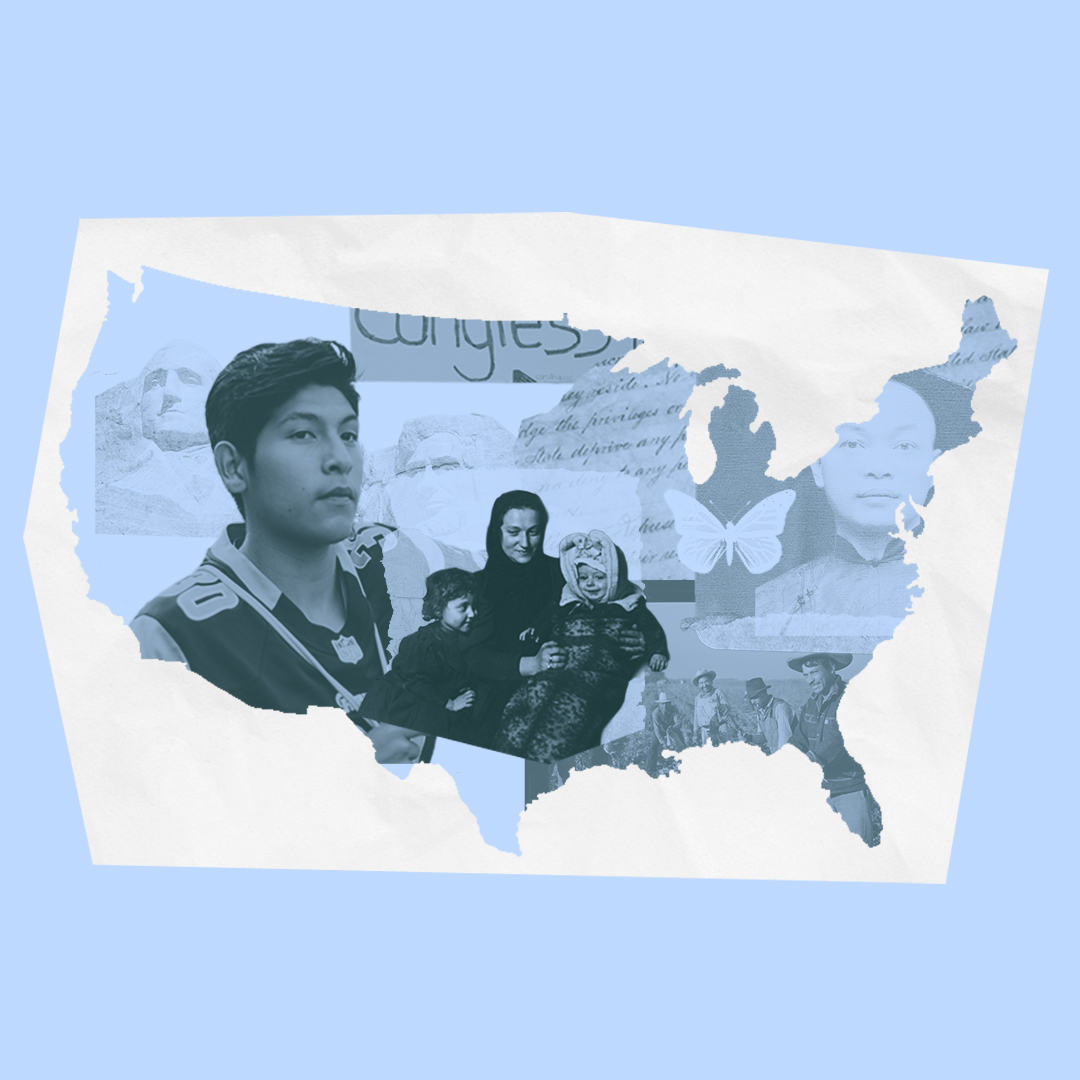
The United States and the colonial society that preceded it were created by successive waves of immigration from all corners of the globe. But public and political attitudes towards immigrants have always been ambivalent and contradictory, and sometimes hostile. The early immigrants to colonial America—from England, France, Germany, and other countries in northwestern Europe—came in search of economic opportunity and political freedom, yet they often relied upon the labor of African slaves working land taken from Native Americans. The descendants of these first European immigrants were sometimes viewed as “racially” and religiously suspect the European immigrants who came to the United States in the late 1800s from Italy, Poland, Russia, and elsewhere in southeastern Europe. The descendants of these immigrants, in turn, have often taken a dim view of the growing numbers of Latin American, Asian, and African immigrants who began to arrive in the second half of the 20th century. Read More
Our American Immigrant Entrepreneurs: The Women
When Americans picture an immigrant entrepreneur, they likely imagine a man who began the migration of his family, later bringing his wife over to become a volunteer assistant in the shop. This image is straying farther and farther from reality as more women open their own enterprises. Yet the idea that immigrant women might be the owners and originators of some of our restaurants, motels, Silicon Valley hi-tech firms, local real-estate agencies, or other entrepreneurial ventures has yet to become conventional wisdom. Today, immigrant women entrepreneurs abound in every region of the United States. In 2010 for example, 40 percent of all immigrant business owners were women (1,451,091 immigrant men and 980,575 immigrant women). That same year, 20 percent of all women business owners were foreign-born. These numbers indicate that there is a quiet revolution of immigrant women’s business ownership that is organically growing, but is going relatively unnoticed in the culture at large. In this report, we asked women from a range of business sectors in several cities to tell us why and how they started their ventures, what challenges they faced, what their businesses mean to them, and what contributions they are making. Read More
The Secure Communities Program: Unanswered Questions and Continuing Concerns
This paper describes the Secure Communities program, identifies concerns about the program’s design and implementation, and makes recommendations for the future of the program. Read More
Turning Off the Water: How the Contracting and Transaction Provisions in Alabama’s Immigration Law Make Life Harder
Turning Off the Water: How the Contracting and Transaction Provisions in Alabama's Immigration Law Make Life Harder For EveryoneBy Joan Friedland Since passage of HB 56, Alabama’s extreme new immigration law, many are aware of the most immediate consequences of the law—rotting tomatoes, racial profiling, and frightened school children. However, two provisions of the law that have the potential to be extremely damaging to the state’s economy, rule of law, and municipal functioning have received comparatively little attention. These two provisions have been in effect since September 30,, 2011, and are likely to result in an increase of exploitation of workers, erosion of fundamental legal protections, and denial of access to state and local government services and activities. In other words, these provisions will undoubtedly impact the daily lives of all Alabamians. Read More
Locked Up Without End: Indefinite Detention of Immigrants Will Not Make America Safer
One of the ugliest myths in the immigration debate is that immigrants are more likely to commit crime or pose a danger to society. Although studies repeatedly have shown that immigrants are less likely to commit crimes than native-born Americans, politicians continue to exploit the public’s fear of crime to justify ever more punitive immigration measures, including the mass incarceration of immigrants for reasons that would never be permitted for U.S. citizens. A prime example of this political double standard is the “Keep Our Communities Safe Act of 2011” (H.R. 1932), introduced this past spring by Representative Lamar Smith (R-TX), Chairman of the House Judiciary Committee. H.R. 1932 proposes a massive expansion of our immigration lock-up system that would waste millions of taxpayer dollars and violate our constitutional commitments to individual liberty and due process of law, while doing little to make America safer. The vast scope of H.R. 1932 became clear during its committee mark-up, where members of the House Subcommittee on Immigration Policy and Enforcement challenged the language and intent of the legislation and sought to amend its reach. During that meeting, Rep. Smith was forced to acknowledge that the bill’s detention mandates extend to immigrants who have no criminal record whatsoever, much less focus narrowly on hard-core offenders. Since that time, however, Rep. Smith has continued to misrepresent that “the bill only specifies that a small segment of criminal immigrants may be detained for extended periods.” Read More
Improving the Naturalization Process: Better Immigrant Integration Leads to Economic Growth
Anyone who has ever attended a naturalization ceremony cannot help but be moved by the power of the moment. The participants enter as men, women, and children of diverse countries, but leave the room as citizens of one—the United States. For many, the path to that naturalization ceremony has been long and arduous, irrespective of whether they entered the United States as wealthy entrepreneurs or as refugees with nothing but the clothes on their backs. The process of obtaining lawful permanent resident (LPR) status, and ultimately U.S. citizenship, is often daunting. A new country, new rules, high costs, and little targeted support for new immigrants makes what should be a journey of exploration and opportunity one that may be frustrating and lonely. Consequently, in order to focus on ways to improve the naturalization process itself, we must take a step back and consider the nature of immigrant integration in the United States. The better our integration policies—and the sooner they begin—the more likely we are to improve the rate of naturalization. Read More
America's story is an immigrant story.