 The American Immigration Council is a non-profit, non-partisan organization.
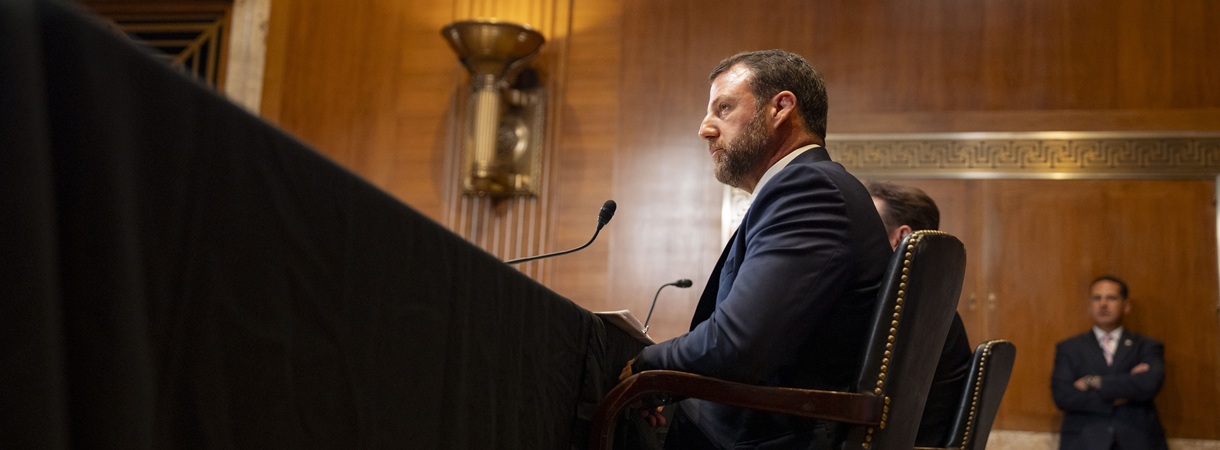
 U.S Department of Homeland Security (DHS) Secretary Markwayne Mullin faced hard questions from members of Congress this week as he doubled down on threats to halt international air traffic in so-called “sanctuary cities” like Chicago, Los Angeles, and New York City. The Trump administration has repeated this sweeping threat for weeks in response to growing protests and clashes in New Jersey over inhumane conditions in the Delaney Hall detention facility used by U.S. Immigration and Customs Enforcement (ICE) to house noncitizens arrested by the agency.
This latest threat represents yet another round of retaliatory efforts from the Trump administration—now with Secretary Mullin at the helm of DHS—aimed at cities and states that oppose mass deportation or decline to work with ICE. If the administration were to divert Customs and Border Protection (CBP) officers out of major international airports, the consequences would be hugely disruptive to the American public and critical industries and could result in travelers stranded at airports.
Secretary Mullin’s threat comes at a moment when voters are already expressing frustration about economic conditions and are increasingly unsupportive of the current immigration agenda. If the administration follows through on this ill-advised plan, it will hurt not only the cities and immigrants pushing back on Trump’s current enforcement agenda but would impose harms on hundreds of thousands of other Americans.
While some voices inside Trump’s cabinet have pushed back against the idea, and the airline industry and other experts have raised the alarm over what some have called a “naïve or dumb” plan, Secretary Mullin appeared unfazed. But even if the administration doesn’t go through with the plan, these threats are just another iteration of ongoing attacks the administration has leveled against “sanctuary” cities and states for months.
Last year, the administration sent paramilitary troops and the National Guard to Los Angeles and Chicago in response to continued resistance to mass deportation operations being carried out inside the cities. It simultaneously advanced legislation that would deprive states of federal funding for core programs like food stamps if they failed to cooperate. The Department of Justice also issued a memo and filed subsequent lawsuits claiming that “failure to comply with lawful immigration-related demands and requests” violates the law. And just this week, the Senate passed a spending package that gives another $70 billion to ICE and CBP and includes a fund the agencies can use to scale-up enforcement specifically in jurisdictions that set limits on their level of cooperation with these agencies.
But the law is clear that state and local governments are entitled under the United States Constitution to make decisions that are best for their own interests and communities when it comes to law enforcement and public safety; and this includes declining to work with ICE or any other federal agency in effectuating mass deportation. The Tenth Amendment prevents the federal government from coercing or threatening states and localities into working with ICE. While states and cities cannot actively interfere with federal immigration enforcement, they are not obligated to cooperate or help—and multiple federal courts agree.
A growing number of local law enforcement leaders have also pushed back on the Trump administration’s constant threats and bullying of jurisdictions that are unwilling to cooperate. In Florida, sheriffs have repeatedly and publicly shared public safety concerns on effectuating a mass deportation agenda that sweeps in many who pose no threat—underscoring how it erodes their credibility and wastes limited local law enforcement resources. Other local sheriffs in Maine and North Carolina have opposed working with the agencies given how it undermines their ability to prosecute serious crimes or pursue law enforcement in a professional manner.
In short, Secretary Mullin’s latest threats represent yet another example of a policy that the administration has packaged as necessary for immigration enforcement, but that will hurt law-abiding immigrants and Americans, erode long-standing relationships between states and the federal government, and do absolutely nothing to credibly enforce our immigration laws.
A Better Way Forward
At the American Immigration Council, we recently released a new blueprint for how federal immigration agencies should work with states in the future. In “Restoring Credibility and Humanity to Immigration Enforcement,” we offer reforms that elected officials can use to present Americans with a viable alternative to mass deportation.
We call for a model of partnership between federal agencies and states that includes federal funding to support states that have immigrant populations. In this way, federal agencies not only work with states to find those who might be subject to the consequences of violations of immigration law but also help states create thriving immigrant communities. It would likewise create safer and stronger communities while credibly and humanely enforcing the law.
For decades, ICE has relied upon local law enforcement to help enforce outdated immigration laws. But this cooperation focused on a patchwork of informal and formal agreements, usually with local law enforcement agencies, and that often swept in long-standing community members who posed no threat for detention and deportation.
Given this history of enforcement-only cooperation and the recent bullying and coercion used by the Trump administration, many states are increasingly unwilling to work with the federal government on anything related to immigration. Congress must do more to provide financial support for state-level services and programs that enable and support immigrants while working in a more targeted manner with state agencies for enforcement against only those immigrants that pose a bona fide safety risk to their community.
Collaboration cannot happen through threats alone, and the federal government should never order states or cities to enforce an agenda that hurts their communities or makes people less likely to trust their local police officers. The model we propose—a supportive public-safety partnership—would be a meaningful way to rebuild trust in places like New Jersey, Illinois, Minnesota, and North Carolina that have faced the full force of aggressive immigration enforcement as punishment for policies that limit collaboration.