State by State
By examining the demographics and impact of immigrants in your state, you can make more informed choices about policy as well as how to serve your community’s unique needs. Explore the fact sheet for your state to understand the immigrant makeup and impact where you live.

State Level Immigration Legislation and the Essential Economy
We often take for granted the important role “behind the scenes” workers – farm labor, restaurant work, and home health care – play in driving our economy. That’s one of the many conclusions of a new report from the Essential Economy Council, which studied the economic and social value of industries that make up what they have coined the “essential economy.” The report identifies six industrial sectors important to our daily way of life, including: agriculture and poultry; hospitality and restaurants; light construction and landscaping; personal care and assisted living; building maintenance and facilities service; and distribution and logistics. For the state of Georgia, the essential economy is a significant component of the state’s overall economy. In particular, the essential economy contributed 12 percent ($49 billion) to Georgia’s GDP in 2010; contributed over $114 million in sales tax in 2011; employed just under one million out of 3.7 million workers in Georgia in 2011; and is present in every country in the state. Read More

Immigrants Add Billions to the Arkansas Economy
A perennial question in the immigration debate is whether or not immigrants contribute more to the economy than they cost. That is, do they add more economically as workers, taxpayers, consumers, and entrepreneurs than they “consume” in public education, public healthcare, and public benefits? In some ways, this question is misleading. Education and healthcare are social investments that pay future dividends; they are not merely fiscal expenses. Nevertheless, it is a useful exercise to take the question at face value and do the math. The result, contrary to the convoluted arithmetic of anti-immigrant activists, is overwhelmingly positive. Immigrants add far more to the economy than they take away. And given the aging of the native-born population, the contributions of immigrants (and their children) will only increase over time. Read More

Fatally Flawed: FAIR Blames Immigrants and Children for Maryland’s Financial Problems
In a case of very creative accounting, the nativist Federation for American Immigration Reform (FAIR) is blaming immigrants and children for Maryland’s fiscal woes. In a new report, FAIR lumps together unauthorized K-12 immigrant students with U.S.-born students who have unauthorized parents and claims that they are all costing Maryland taxpayers astronomical sums in educational expenditures. However, the report, entitled The Cost of Illegal Immigration to Marylanders, suffers from several fatal flaws. Read More
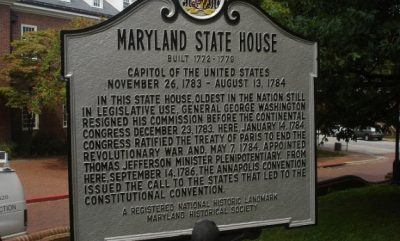
Report by Maryland State Panel Details Positive Approach to Immigration
A new report from the Commission to Study the Impact of Immigrants in Maryland concludes that immigrants bring a plethora of economic, social, and cultural contributions to the state of Maryland. The commission, which was created by the Maryland General Assembly, also warns against attempts to deal with unauthorized immigration through enforcement-only policies that needlessly sow fear and distrust in immigrant communities. Rather, the commission admonishes, “Maryland must remain welcoming to immigrants, and the state and its local jurisdictions should further strengthen its efforts to integrate immigrants into the economy and the community.” Read More
Missouri State Legislature Pursing Budget Busting Solutions to Immigration
Washington D.C. – As Missouri faces a $704 million shortfall in fiscal year 2012, state legislators are currently pursuing a costly and short-sighted anti-immigrant law. Senate Bill 590 is similar to the immigration law passed in Alabama and is currently working its way through the state legislature. The… Read More
A Rising Tide or a Shrinking Pie
Washington, D.C. – As Arizona approaches the one-year anniversary of the passage of SB 1070, the Immigration Policy Center and Center for American Progress release a new report, A Rising Tide or a Shrinking Pie: The Economic Impact of Legalization Versus Deportation in Arizona, by Raúl Hinojosa-Ojeda… Read More
Utah’s Immigration Solution Not a National Model
Washington D.C. – Late Friday night, the Utah Legislature passed three immigration-related bills that await Governor Herbert’s signature or veto. Utah’s policy discussions were guided by the principles of a much-lauded Utah Compact, which brought together leaders from political parties, business, labor, and faith-based organizations for a thoughtful dialogue about… Read More
State Legislators Attack Fundamental Constitutional Values
Washington, D.C. – Today, State Legislators for Legal Immigration (SLLI), a coalition of state legislators, revealed their plan to challenge the 14th Amendment and the Constitutional definition of citizenship. Claiming that they need to correct a “monumental misapplication of the 14th Amendment” and protect their states from the “illegal alien… Read More
State Lawmakers from Critical States Speak Out in Favor of DREAM Act
Washington D.C. – Today, a group of state legislators from Colorado, Massachusetts, Maine, Texas, and Utah participated in a briefing to share their support for federal legislation know as the DREAM Act. The bi-partisan DREAM Act passed the House of Representatives and awaits a final vote in the Senate in… Read More
Implementation Costs of SB 1070 to One Arizona County
Washington D.C. – Today, Arizona Governor Jan Brewer may sign into law a bill that has the potential to sink her state much deeper into the red than it already is. Touting a $10 million investment into local law enforcement from discretionary federal stimulus money the state received from… Read More
America's story is an immigrant story.
