State and Local

As Iowa Caucuses Approach, Signatories of Iowa Compact Hope to Reframe Immigration Debate
Exhausted by the base immigration rhetoric prevalent in the GOP presidential debate, a group of concerned Iowans is seeking to reframe the issue in anticipation of the Iowa Caucuses next month. Last week, business, faith and city leaders in Iowa signed the Iowa Compact—a list of five principles meant to guide how people discuss immigration. Signatories of the compact, which is modeled after Utah and Indiana’s Compact, urged politicians “to stop playing politics on the issue” and said that state level fixes, like enforcement-only legislation, do “not address the root problem of immigration” but instead hurts economies and communities. Read More

Federal Verification System Won’t Help Alabama Determine Legal Status Under New Law
While the devastating impacts of Alabama’s over-the-top immigration law, HB 56, continues to be felt by Alabamans, there have been a recent string of victories. In addition to a federal judge’s ruling this week temporarily blocking state agencies from denying mobile home registrations to immigrants who cannot prove legal status, the state’s Attorney General also recently issued a memo limiting the scope of the law. It is becoming more and more evident that enforcing HB 56 is not as clear cut as its proponents thought it would be. Read More

Federal Judge Blocks Yet Another Provision of Alabama’s Extreme Anti-Immigrant Law
As if people needed more proof that Alabama’s extreme anti-immigrant law, HB 56, is bad for the state, a federal judge temporarily blocked enforcement of yet another provision of the law this week. U.S. District Court Judge Myron Thompson temporarily enjoined enforcement of Section 30 that, as applied, requires mobile home owners to provide proof of lawful status before renewing their registration. Judge Thompson’s ruling, in which he calls Alabama’s law “discriminatorily based,” is the latest in a series of blows to the harsh law—a law that even Alabama’s own attorney general and governor find problematic. Read More
Supreme Court to Weigh in on Injunctions Against Arizona SB 1070
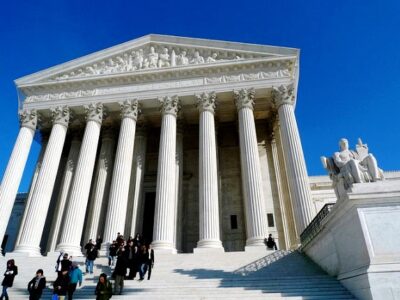
Earlier today, the Supreme Court announced what many supporters and opponents of Arizona SB 1070 long expected: that the Justices will themselves have the final word on the validity of the injunctions entered shortly after the law was enacted last year. Technically, the question before the Justices is simply whether four of the law’s provisions should be temporarily blocked pending resolution of a larger legal challenge. In addition, the Court will not consider claims raised in a separate lawsuit by numerous immigrants’ and civil rights groups. But in the decision it ultimately issues, the Supreme Court may well provide broad guidance about what role, if any, local police may play in enforcing federal immigration law—which could in turn affect legal challenges to copycat laws in other states, such as Alabama. Read More
New Report Challenges Notion that Harsh Enforcement Measures Drive Unauthorized Immigrants Out
Last week, a new report released by the Pew Hispanic Center found that nearly two-thirds of all unauthorized adult immigrants currently living in the U.S. (10.2 million) have been here for at least 10 years and nearly half of them (4.7 million) are parents of minor children. The longevity of their U.S. residency and pattern of parenthood suggest that these unauthorized immigrants are integrated into American society, challenging the notion that ramped-up enforcement measures like Arizona’s SB 1070 and Alabama’s HB 56 are effectively driving unauthorized immigrants back to their countries of origin. Read More

Alabama’s Immigration Law Digs Deeper Hole for State Economy
Although some Alabama lawmakers credit the state’s overall drop in unemployment to their new immigration law (HB 56), the reality is that many industries and sectors in the state are losing workers and jobs. This week, the Birmingham News reported that Alabama’s construction industry is losing jobs faster than nearly any other state—a loss experts say is due in part to HB 56’s draconian provisions. To make matters worse, Alabama’s crackdown on those who look or sound foreign (a Honda employee stopped this week and the arrest of a Mercedes executive last week) is causing many to fear Alabama’s anti-immigrant reputation will detract foreign investors from doing business in the state. In fact, according to the Tuscaloosa News, “the law is becoming the greatest threat to the state’s economy and job creation, overshadowing even the record-setting bankruptcy of Jefferson County.” Read More

How to Talk Turkey on Immigration: Redux
Washington, D.C. area schools participate in the Urban Debate program, which gives middle school children the opportunity to learn the art of debate. My sixth grader signed up right away. She was surprised to learn, however, at her first tournament that many people have no qualms debating either side of an issue, no matter how they personally feel about it. She also discovered that a few kids had no problems saying whatever they had to say to win. She was in tears because another twelve year old insisted that American lives were more valuable than others in a debate over U.S. military involvement abroad. Read More
Thousands Rally for Repeal of Alabama’s Extreme Anti-Immigrant Law
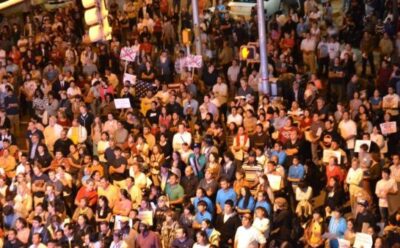
Thousands gathered outside the historic 16th Street Baptist Church in Birmingham, Alabama yesterday to demand the repeal of the state’s harsh anti-immigration law, HB 56. Religious, community and civil rights leaders, as well as a special Congressional delegation, urged state legislators to bring an end to Alabama’s immigration law—a law which continues to slow state businesses, separate families and drive immigrants from the state. The Congressional delegation also held an ad hoc hearing at Birmingham City Hall to hear how the controversial law is effecting state residents, especially the Latino and immigrant communities where, according to Rep. Luis Gutierrez, “the feeling of danger and despair is palpable.” One Congressional member, Rep. Al Green of Texas, commented that the law "deserves to be placed on the trash heap of history." Read More
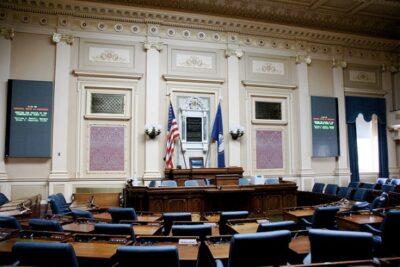
Heads Up, Virginia, Anti-Immigrant Agenda Could Be 2012 Legislative Focal Point
BY CLAIRE GUTHRIE GASTAÑAGA The Virginia General Assembly that convenes in January 2012 will be much changed from the one that it replaces. Effective control of Virginia’s government—a Governor, House of Delegates and Senate— is now in the hands of legislators who have consistently sought to lead Virginia in the direction of states like Arizona and Alabama that boast of how inhospitable they are to undocumented immigrants. For example, one of the Governor's first acts after his election in 2009 was to seek 287g authority for the State Police (a request that is still pending). And this fall's legislative elections resulted in an increase in members of both the House and the Senate who ran on overtly anti-immigrant platforms. Delegate Jackson Miller (R-Manassas), one of the most anti-immigrant legislators, has just been elected as majority whip. Read More
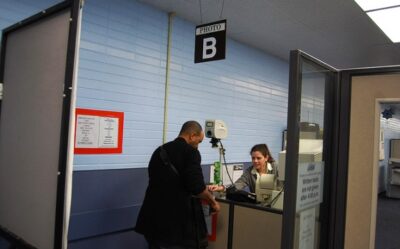
Policing the Enforcers: Criminalizing Alabama Employees Encourages Discrimination
Alabama lawmakers want undocumented immigrants to be so afraid of the consequences of the state’s new anti-immigrant law (HB 56) that they leave the state. However, that’s not the only fear factor built into the law. Under section 6(f), state and local government employees must report violations of HB 56—which includes unlawfully present immigrants even attempting to complete a business transaction with the government—or face criminal penalties. In order to avoid criminal prosecution, government employees are likely to be suspicious of foreign-looking or sounding people. But the new law does not include details or require specialized training for state employees, making discrimination, mistakes and civil rights violations all the more likely. Read More
America's story is an immigrant story.