State and Local

State Lawmakers Push for Reforms to Make College Affordable for Young Immigrants
The movement for in-state tuition for undocumented immigrants got off to a quick start in 2014 when Virginia state Del. Alfonso H. Lopez (D) introduced the Virginia Tuition Equality Act. This is the third time Lopez has attempted to pass the bill, which would permit undocumented residents to pay in- state tuition rates. During the 2013, legislative session, one Virginia House committee approved the measure before it died in another committee. “In 2013, it got further than it has ever gotten,” Lopez told the Richmond Times-Dispatch. “That’s why I am optimistic; I think we got great momentum”: Read More

Top Five Immigration Stories from 2013
From the beginning, it was clear that 2013 was going to be a big year for immigration. The results of the 2012 Presidential Election were widely interpreted as a rebuke to Mitt Romney’s enforcement-only “self-deportation” policy, and President Obama’s huge victory among minority communities was seen as a… Read More
Federal Judge Enjoins Key Provisions of South Carolina’s Immigration Law
Washington, D.C.—The American Immigration Council welcomes today’s ruling from U.S. District Judge Richard M. Gergel, which temporarily enjoined three provisions of South Carolina Act 69 and found a fourth provision likely to be overturned in future proceedings. The ruling makes South Carolina the sixth state—after Arizona, Indiana, Georgia, Utah, and… Read More

New Legal Analysis Shows State Compliance with ICE Detainers May Violate the Constitution
Chicago, New York, and San Francisco now prevent local jails from honoring immigration detainers—requests from federal immigration officials for state and local jails to hold a person so that Immigration and Customs Enforcement (ICE) agents can investigate the person’s immigration status—unless an arrestee has been charged with or convicted of certain criminal offenses. And California’s Trust Act, which does virtually the same thing, will go into effect early next year. Yet, while these states have limited who can be subject to an immigration detainer, there are legal questions surrounding this selective enforcement that call into question whether detainers are legal at all. Read More

Local Officials Improve Immigration Enforcement Policies as Congress Fails to Act
The county council in King County, Washington, decided this week that local law enforcement officials will stop honoring federal immigration agents’ requests to detain immigrants who are arrested for low-level crimes. They voted 5-4 for the new policy on Monday, and supporters hope the change “will build trust between local police and immigrants who don’t report crimes for fear they or a family member will be deported,” according to the Seattle Times. Read More
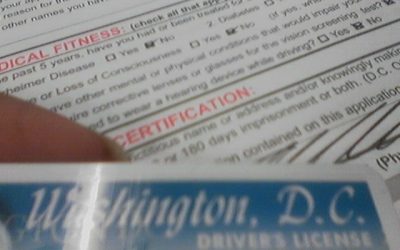
D.C. Follows 11 Other States Allowing Undocumented Immigrants to Drive Legally
As House leaders delay on passing immigration reform that would help millions of immigrants already in the U.S., Washington, D.C., officials are taking steps to improve the lives of undocumented immigrants who call the city home. Last week the D.C. Council passed a bill, written by Council member Mary Cheh, which allows undocumented residents to apply for Driver’s Licenses. D.C. Mayor Vincent Gray signed the bill yesterday. The new policy, which goes into effect May 1, sets up a system where undocumented immigrants will receive licenses that are the same but for their being marked "not valid for official federal purposes." Driver’s licenses for legal residents and citizens will not change. Read More

How Immigrants on a Pathway to Citizenship can Revitalize Rust Belt Cities
Like Rust Belt cities such as Baltimore and Detroit, rural towns across America have experienced population declines in recent decades. Some places, however, are an exception to that trend thanks in part to the arrival of immigrants. For example, while other Iowa towns experienced population decline over the past several decades, West Liberty’s population grew because of immigration. As Steve Hanson, superintendent of West Liberty Community School District, notes, “in the last 20-30 years we would have had a population decline if we hadn’t had immigrants come in [for] jobs in the food manufacturing business. They provide a source of labor that wouldn’t have been there.” And West Liberty’s Mayor, Chad Thomas, said immigration has “kept a lot of storefronts and businesses open that probably otherwise would have closed.” Read More

Alabama’s HB 56 Anti-Immigrant Law Takes Final Gasps
Immigration advocates who have been fighting against Alabama’s HB 56, the punitive immigration measure often called the “show me your papers” law, declared victory after the state agreed not to pursue key provisions of the 2011 legislation. The agreement is part of a settlement of long-running lawsuits filed by the U.S. Department of Justice (DOJ) and a coalition of civil rights groups against HB 56. Alabama. The Supreme Court earlier this year refused to hear the state’s appeal of a previous federal court’s ruling that gutted the law. Read More
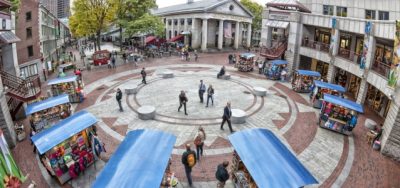
It’s Immigrant Entrepreneurship Month in Massachusetts!
Massachusetts is no stranger to the many benefits immigrant entrepreneurs bring to communities. From family owned restaurants and shops along small town main streets, to large Fortune 500 companies, immigrant-owned businesses make sizeable contributions to Massachusetts. And as a growing number of places around the country make efforts to attract and welcome immigrants, Massachusetts continues to expand the state’s efforts. October 15 marked the start of the third annual Massachusetts Immigrant Entrepreneurship Month, which will officially run through November 15. State groups—including the Immigrant Learning Center (ILC), the New Americans Integration Institute at the Massachusetts Immigrant and Advocacy Coalition (MIRA), and the state’s Office for Refugees and Immigrants—are leading the initiative, which recognizes the contributions of immigrant business owners and innovators to Massachusetts’ economic development. Read More

From Coast to Coast, Immigrants Drive Local Economies
Immigrant entrepreneurship has transformed Atlanta’s northeastern suburbs along and near Buford Highway into “International Village” – an area filled with immigrant restaurants, markets, specialty stores, and other businesses. Through ventures such as Chinatown Square, Asian Square Mall, and Plaza Fiesta immigrants have “economically and socially revived an area that faced economic stagnation and population decline.” As one researcher noted, “the five-mile stretch of highway running through Chamblee, Doraville, and Norcross constitutes the greatest concentration of ethnic-owned businesses in the southeastern U.S.” Read More
America's story is an immigrant story.