Immigration Enforcement
Featured Content

Restoring Credibility and Humanity
- Interior Enforcement
- May 12, 2026
A new framework for U.S. immigration enforcement that prioritizes public safety, fairness, accountability, and humane, proportionate consequences. Read More
Read More
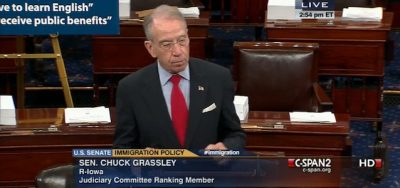
Border Security Amendments To Delay Legalization Harm Immigration Bill Efforts
During The first full day of debate after the Senate approved a motion to proceed to S. 744, the Border Security, Economic Opportunity, and Immigration Modernization Act, several Senators sought to make the debate all about border security. In the process, they proposed amendments that tie border security increases to the start of the legalization program in ways that make legalization a virtually unattainable goal. One of these amendments is from Sen. John Cornyn (R-TX). His RESULTS amendment ties the fate of unauthorized immigrants who are already living in the United States, and who have applied for legalization, to the success of highly stringent border-enforcement measures in deterring future unauthorized immigration. However, applicants for legalization have no control over the ability of the federal government to maintain the integrity of U.S. borders, so there is no logical reason to link their legal status to border-enforcement metrics. The RESULTS amendment also mistakenly views immigration reform as a two-step process: enforcement, followed by legalization. However, the various components of immigration reform must be implemented simultaneously to maximize their effectiveness. The amendment breaks apart what should by a single, integrated revamping of U.S. immigration policy. Finally, the RESULTS amendment contains no mechanism for judging the feasibility or cost-effectiveness of the border-security measures and metrics that it would mandate. Read More

States Work To Improve Immigration Policies As Senate Immigration Bill Debate Begins
State legislatures are mostly winding down their 2013 legislative sessions after several states made huge strides on immigration reform. While Congress continues to debate how to overhaul the nation’s immigration system, several states have moved to make qualified undocumented immigrants eligible for in-state tuition rates and to allow undocumented immigrants to drive legally. These and other reforms at the state and local level are helpful changes to complement the national debate. Read More

New Report Reveals Scale of Deaths Along U.S.-Mexico Border
Nothing illustrates the high stakes of the immigration reform debate now taking place in the Senate quite as powerfully as the growing body count along the U.S.-Mexico border. Despite the U.S. government’s decades-long effort to stop unauthorized immigration through an “enforcement first” strategy, unauthorized migrants continue to cross the border—and scores die before completing the journey. In fact, the Tucson sector alone witnessed 2,238 migrant deaths between Fiscal Year (FY) 1990 and FY 2012. That is one of the central findings of a new report from the Binational Migration Institute at the University of Arizona, entitled A Continued Humanitarian Crisis at the Border. The report examines data from the Pima County Office of the Medical Examiner to shed light on trends in border fatalities over time, as well as the demographic characteristics of those who died. Read More

Congressional Opponents of Immigration Reform Demand Endless Increases in Border Security
Not surprisingly, the issue of border security is emerging as the biggest stumbling block to passage of the immigration reform bill now moving through the Senate. Conservative opponents of reform are refusing to support any measure that would grant legal status to unauthorized immigrants already in the country without first achieving that most nebulous of goals: “securing the border.” Yet the calls of these critics for “enforcement first” conveniently overlook the fact that the United States has been pursuing an “enforcement first” approach to border security for more than 20 years—and it has yet to work. Read More

Subtle but Dramatic Progress on Immigration Reform
Yesterday was day 3 of the Senate Judiciary Committee’s mark-up on S. 744, the Gang of Eight’s immigration bill. While it wasn’t as exciting as the first two days—no dramatic speeches or vocal disagreement—several important votes were taken to modify the mandatory E-verify program, adding and subtracting protections, safeguards, and reporting requirements. This lack of drama was a good thing, however, because there was far less posturing and far more legislating going on. Read More

Senate Committee Debates W Visas and E-Verify on Day Three of Immigration Bill Mark-up
For the third day of the Senate Judiciary Committee’s mark-up of the “Border Security, Economic Opportunity, and Immigration Modernization Act,” committee members continued to work through Title Four (specifically regarding the W visa program) and began debating Title Three (about interior enforcement). The senators considered 21 amendments and passed 11 of them with mostly bipartisan support. Four amendments were withdrawn. The adopted changes included Sen. Chuck Grassley’s (R-IA) amendment to protect children’s social security numbers from identity theft and Sen. Sheldon Whitehouse’s (D-RI) proposal to help immigrant entrepreneurs. And they approved multiple changes to the E-Verify language in the Senate immigration bill to both strengthen the program and help small businesses comply with the new regulations. Read More
Bringing Fairness to the Immigration Justice System
Washington D.C. – Thursday, the Senate Judiciary Committee continues mark-up of S. 744, the Border Security, Economic Opportunity, and Immigration Modernization Act. The Committee will complete work on Title Four and then begin to take up amendments related to Title Three, which addresses interior enforcement programs like E-Verify, as well… Read More

What Do You Think About Immigration Reform?
As the Senate continues to shepherd a comprehensive immigration reform bill through the legislative process (day two of mark-up in the Senate Judiciary Committee begins tomorrow), it becomes clear how many issues are at stake in reform and how interconnected they are. It’s also overwhelming at times. That’s why the American Immigration Council is attempting to divide the issues into smaller discussions on our wiki, ThinkImmigration.org. Read More
Lost in the Shadow of the Fence
The Important Economic Relationship of Mexico and the United States Mexico is the United States’ third largest trading partner, after Canada and China, in terms of total trade in goods, while the U.S. is Mexico’s largest trading partner. As such, the economic ties of the U.S. and Mexico are significantly important to the economy and society in both countries. Further, the U.S.-Mexico border is not a static line drawn on a map, but a dynamic and ever-evolving place along which substantial daily interaction takes place. Yet the resounding refrain we repeatedly hear from some members of Congress is that building a 1,969-mile fence to separate us from one of our largest economic partners, and the eleventh largest economy in the world, is a key component to solving the issues presented by an outdated immigration system and a requirement that must be completed before moving forward with proposed immigration reforms. To be clear, there is a need for secure borders, but there is also a need for further streamlining and efficiently facilitating the daily cross-border flows of people, goods, and services important to the bi-national economic relationship of the United States and Mexico – an economic relationship the following facts highlight. The United States and Mexico have an enormous trading partnership Read More
The Fallacy of “Enforcement First”
Since the last major legalization program for unauthorized immigrants in 1986, the federal government has spent an estimated $186.8 billion on immigration enforcement. Yet during that time, the unauthorized population has tripled in size to 11 million. Read More
America's story is an immigrant story.