Immigration Enforcement
Featured Content

Restoring Credibility and Humanity
- Interior Enforcement
- May 12, 2026
A new framework for U.S. immigration enforcement that prioritizes public safety, fairness, accountability, and humane, proportionate consequences. Read More
Read More

New York’s Highest Court Says that Noncitizens Must Be Warned of Deportation Risk Before Pleading Guilty
The highest court in New York ruled on Tuesday that due process compels state court judges to warn defendants in criminal proceedings who are not U.S. citizens that pleading guilty to a felony may result in their deportation. The court noted that “deportation is a plea consequence of such tremendous importance, grave impact and frequent occurrence that a defendant is entitled to notice that it may ensue…Due process compels a trial court to apprise a defendant that, if the defendant is not an American citizen, he or she may be deported as a consequence of a guilty plea to a felony.” Read More

Detention Bed Mandate is Just One Example of How Immigration is Being Criminalized
For more than a century, study after study has confirmed two simple yet powerful truths about the relationship between immigration and crime: immigrants are less likely to commit serious crimes or be behind bars than the native-born, and high rates of immigration are not associated with higher rates of either violent or property crime. Unfortunately, immigration policy is frequently shaped more by fear and stereotype than by empirical evidence, which is why immigrants are so often treated like dangerous criminals by the U.S. immigration system. Whole new classes of “felonies” are created which apply only to immigrants, deportation is viewed as a just punishment for even minor crimes, and policies to end unauthorized immigration become more and more punitive rather than more rational and practical. In short, immigration itself is being criminalized. Read More
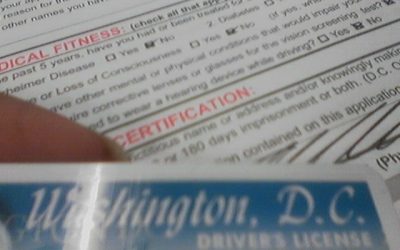
D.C. Follows 11 Other States Allowing Undocumented Immigrants to Drive Legally
As House leaders delay on passing immigration reform that would help millions of immigrants already in the U.S., Washington, D.C., officials are taking steps to improve the lives of undocumented immigrants who call the city home. Last week the D.C. Council passed a bill, written by Council member Mary Cheh, which allows undocumented residents to apply for Driver’s Licenses. D.C. Mayor Vincent Gray signed the bill yesterday. The new policy, which goes into effect May 1, sets up a system where undocumented immigrants will receive licenses that are the same but for their being marked "not valid for official federal purposes." Driver’s licenses for legal residents and citizens will not change. Read More

Understanding DACA’s Education Requirement
When the Deferred Action for Childhood Arrivals (DACA) program was first announced, it was clear that individuals would have to meet some sort of education requirement in order to obtain the program’s many benefits, including a two-year renewable reprieve from deportation, work authorization, a social security number, and—in nearly every state—the chance to apply for a driver’s license. What was unknown was how the immigration agency would address the question of individuals who were unable to finish high school. Would they be categorically excluded from DACA? Or would the agency provide an incentive for those folks to re-enroll in school? Fortunately, the government chose the latter. In doing so, it gave an estimated 400,000 people who met the DACA guidelines but didn’t finish high school a shot at getting DACA. Many of these individuals are thought to be among the 1.2 million who haven’t yet taken advantage of the program. Read More

Report Exposes Treatment of Asylum Seekers in U.S. Detention
Asylum seekers—often scarred by physical and mental trauma—seek safety and refuge from genocide, religious persecution, organized violence, or other life-threatening conditions. They embark on dangerous and lengthy journeys in hope of being welcomed at our borders. Instead, upon arrival, asylum seekers routinely are arrested, shackled, and sent to detention facilities where they may be subjected to dehumanizing and degrading treatment. A recent report by the Center for Victims of Torture (CVT) and the Torture Abolition and Survivor Support Coalition International (TASSC), Tortured and Detained: Survivor Stories of US Immigration Detention, chronicles the stories of asylum seekers and details the physical and psychological agonies of detention. Read More

How Immigrants on a Pathway to Citizenship can Revitalize Rust Belt Cities
Like Rust Belt cities such as Baltimore and Detroit, rural towns across America have experienced population declines in recent decades. Some places, however, are an exception to that trend thanks in part to the arrival of immigrants. For example, while other Iowa towns experienced population decline over the past several decades, West Liberty’s population grew because of immigration. As Steve Hanson, superintendent of West Liberty Community School District, notes, “in the last 20-30 years we would have had a population decline if we hadn’t had immigrants come in [for] jobs in the food manufacturing business. They provide a source of labor that wouldn’t have been there.” And West Liberty’s Mayor, Chad Thomas, said immigration has “kept a lot of storefronts and businesses open that probably otherwise would have closed.” Read More

Alabama’s HB 56 Anti-Immigrant Law Takes Final Gasps
Immigration advocates who have been fighting against Alabama’s HB 56, the punitive immigration measure often called the “show me your papers” law, declared victory after the state agreed not to pursue key provisions of the 2011 legislation. The agreement is part of a settlement of long-running lawsuits filed by the U.S. Department of Justice (DOJ) and a coalition of civil rights groups against HB 56. Alabama. The Supreme Court earlier this year refused to hear the state’s appeal of a previous federal court’s ruling that gutted the law. Read More

ICE Will Not Use Health Care Application Information for Immigration Enforcement Purposes
Last Friday U.S. Immigration and Customs Enforcement (ICE) issued a clarification stressing that information provided by those applying for insurance under the Affordable Care Act will not trigger immigration enforcement. Undocumented immigrants are not eligible for health care under the Affordable Care Act (ACA); however, this clarification should bring peace of mind to mixed-status families. Eligible members of those families will now be able to seek coverage under the ACA without fear of placing some family member at risk of deportation. Read More

It’s Immigrant Entrepreneurship Month in Massachusetts!
Massachusetts is no stranger to the many benefits immigrant entrepreneurs bring to communities. From family owned restaurants and shops along small town main streets, to large Fortune 500 companies, immigrant-owned businesses make sizeable contributions to Massachusetts. And as a growing number of places around the country make efforts to attract and welcome immigrants, Massachusetts continues to expand the state’s efforts. October 15 marked the start of the third annual Massachusetts Immigrant Entrepreneurship Month, which will officially run through November 15. State groups—including the Immigrant Learning Center (ILC), the New Americans Integration Institute at the Massachusetts Immigrant and Advocacy Coalition (MIRA), and the state’s Office for Refugees and Immigrants—are leading the initiative, which recognizes the contributions of immigrant business owners and innovators to Massachusetts’ economic development. Read More

Three Ways Congressional Inaction on Immigration is Hurting Children
Last week, First Focus released a new report, “The Cost of Inaction: Why Children Can’t Wait for Immigration Reform.” The report highlights the particularly vulnerable position children are placed in within our broken immigration system. Read More
America's story is an immigrant story.