Immigration Courts
Immigration courts play a crucial role in ensuring that immigration laws are applied fairly and consistently, providing due process to those facing removal. Learn more about issues facing the courts today and explore the actions we're taking to ensure the rights of immigrants are upheld and legal integrity is maintained.

The Punishment Should Fit the Crime for Immigrants, Too
The punishment should fit the crime. That maxim is as old as law itself, dating at least as far back as the Old Testament and Hammurabi’s Code. It’s firmly rooted in our Constitution’s Due Process Clause and the Eighth Amendment’s prohibition against excessive fines and cruel and unusual punishment. That principle—referred to as proportionality—appears in both our criminal and civil law. It forbids, for example, the imposition of a life sentence for passing a bad check. It means that the state cannot sentence juveniles for non-homicide crimes to life without parole. And it disallows extreme punitive damages awards. So what does proportionality have to say when the government tries to deport a lawful permanent resident who, a decade ago, shoplifted $200 worth of merchandise from a department store? Right now, astonishingly, nothing: immigration judges do not even consider whether a person’s banishment from the United States is a disproportionate punishment for a crime before ordering the person’s removal. But advocates are working to change this. Read More

New York’s Highest Court Says that Noncitizens Must Be Warned of Deportation Risk Before Pleading Guilty
The highest court in New York ruled on Tuesday that due process compels state court judges to warn defendants in criminal proceedings who are not U.S. citizens that pleading guilty to a felony may result in their deportation. The court noted that “deportation is a plea consequence of such tremendous importance, grave impact and frequent occurrence that a defendant is entitled to notice that it may ensue…Due process compels a trial court to apprise a defendant that, if the defendant is not an American citizen, he or she may be deported as a consequence of a guilty plea to a felony.” Read More
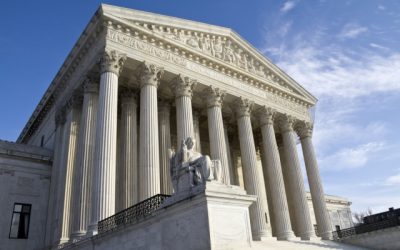
Supreme Court to Interpret Child Status Protection Act
Last week, several groups, including the American Immigration Council, submitted an amicus brief to the Supreme Court describing the heartrending stories of young people who have been separated from their families due to government processing delays and the shortage of visas. The case, Mayorkas v. Cuellar de Osorio, concerns the Child Status Protection Act (CSPA), which provides relief for the longstanding problem of children included on a parent’s visa application who “age out” – that is, turn 21 and lose their status as a “child”– before a visa becomes available. Upon turning 21, these young adults are unable to immigrate with their parents and must begin the visa application process anew, starting at the back of a new visa line. They end up being separated from family for years, even decades. The stories in the amicus brief make the case for how important it is that the law provide a remedy broadly available to young adults who age-out. Read More

New York City Pilots Free Legal Representation in Immigration Court
In criminal courts throughout the United States, the government provides defendants who cannot afford an attorney with a free public defender. In immigration courts, which are not part of the criminal court system, immigrants who are unable to hire a private attorney and cannot find a free legal service provider are forced to face off on their own against trained government attorneys. Individuals facing deportation had no legal representation in about 44% of the cases the immigration courts ruled on in 2012 – more than 126,000 cases in one year. But a new program in a New York City immigration court could change this system – for a limited number of indigent, detained immigrants, a pilot “public defender” program is providing free representation in immigration court. Read More

Alabama’s HB 56 Anti-Immigrant Law Takes Final Gasps
Immigration advocates who have been fighting against Alabama’s HB 56, the punitive immigration measure often called the “show me your papers” law, declared victory after the state agreed not to pursue key provisions of the 2011 legislation. The agreement is part of a settlement of long-running lawsuits filed by the U.S. Department of Justice (DOJ) and a coalition of civil rights groups against HB 56. Alabama. The Supreme Court earlier this year refused to hear the state’s appeal of a previous federal court’s ruling that gutted the law. Read More

Holding the Detention System Accountable for Alleged Post 9/11 Abuses
A dozen years ago, in the days after 9/11, the Metropolitan Detention Center in Brooklyn served as the site of unimaginable horror: twenty-three hour cell confinement; sleep and food deprivation; widespread physical abuse; endless humiliation through sexual harassment and constant strip-searches; and relentless taunting and insults. The subjects of these atrocities were not enemy combatants or even convicted criminals; they were simply a group of noncitizens suspected of minor, non-criminal, immigration offenses. Their primary “offense”: the misfortune of being or appearing to be Muslim or Arab in a post 9/11 world. Read More
First Circuit Holds That Immigrants Can Pursue Cases From Outside the United States
Washington, D.C. – Last week, the First Circuit Court of Appeals held that individuals who have been deported must have the opportunity to pursue motions to reopen their cases from outside the United States. A motion to reopen is an important procedural safeguard that helps ensure noncitizens are afforded… Read More

Why is the Obama Administration Arguing that Undocumented Immigrants Should Not Practice Law?
Today, the California Supreme Court will hear oral argument in a case that asks whether an undocumented immigrant may receive a license to practice law in California. The Committee of Bar Examiners – the entity charged with deciding who qualifies for a law license in California – supports admitting Sergio Garcia to the bar. So do some 48 organizations and 53 individuals who signed on to “friend of the court” briefs submitted to the California Supreme Court. Of the three opposing arguments filed, two came from individuals but the other came from an unexpected source: the Department of Justice. Not only did DOJ voluntarily weigh in with a hypertechnical argument that is tone deaf to the current debate over undocumented status in this country, but it took the same position in a Florida case involving a lawfully present and work-authorized recipient of Deferred Action for Childhood Arrivals (DACA), Jose Godinez-Samperio. Even if there was a good legal argument for opposing admission of an unauthorized immigrant to the bar, the rationale makes little sense in the context of an individual who is a DACA beneficiary. In both cases, however, the result DOJ seeks would lead to less socio-economic inclusion of the very immigrants the Obama administration seeks to protect. Read More

Courts Continue to Reject Arizona Style Laws, Even as House Embraces SAFE Act
Last year, in Arizona v. United States, the Supreme Court reaffirmed that the federal government, rather than the states, has both the responsibility and the authority to enforce immigration law. Leaving immigration enforcement to the whims of individual state legislatures and law enforcement officers was, according to the Court, likely to undermine the federal framework and interfere with U.S. foreign relations. Despite this resounding rejection of state immigration enforcement, or perhaps because of it, the House Immigration Subcommittee passed the Strengthen and Fortify Enforcement (SAFE) Act (H.R. 2278), which attempts to make an end run around the Supreme Court’s decision by empowering states and localities to enforce immigration law as they see fit. At the very time the country is pushing for a comprehensive federal overhaul of the immigration system, the presence of the SAFE Act threatens to cripple the success of those efforts. Read More
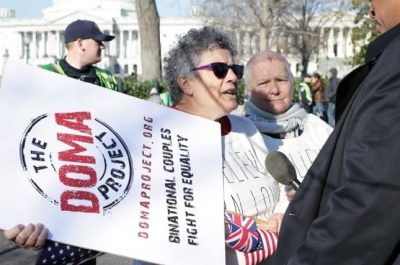
USCIS Approves First Green Cards for Same Sex Couples
On June 26, the Supreme Court issued its decision in the case of United States v. Windsor, in which it struck down section 3 of the Defense of Marriage Act (DOMA), which defined marriage as between a man and a woman for all federal laws. This law meant that the immigration agencies would not recognize lawful, same-sex marriages for any immigration purpose. Since the Court’s decision, the Obama administration has moved rapidly to allow U.S. citizens to petition for immigration benefits for their spouses, providing hope to an estimated 28,500 bi-national same-sex couples in the United States who might otherwise be separated by our immigration laws. Read More
America's story is an immigrant story.