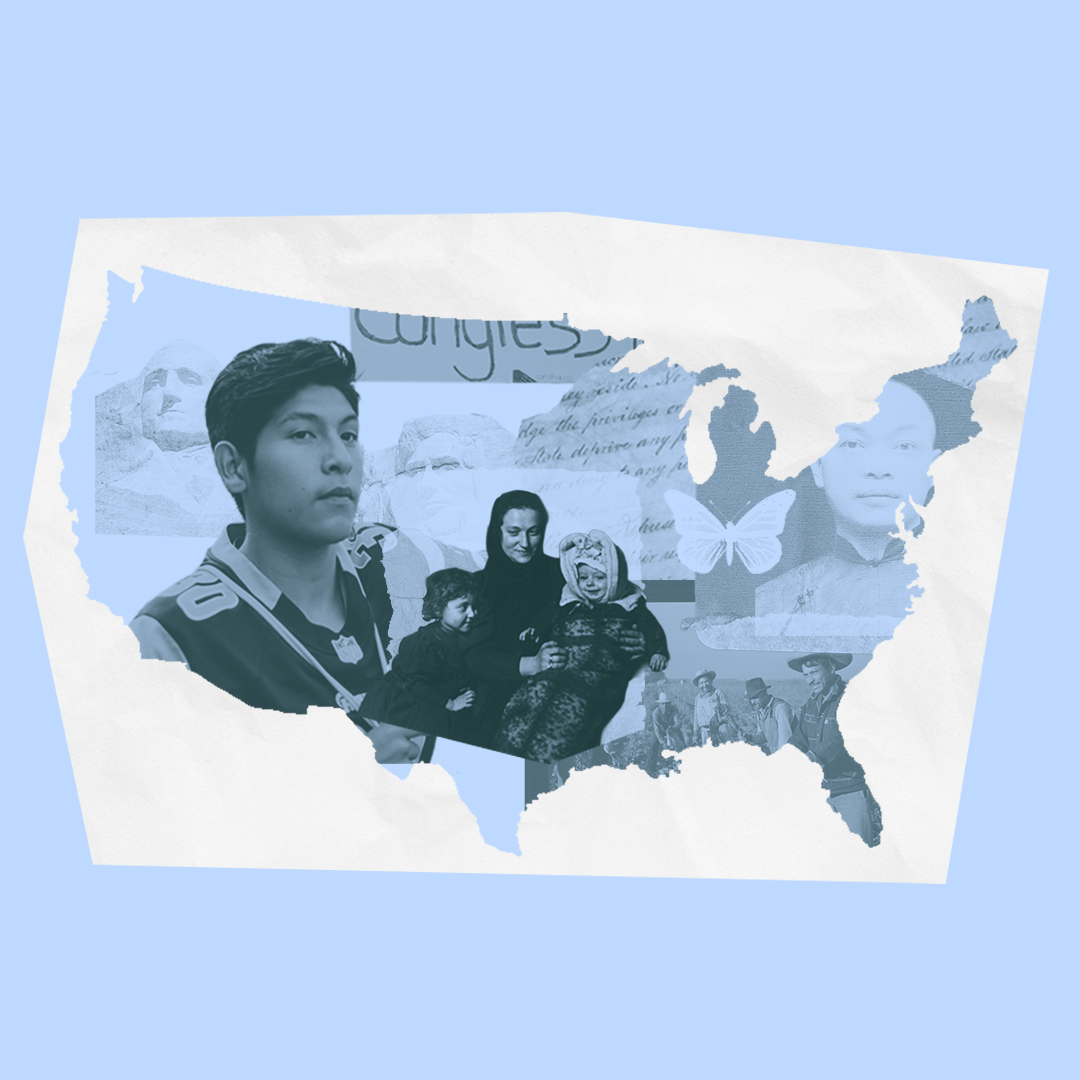
Immigration 101
Immigration in the United States is complex and ever-evolving. Start here to understand the fundamental aspects of immigration policy, its history, and its impact on both individuals and the country at large. Learn commonly used terms about immigration law and how the U.S. immigration system is designed. Explore layered topics like how and whether immigrants can become citizens, as well as what individual protections look like under the law.
How the United States Immigration System Works
- How the Immigration System Works
- June 24, 2024
U.S. immigration law is very complex, and there is much confusion as to how it works. This fact sheet provides basic information…
Read More
Birthright Citizenship in the United States
- Birthright Citizenship
- September 8, 2026
This fact sheet explains birthright citizenship, the Fourteenth Amendment, and its interpretations. Who is…
Read More
Asylum in the United States
- Asylum
- August 27, 2014
Asylum seekers must navigate a difficult and complex process that can involve multiple government…
Read More

A Snapshot of Immigrant Women in the United States
There are more than 23 million female immigrants in the United States, and they are a formidable presence in U.S. society and the economy. Read More

New Study Shows Deportations Don’t Reduce Crime
In 2008, the Department of Homeland Security (DHS) introduced “Secure Communities,” which for the first time allowed DHS to check the fingerprints of any individual arrested by a local jurisdiction. Secure Communities piggybacked on prior DHS initiatives to use local police as “force multipliers” including the Criminal… Read More
Asylum in the United States
Asylum seekers must navigate a difficult and complex process that can involve multiple government agencies. This fact sheet provides an overview of the asylum system in the United States, including how asylum is defined, eligibility requirements, and the application process. Read More

Unauthorized Immigrants Today
Unauthorized immigrants include adults and children, mothers and fathers, homeowners and people of faith, most of whom are invested in their communities. Read More

Anti-Immigrant Groups Attempt to Incite Fear Over Administrative Action
As news trickles out of the White House that President Obama is planning to announce a program like the Deferred Action for Childhood Arrivals (DACA) initiative for other worthy populations, the anti-immigrant community is preparing their fire. An early shot comes via a post in The Hill where… Read More

Immigrants Work in More Arduous Jobs than U.S. Natives, New Study Shows
One of the reasons often cited to explain the importance of immigrant workers to the U.S. economy is the presumption that immigrants perform jobs that U.S. natives are unwilling to take. Numerous studies show that immigrant workers complement the native-born in various ways. But in spite of the… Read More
Nativist Group Falsely Blames Immigrants for Unemployment in Tennessee
From the narrow, nativist perspective of groups such as the Center for Immigration Studies (CIS), every immigrant worker who enters the U.S. economy is stealing a job from a native-born worker. In this view of the world, employment is a zero-sum game in which immigrants and the native-born… Read More

Texas Governor Invokes Nonsensical Statistics on Immigrant Crime in His State
After more than a century’s worth of studies and reports, you’d think that politicians would have gotten the message: not only are the vast majority of immigrants not criminals, but immigrants are less likely to be criminals than native-born Americans. This is true for both unauthorized immigrants and… Read More

Restrictionists Spread Unfounded Rumors About Migrant Children and Disease
More often than not, anti-immigrant groups use their hateful rhetoric to blame immigrants for all of our nation’s ills. On a regular basis, restrictionist groups release reports that portray immigrants as criminals, terrorists, a threat to American workers, an economic and fiscal burden, or an obstacle to national unity,… Read More

The Facts About the Humanitarian Challenge at the Border
What is our obligation as a country to the unaccompanied child migrants at our border? This seemingly straightforward question is frequently lost among the political debate surrounding the humanitarian challenge at our southern border. In a recent Senate homeland security committee hearing, several senators focused only on how to… Read More
America's story is an immigrant story.