High Skilled Labor
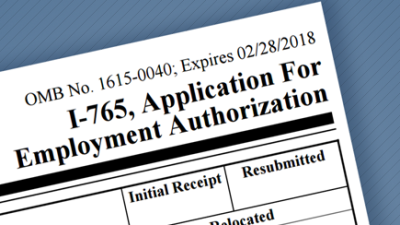
Employment Authorization Documents Adjudication Delays
Faced with increasing reports from immigration lawyers of Employment Authorization Documents adjudication delays, the Council and several partners filed this lawsuit against USCIS and DHS. Read More
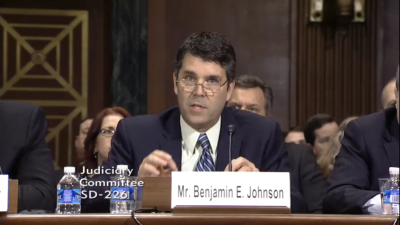
The Power and Potential of High Skilled Immigration
Note: This article features the oral testimony of Benjamin Johnson, Executive Director of the American Immigration Council before the United States Senate Committee on the Judiciary. Read his full written testimony here. Mr. Chairman and members of the committee, thank you for the opportunity to appear before you today… Read More

Six Reasons Why Sen. Jeff Sessions’ ‘Immigration Handbook’ is a Work of Fiction
The chairman of the Senate Immigration Subcommittee, Jeff Sessions (R-AL), wasted no time in advertising his antipathy towards immigrants. Shortly after assuming his post, Sessions released an “Immigration Handbook for the New Republican Majority” that, in only 23 pages, managed to distill just about every fact-free sound bite ever conceived… Read More
Visa Programs for High-Skilled Workers
Valorem, an IT consulting company, petitioned to employ a software developer for three years in H-1B status as part of a project development team at its office. Initially, USCIS denied the petition, but later – after Valorem, represented by AILA member Susan Bond, filed suit – approved it for one year. Read More

High-Skilled Immigration Boosts Native-Born Wages in Cities
Despite the soaring demand there are only 85,000 H-1B visas available each year for high-skilled workers. And as a new report explains, these foreign workers who often work in STEM (science, technology, engineering, and mathematics) fields are helping to boost the wages of native born workers without taking… Read More

Changes Could Help Spouses of H-1B Visa Holders Work in U.S.
The spouses of some H-1B visa holders could receive work authorization in the U.S., according to a proposed rule change the Department of Homeland Security announced Tuesday. This change, as well as a proposal that would remove obstacles to staying in the U.S. for specific high-skilled workers,… Read More

Broken H-1B Visa Program is Costing American Jobs
Compete America, an association of high-tech companies advocating for reform of immigration policies affecting higher-skilled workers, launched a job loss calculator today estimating the numbers of American jobs lost due to the lack of H-1B visas, the primary work visa for higher-skilled… Read More
Health Worker Shortages & the Potential of Immigration Policy
Foreign-born and foreign-trained professionals play an important role in the delivery of health care in the United States. This report examines the important role of immigrant doctors and nurses – many of whom have received their training abroad – in the U.S. health industry, using new Census Bureau data as well as information from numerous interviews with health industry experts. Read More

Immigrants are Key Driver of U.S. Talent and Economic Competitiveness
U.S. workers in science, technology, engineering, and mathematics (STEM) fields have been important contributors to American innovation, job creation, rising incomes, and global economic competitiveness throughout the years. And not surprisingly, immigrants have played a critical role in American innovation through STEM fields and all parts of the U.S. economy. A new report by Gordon Hanson (University of California, San Diego) and Matthew Slaughter (Dartmouth) describes these important relationships between talent, economic competitiveness, and immigration in the United States. In their paper, the authors present data in support of three critical points: Read More
Fueling the Recovery
How High-Skilled Immigrants Create Jobs and Help Build the U.S. Economy With the U.S. economy still recovering, it may seem counterintuitive to believe that any industry would benefit from having more workers. But that is precisely the case when it comes to those industries which depend upon highly skilled workers. The United States has long faced a dilemma in this respect: the U.S. economy is, in general, absorbing more high-skilled professionals than the U.S. educational system produces or that are available in our workforce. That is one reason so many highly skilled workers in the United States are immigrants. For instance, in “STEM” occupations (science, technology, engineering, and mathematics), the foreign-born account for 26.1 percent of workers with PhDs and 17.7 percent of those with master’s degrees. However, arbitrary limits imposed by the U.S. immigration system, particularly the inadequate supply of green cards and H-1B visas, have restricted the ability of the U.S. to compete in the global battle for talent and ideas. Given that highly skilled professionals tend to create jobs through their innovative work, such limits are economically self-defeating. High-skilled immigrant workers create new jobs. Read More
America's story is an immigrant story.