Entrepreneurship
Are immigrants more likely to start businesses?
Yes. Immigrants are more likely to become entrepreneurs than U.S.-born Americans. Immigrants play an outsized role in business creation and are a crucial part of the U.S. economy.Today, immigrants make up 23.6% of all entrepreneurs nationwide, even though they account for just 14.3% of the U.S. population.
Immigrant entrepreneurs start businesses ranging from neighborhood small shops to some of the largest and most successful companies in the country, including a significant portion of Fortune 500 businesses. They create jobs, generate income, and contribute to economic growth in communities across the United States.
What kind of businesses do immigrants start?
Immigrants start businesses across virtually every sector of the U.S. economy. They are particularly prominent in industries including accommodations and food services, construction, professional services, transportation, retail, and healthcare.For example, immigrants make up one-third of entrepreneurs in the accommodations and food services industry, as well as 26.6% of entrepreneurs in construction.
Immigrant entrepreneurs also start and build companies that grow far beyond the small-business stage. Some of America’s best-known corporations — such as Amazon, Apple, NVIDIA, and Levi Strauss & Co. — were founded by immigrants or their children.
How many people do immigrant-owned businesses employ?
Immigrant-owned businesses provide millions of jobs for American workers. The latest data shows the significant role immigrant-owned and immigrant-founded businesses play in job creation.The impact is especially visible among the country’s biggest and most valuable companies. In the 2025 Fortune 500, a total of 231 companies — nearly half of all Fortune 500 companies — were founded by immigrants or children of immigrants.
These companies include businesses founded directly by immigrants as well as companies founded by the children of immigrants. Of the 231 New American Fortune 500 companies in 2025, 109 were founded by immigrants and 122 were founded by children of immigrants.
Do immigrants create jobs?
Yes. Immigrant entrepreneurs are job creators. New businesses are a major source of job growth in the United States, and immigrants play a particularly important role in business creation.Our research shows that immigrant-founded businesses often grow into major employers and economic engines. Nearly half of the Fortune 500 companies were founded by immigrants or their children. Collectively, these companies employed more than 15.4 million people worldwide and generated $8.6 trillion in revenue in fiscal year 2024.
Immigrant entrepreneurship benefits more than the entrepreneurs themselves: immigrant-founded and immigrant-owned businesses create opportunities for workers, support local economies, and contribute to innovation and economic growth. They have been especially helpful as baby boomers retire, fueling growth in sectors that would have otherwise seen major declines.
How do immigrants contribute to America’s biggest companies?
Immigrants and their children have founded some of America's most influential companies — and their presence among the nation's largest businesses continues to grow.In 2025, 46.2% of Fortune 500 companies were founded by immigrants or their children, the highest share recorded by the Council since we began tracking immigrant-founded Fortune 500 companies in 2011.
Among the 14 companies appearing on the Fortune 500 for the first time in 2025, a total of 10 were founded by immigrants or their children. This included companies rising in the ranks of the Fortune 500, like Ace Hardware and Sirius XM Holdings.
Immigrant-founded and immigrant-descended companies are particularly prominent in major industries. They account for 80% of Fortune 500 companies in professional and other services, 65.6% in manufacturing, and 57.5% in information.
Why are immigrants more likely to become entrepreneurs?
There’s no single reason immigrants have higher rates of entrepreneurship. Starting a business can provide immigrants with an opportunity to use their skills in their new home, pursue economic mobility for themselves and their families, and serve needs in their communities.Immigrants also bring skills, knowledge, experiences, and connections from around the world. Their businesses range from local ventures to companies that operate on a global scale.
It’s worth noting, however, that the United States doesn’t have a dedicated visa specifically for immigrant entrepreneurs, despite relying heavily on their contributions. This gap can make it difficult for promising foreign entrepreneurs to establish and grow businesses in the United States — even when they have the resources and ideas to do so. Coupled with increasingly restrictive U.S. immigration policies, it has become even more difficult to drive international talent to this country.
Supporting immigrant entrepreneurs — and creating streamlined pathways that allow talented entrepreneurs to build and grow businesses in the United States — can help strengthen the U.S. economy, provide jobs to Americans, and build up local communities.
Michigan to Immigrants: You’re Welcome Here
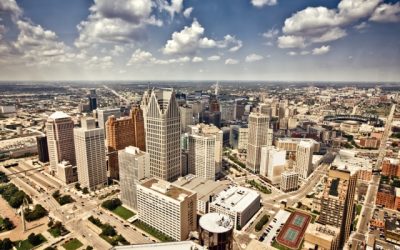
It is clear that Michigan Gov. Rick Snyder understands that immigration can be a potent boost to his state’s economy. It’s also an important component of economic revitalization for a city such as Detroit. Improving the nation’s broken immigration system could have enormous economic benefits for Michigan and states across the country, so Snyder joined former New York City Mayor Michael Bloomberg and former Secretary of Commerce Carlos Gutierrez, in Washington Friday to continue urging lawmakers to overhaul the U.S. immigration system. As Gutierrez explained, “Our laws aren’t serving our economy.” And Bloomberg noted that it is terrible economic policy to turn away foreign born entrepreneurs and innovators while also making it difficult for foreign-born graduates to remain in the country after earning degrees from our colleges and universities. State leaders recognize this as well, but they also know upgrading immigration laws requires congressional action. “We need comprehensive immigration reform. Bottom line,” Snyder said Friday. “To be blunt, we have a dumb system.” Read More

Immigrant Entrepreneurs Driving Growth in America’s Heartland
When Jordi Carbonell, originally from Spain, and his wife Melissa Fernandez opened their Cafe Con Leche coffee shop several years ago in southwest Detroit, the couple founded their business on the idea that the neighborhood needed a central gathering place to create a strong community. Today,… Read More

Immigrant Entrepreneurs are Investors in their Communities
Cedric Francois, a medical researcher from Belgium, came to Louisville, Kentucky, after hearing that researchers there were beginning work on the first hand transplant. Later, he co-founded two pharmaceutical companies. Suhas Kulkarni, an immigrant entrepreneur himself who founded Louisville-based IT firm Omnisys, understands the need for integrating and helping immigrant entrepreneurs get their start and is leading the area’s new Refugees and Immigrants Succeeding in Entrepreneurship (RISE) initiative. This is a collaborative effort among public and private organizations to support immigrants and refugees in the entrepreneurial endeavors in the Louisville area. RISE recognizes that Louisville “has an untapped pool of talent for city-wide economic development in the form of immigrants and refugees” and that “this population has the potential of becoming drivers of economic growth” for the region. Immigrant entrepreneurs are often vital assets in communities. They start businesses, create jobs, and encourage community revitalization efforts. Immigrant businesses can help revive dilapidated or aging retail corridors. And they provide an opportunity for immigrants to reinvest in the area. Take for example Vilmar Zenzen, originally from Brazil, who is opening a new upscale Brazilian steakhouse in downtown Louisville. Zenzen already operates another Brazilian steakhouse in Knoxville, Tennessee. Read More

Licensing Barriers Leave Immigrant Doctors Driving Cabs Instead of Practicing Medicine
Instead of putting foreign medical and other advanced degrees to use in the United States, it is common among immigrant doctors and other professionals to work less skilled jobs, such as a taxi driver or waiter, because the complicated licensing process keeps them from applying their training in the U.S. market. According to a recent Migration Policy Institute (MPI) series of reports on improving credential recognition, the United States is experiencing a “brain waste” by preventing immigrants living in the country from efficiently transferring their foreign credentials. MPI’s most recent report concludes their series by exploring prospects for international recognition of foreign qualifications. Read More

How Immigrants on a Pathway to Citizenship can Revitalize Rust Belt Cities
Like Rust Belt cities such as Baltimore and Detroit, rural towns across America have experienced population declines in recent decades. Some places, however, are an exception to that trend thanks in part to the arrival of immigrants. For example, while other Iowa towns experienced population decline over the past several decades, West Liberty’s population grew because of immigration. As Steve Hanson, superintendent of West Liberty Community School District, notes, “in the last 20-30 years we would have had a population decline if we hadn’t had immigrants come in [for] jobs in the food manufacturing business. They provide a source of labor that wouldn’t have been there.” And West Liberty’s Mayor, Chad Thomas, said immigration has “kept a lot of storefronts and businesses open that probably otherwise would have closed.” Read More

How Would Immigration Reform Help the U.S. Economy?
A growing consensus has emerged among both liberals and conservatives that immigration reform would serve as a stimulus to the U.S. economy. Reform would not only raise the wages—and therefore the tax payments and consumer purchasing power—of newly legalized immigrants, but would ensure future flows of immigrant workers, taxpayers, and consumers that are sufficient to meet the labor-force needs of our rapidly aging society. Conversely, trying to enforce our way out of a dysfunctional immigration system only wastes taxpayer dollars while exacting a high toll in both human lives and missed economic opportunities. Read More

It’s Immigrant Entrepreneurship Month in Massachusetts!
Massachusetts is no stranger to the many benefits immigrant entrepreneurs bring to communities. From family owned restaurants and shops along small town main streets, to large Fortune 500 companies, immigrant-owned businesses make sizeable contributions to Massachusetts. And as a growing number of places around the country make efforts to attract and welcome immigrants, Massachusetts continues to expand the state’s efforts. October 15 marked the start of the third annual Massachusetts Immigrant Entrepreneurship Month, which will officially run through November 15. State groups—including the Immigrant Learning Center (ILC), the New Americans Integration Institute at the Massachusetts Immigrant and Advocacy Coalition (MIRA), and the state’s Office for Refugees and Immigrants—are leading the initiative, which recognizes the contributions of immigrant business owners and innovators to Massachusetts’ economic development. Read More

From Coast to Coast, Immigrants Drive Local Economies
Immigrant entrepreneurship has transformed Atlanta’s northeastern suburbs along and near Buford Highway into “International Village” – an area filled with immigrant restaurants, markets, specialty stores, and other businesses. Through ventures such as Chinatown Square, Asian Square Mall, and Plaza Fiesta immigrants have “economically and socially revived an area that faced economic stagnation and population decline.” As one researcher noted, “the five-mile stretch of highway running through Chamblee, Doraville, and Norcross constitutes the greatest concentration of ethnic-owned businesses in the southeastern U.S.” Read More

White House Honors Local Groups Leading the Way to Welcome Immigrants in Their Cities
Thousands of immigrants every day demonstrate a commitment to being part of America by becoming naturalized citizens every day. These Americans by choice often make huge sacrifices to move to the United State and become part of their community. But it also takes support from the local community to welcome new immigrants who want to establish roots in the area. Groups across the country are stepping up to fill that role and make their cities inviting to immigrants. Read More

Immigration is a Positive Force for Economic Growth in Cities
Posters on metro buses and trains in St. Louis will now welcome you to the city in 17 different languages, one of the many initiatives begun by the St. Louis Mosaic Project to create an atmosphere that welcomes and encourages immigrants to the area. Signs in the public transit system aren’t just designed to look pretty, however, but acknowledge that for many immigrants, particularly those new to the St. Louis region, this is their primary means of going to work or school, shopping, and taking part in all the community has to offer. “The Mosaic Project says a lot about where our region is going,” St. Louis County Executive Charlie Dooley said. “We want to be more diverse and see things from different points of view.” Read More
America's story is an immigrant story.