Employment and Wages

Immigrant Integration is a Two-Way Street
The process by which immigrants integrate into the economic and social fabric of the United States is very much a two-way street. Naturally, immigrants must harbor the desire to climb the socioeconomic ladder of success. But there must be a ladder for them to climb. If the community within which immigrants live and work makes the collective decision to deprive them of opportunities, then their upward mobility is hindered—to the social and economic detriment of the entire community. Yet, if the community actually welcomes newcomers and helps to facilitate their upward mobility, then the community eventually reaps the rewards of having workers and neighbors who are more highly skilled, more integrated, and more heavily invested in the community itself. Read More

Nativist Group Publishes a Distorted Portrait of the Foreign-Born Population
The latest report from the Center for Immigration Studies (CIS), Immigrants in the United States, suffers from a bad case of selective statistics. While purporting to be a neutral and scholarly demographic profile of the foreign-born population in the United States, the report is actually an anti-immigrant treatise adorned with charts and bar graphs. On the one hand, the report lumps the native-born children of immigrants in with the immigrant population when tabulating rates of poverty, public-benefits usage, and lack of health insurance among the foreign-born. On the other hand, the report overlooks or minimizes the enormous economic contributions which immigrants make as consumers, entrepreneurs, and innovators. Reading the CIS report, you’d never know that immigrants pay taxes, create new jobs by opening businesses, or make scientific discoveries that transform entire industries. Read More
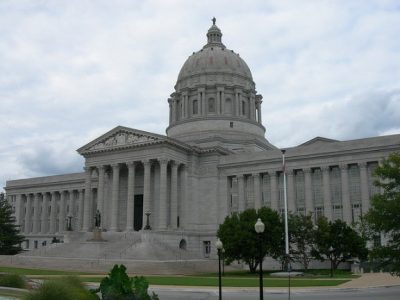
What the Show Me State Shows Us About Immigration
According to data released by the Immigration Policy Center, there are approximately 6,500 young people in Missouri who may benefit from President Obama’s plan to grant deferred action to DREAM eligible youth. This isn’t a huge amount in the grand scheme of things, as Missouri ranks 31st in the country with respect to the number of youth eligible for this new program. And because these numbers roughly parallel distribution of undocumented people around the country, if you are going solely by the numbers, Missouri shouldn’t be a big player in the debate over immigration, especially unauthorized immigration. But the numbers don’t tell the full story when it comes to the importance of the issue to the people of a state, and the importance of a state to the way the immigration debate plays out nationally. Looking at it from other perspectives, Missouri matters a lot. Read More
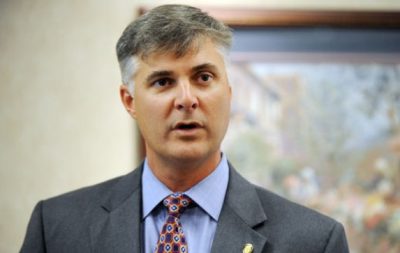
According to Scott Beason, Alabamans Will Return to “Menial Jobs” Over Time
Alabama State Senator Scott Beason continues to link the state’s recent dip in unemployment to its extreme immigration law (HB 56), even though there is no evidence to support that this theory. In fact, many Alabama business have reported difficulties in replacing immigrant workers, many of whom have left the state or gone further underground. But in a recent effort to address this reported labor shortage, Sen. Beason—a sponsor of HB 56—managed to insult both immigrants and native Alabamans alike. Read More

Why the Next Einstein Can’t Get a Visa
By Shelby Pasell. Though Einstein may be a household name in the United States, he was not born here, and he would have a hard time obtaining a visa if he were alive today. In fact, inventors behind most patents in the U.S. were born outside of the country, according to a new report by the Partnership for a New American Economy, and most face huge difficulty in obtaining visas to stay. Read More

U.S. Losing High-Skilled Workers to Australia, Canada, and China, Report Says
By Shelby Pasell. “As our competitors press ahead with strategic policies suited to a global century, how much longer can America afford to drift with an immigration regime built in 1965?” This is the question addressed in recent report by the Partnership for a New American Economy and The Partnership for New York City. According to the report, as other countries simplify and expand their immigration programs to attract entrepreneurs and high-skilled workers, the U.S. maintains an old system that makes it difficult for much needed workers to secure a visa. By 2018, the U.S. will face a projected shortfall of 223,800 STEM (Science, Technology, Engineering, and Mathematics) workers, but even for graduates of these programs, visas are limited and there is no secure path towards permanent residency. Read More

Michigan Pushes Plan to Welcome Immigrants and their Revitalizing Power to State
While some states pushed for punitive immigration measures over the last year—measures designed to drive immigrants away —others, like those in Michigan, were busy putting together a plan that welcomes immigrants and their revitalizing power to the state. This month, leaders in Michigan—including state Rep. Rashida Tlaib (D-Detroit) and U.S. Rep. Hansen Clarke (D-Detroit)—helped launch “Welcoming Michigan,” a statewide initiative that seeks to welcome immigrants and their entrepreneurial talents to Michigan. Read More
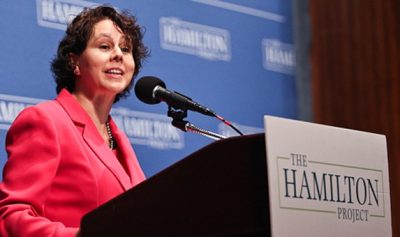
Administration Takes Step Toward More Entrepreneur-Friendly Immigration Policy
BY TEJAS SHAH*. While the U.S. economy continues to recover at a sluggish pace, the administration continues to emphasize immigration reform’s critical role in promoting innovation and entrepreneurship in the U.S. This week, Cecilia Munoz, the Domestic Policy Council Director at the White House, spoke at a forum hosted by The Hamilton Project of the Brookings Institution about the administration’s commitment to immigration reform and easing pathways for foreign investors in the United States. Sadly, however, talented and dynamic foreign entrepreneurs seeking authorization to direct, operate, manage, or work for their investment vehicles often face tedious barriers. Easing these barriers would benefit our economy and enhance our ability to out-compete other countries in the modern global economy. After all, with out foreign entrepreneurs, we wouldn’t have such U.S. companies as Yahoo, Google, and Intel. Read More
Government Agencies and E-Verify: Erroneous Results and Misuse Cost Workers Their Jobs
Making E-Verify mandatory—even for government agencies and contractors—could threaten the jobs of U.S. citizens because there are errors in the system and because employers misuse it. E-Verify is inaccurate. According to an evaluation by Westat commissioned by the Department of Homeland Security, approximately 0.8 percent of work-authorized U.S. citizens and legal immigrants received an erroneous “tentative nonconfirmation” from E-Verify. Approximately 0.3 percent of those workers were able to successfully contest their findings and keep their jobs. The remaining 0.5 percent were not able to correct their records and received an erroneous “final nonconfirmation.” Read More

New Data Highlights Immigrant Integration and Economic Contributions
A recent analysis of data from the Census Bureau highlights the degree to which immigrants integrate into U.S. society and contribute to the U.S. economy. In its latest statistical profile of the foreign-born population, the Pew Hispanic Center presents statistics which illustrate that most immigrants have been here for more than a decade, more become homeowners the longer they are here, and growing numbers are becoming U.S. citizens. Moreover, the data show the degree to which immigrants fuel labor-force growth and fill valuable roles in the economy as workers in both high-skilled and less-skilled occupations. Read More
America's story is an immigrant story.