Employment and Wages

How the Immigration Reform Bill Could Help Undocumented Farmworkers and Growers
Approximately 11 million undocumented immigrants could become eligible for legal status under S. 744, the immigration reform bill the Senate is considering, including millions of undocumented farmworkers. The importance of finding a way to create a legal workforce within the agriculture industry is critical, as undocumented farmworkers make up an estimated 53 percent of agriculture workers. Read More

How Immigrant Entrepreneurs Fare in the New Immigration Bill
With the Senate Judiciary Committee’s vote last week to pass S.744 on to the Senate floor, a new proposal for spurring immigrant entrepreneurship and innovation will be before Congress. Title IV, Subtitle H of the bill creates the INVEST visa (Investing in New Venture, Entrepreneurial Startups, and Technologies) for immigrant entrepreneurs. This new visa program would allow immigrant entrepreneurs to come to the United States, start businesses, and create jobs in America. There would be two types of INVEST visas. A nonimmigrant INVEST visa would be renewable provided certain initial investment, annual revenue, and job creation criteria are met within an initial three-year period. The immigrant version of the INVEST visa would have basically the same criteria just at higher thresholds. The committee also adopted an amendment that permanently authorizes the EB-5 Regional Center Program, which has created tens of thousands of American jobs and attracted over $1 billion in investments since 2006. Read More

Experts from Left and Right Agree on Economic Power of Immigration Reform
In recent years, study after study has demonstrated a simple yet economically powerful truth about broad-based immigration reform: workers with legal status earn more than workers who are unauthorized—and these extra earnings generate more tax revenue, as well as more consumer spending, which creates more jobs. As a new report from the Center for American Progress (CAP) points out, this fact implies that states with appreciable unauthorized populations stand to gain economically from immigration reform that includes a legalization program for the unauthorized. Moreover, a new open letter to Congressional leaders released by the conservative American Action Forum illustrates that it is not only liberal advocacy groups like CAP which recognize the economic potential of immigration reform. Read More

How the Senate Bill Seeks to Deter Future Waves of Unauthorized Immigration
The Senate Judiciary Committee continues to consider amendments to Title II of the “Border Security, Economic Opportunity, and Immigration Modernization Act’’ (S.744) today. For many, Title II is the bill’s core as it deals with the legalization of the undocumented population already living here and lays out the rules concerning future immigration, among other issues. Read More

The W Visa: Why the Economy Benefits from A Robust New Worker Program
The Senate Judiciary Committee returns to its task of marking up S. 744 tomorrow, taking up, among other things, possible amendments to the W visa program for new nonimmigrant workers. This new program, blessed by both business and labor, is an effort to acknowledge the need for a more flexible system for meeting the demand for workers in certain occupations and industries that require less-skilled workers. At Tuesday’s hearing, several Senators challenged the idea that the American workforce needed to be supplemented with immigrant labor, but the evidence is overwhelming that there is both a need and an economic benefit to having a flexible and responsive program in place to bring in new workers where they are most needed. Read More
Day Two of Senate Immigration Mark-Up Continues With Temporary Employment Visas
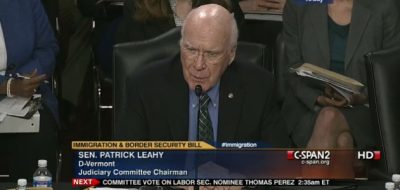
On the second day of the Senate Judiciary Committee’s mark-up of S. 744, the “Border Security, Economic Opportunity, and Immigration Modernization Act,” the senators tackled most of the amendments to Title IV after finishing debate on a few border security amendments. The fourth section addresses the majority of non-immigrant temporary visas including those for high and less- skilled immigrant workers, entrepreneurship and innovation programs, as well as a range of miscellaneous visitor visas. Read More
The Important Role of Immigrants in America’s Innovation Economy
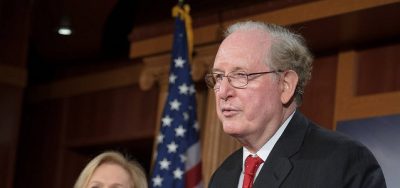
This week, the U.S. Senate Committee on Commerce, Science, and Transportation weighed in on immigration reform with a hearing on the role of immigrants in America’s innovation economy. Remarks from Sens. Rockefeller (D-WV) and Thune (R-SD) noted the contributions of immigrant innovators and entrepreneurs. Immigrants in the United States were named as inventors or co-inventors on 25.6 percent of international patent applications filed from the U.S. in 2006. Furthermore, temporary workers and permanent residents made contributions to over half of the international patents filed by several large, multi-national companies. Temporary and permanent foreign-born workers represent at least 24 percent of the nation’s scientists and 47 percent of engineers with doctoral degrees. Read More

How to Accurately Estimate the Economic Impact of the Senate Immigration Reform Bill
One of the most important questions being asked about the Senate immigration reform bill (S. 744) is how it will impact the economy. There is already a broad consensus among economic experts that immigration reform would be a net economic benefit in terms of jobs, wage levels, tax revenue, and Gross Domestic Product (GDP). As reported in Politico on May 8, for instance, a new study by the Social Security Administration estimates that “by 2024, the immigration bill will have created 3.22 million jobs, and boost GDP by 1.63 percent.” However, the most widely awaited estimate is that of the Congressional Budget Office (CBO), which will soon be “scoring” the bill in terms of its fiscal consequences. Read More

Keeping U.S. High-Skilled Temporary Worker Visa Programs Workable
When analyzing higher-skilled guest worker visa programs, such as the H-1B and L-1 programs, critics often fail to acknowledge the very different and important purposes that these programs were designed to serve, and the complicated requirements already in place to protect against abuse or exploitation. There is no denying that we can and should improve these programs and the strategies used to enforce them. However, given the well-established economic benefits of these programs, and the challenges employers face finding highly skilled workers, particularly in technical fields, it is essential that any proposed reforms not impose restrictions that may make these programs completely unworkable. Read More

High-Skilled Immigration and Entrepreneurship in the Senate’s Immigration Bill
On the road to reform, the Senate’s Border Security, Economic Opportunity, and Immigration Modernization Act contains several changes and new provisions for skilled immigration and entrepreneurship. Specifically, the bill provides balanced reforms to the H-1B nonimmigrant visa for high-skilled individuals, various provisions for highly skilled individuals through permanent employment-based immigration, and a new INVEST visa for entrepreneurs. Read More
America's story is an immigrant story.