Economic Impact
Immigrants are essential to the U.S. economy, filling roles from high-skilled tech sectors to agricultural labor and driving economic growth. They also contribute to the tax base and consumer spending. We champion reform that will maximize this effect and create a more diverse and competitive workforce.
The Lasting Impact of Mendez v. Westminster in the Struggle for Desegregation
Years before the U.S. Supreme Court ended racial segregation in U.S. schools with Brown v. Board of Education, a federal circuit court in California ruled that segregation of school children was unconstitutional—except this case involved the segregation of Mexican American school children. The Ninth Circuit Court of Appeals reached this historic decision in the case of Mendez v. Westminster in 1947—seven years before Brown. Historic in its own right, Mendez was critical to the strategic choices and legal analysis used in arguing Brown and in shaping the ideas of a young NAACP attorney, Thurgood Marshall. Moreover, the Mendez case—which originated with LULAC but benefited from the participation of the NAACP—also symbolized the important crossover between different ethnic and racial groups who came together to argue in favor of desegregation. From a legal perspective, Mendez v. Westminster was the first case to hold that school segregation itself is unconstitutional and violates the 14th Amendment. Prior to the Mendez decision, some courts, in cases mainly filed by the NAACP, held that segregated schools attended by African American children violated the 14th Amendment’s Equal Protection Clause because they were inferior in resources and quality, not because they were segregated. Read More
Nativist Group Blames Immigrants for Unemployment and Low Wages
The Federation for American Immigration Reform (FAIR) yesterday released a report, Amnesty and the American Worker, which recycles a number of discredited claims about the supposedly negative impact that immigrants have on U.S. workers and the U.S. economy. According to FAIR, unauthorized immigration has “put Americans out of work and reduced wage levels for all workers across broad sectors of the economy.” The FAIR report also claims that granting legal status to currently unauthorized immigrants would be a drain on the U.S. economy because newly legalized immigrants would qualify for tax credits. FAIR ignores the fact that there is no correlation between immigration and unemployment in the United States—that immigration has provided a small wage boost to most native-born workers and helped “grow” the economy—and that newly legalized immigrants would earn higher wages and therefore spend more in U.S. businesses and pay more in all kinds of taxes. Read More
Strength in Numbers
The positive impact of Sunday’s rally on the mall for immigration reform is already in evidence. Yesterday, after months of pressure, Senators Schumer and Graham finally released their blueprint for immigration reform and President Obama immediately pledged to help push bipartisan legislation forward. Next was Senator Reid who promised to make time for legislation on the floor this year and Senator Leahy also pledging his support. Read More
Restrictionist Group Strikes Back
Today, the Center for Immigration Studies (CIS) released a report which attacks the decision of the Southern Poverty Law Center (SPLC) to designate the Federation for American Immigration Reform (FAIR) a “hate group,” and thereby impugn the reputation of two FAIR spin-offs: CIS and NumbersUSA. The report offers a defense of FAIR and its founder, John Tanton (a man who has expressed sympathy for eugenics—that is, selective human breeding), and attacks SPLC and its work with the National Council of La Raza (NCLR) and other organizations belonging to the “Stop the Hate” campaign. Leaving aside SPLC’s rebuttal of the report, or the question raised by the report of why it took so long for FAIR’s (hateful) past to catch up with it, the fact remains that FAIR, CIS, and NumbersUSA have engaged in an intellectually dishonest analysis of immigration that sometimes devolves into name-calling. Read More
Restrictionist Front Group Still Pushing Green Xenophobia
In a new report, Progressives for Immigration Reform (PFIR)—a front group for the Federation for American Immigration Reform (FAIR)—regurgitates an argument as tired as it is flawed: that immigration hastens the destruction of the environment in the United States. Specifically, the report claims that immigration-driven population growth is increasing the nation’s “ecological footprint” and exceeding the country’s “carrying capacity.” This is a faulty line of reasoning that overlooks the degree to which destruction of the environment is a function not of population size, but of how a society utilizes its resources, produces its goods and services, and deals with its waste. Read More
How Expanding E-Verify Would Hurt American Workers and Business
Expanding mandatory E-Verify would threaten the jobs of thousands of U.S. citizens and saddle U.S. businesses with additional costs—all at a time when we need to stimulate our economy. Expanding E-Verify now would be in direct contradiction to the goal of creating jobs and would slow America’s economic recovery. Read More
Budgeting Immigration: Secretary Napolitano Talks Dollars and Programming
Department of Homeland Security (DHS) Secretary Janet Napolitano spent the past two days testifying in front of congressional committees addressing concerns over President Obama’s fiscal year (FY) 2011 DHS budget. Mixed in among the complaints over proposed cuts in cyber security and the Coast Guard were a number of budget decisions with immigration implications. Chief among those decisions were a cut in border patrol agents, the status of the troubled SBInet program, and worksite enforcement efforts—including the oft-maligned E-Verify program. Read More
E-Verify Gets It Wrong, Again
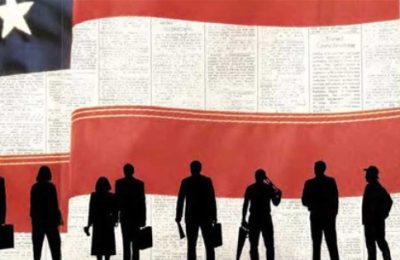
Another independent evaluation of the E-Verify program once again confirms what advocates have been saying for years—E-Verify doesn’t work. A new evaluation of the federal employment authorization program—conducted by Westat, a research company, in December 2009—is now available on the E-Verify website. The system only detected unauthorized workers about half of the time. The evaluation found the program couldn't confirm whether the documents workers were presenting were their own. As a result, "many unauthorized workers obtain employment by committing identity fraud that cannot be detected by E-Verify," according to Westat. The "inaccuracy rate for unauthorized workers" is about 54%. Read More
Collateral Damage: Children in the Aftermath of Immigration Raids
The collateral damage left in the wake of internal immigration enforcement is far too often overlooked in the immigration debate—especially considering that children bear the brunt of such enforcement policies. There are roughly 5.5 million children currently living in the U.S. with at least one unauthorized parent, and at least three-quarters of these children are U.S. born citizens. The Department of Homeland Security (DHS) estimates that over the last 10 years, more than 100,000 immigrant parents of U.S. citizen children have been deported from the United States. As DHS continues to increases its enforcement-heavy budget, it’s important to consider the serous risks raids and other ICE actions that separate parents and children pose to children’s immediate safety, economic security, well-being, and long-term development. Read More
Can Immigrants Give America’s Rust Belt a Tune-Up?
Immigrants have long been a driving economic force in America’s large thriving metropolitan areas—New York, Los Angeles, Chicago, Miami, Dallas—where immigrants’ economic output produces a large and growing share of the U.S. gross domestic product. But what about the once thriving industrial heartland of the United States known as the Rust Belt? In a roundtable discussion yesterday in Akron, Ohio, authors Richard Herman and Robert Smith discussed their new book which points out how “immigrants and the businesses they create” can “provide rundown neighborhoods with a powerful jolt of new investment and spinoff job opportunities” and how our broken immigration system is taking away at least one tool for economic recovery in the cities that need the most help. Read More
America's story is an immigrant story.