Economic Impact
Immigrants are essential to the U.S. economy, filling roles from high-skilled tech sectors to agricultural labor and driving economic growth. They also contribute to the tax base and consumer spending. We champion reform that will maximize this effect and create a more diverse and competitive workforce.

Congressional Budget Cuts Threaten Vital USCIS Integration Grant Program
This month, United States Citizenship and Immigration Services (USCIS) announced $5 million in government grant opportunities available to service providers who help immigrants integrate and prepare for the naturalization exam. The money for these grants, awarded through the Citizenship and Integration Grant program, however, was not appropriated through Congress. Congress actually voted not to fund this vital program, leaving USCIS to cut costs elsewhere in order to keep the program afloat. Read More
Latinos in North Carolina: A Growing Part of the State’s Economic and Social Landscape
North Carolina has become a hub of Latino migration to the South. While many think this migration came suddenly, North Carolina has, in fact, been welcoming and integrating Mexican and other Latino migrants for generations. Over the last three decades, the Latino population in North Carolina grew from less than a half percent of the total population to 8.4 percent—more than 800,000 people. North Carolina, which now has more agricultural guest workers than any other state in the nation, has contributed to a quickly growing national population of 50 million Latinos, now the largest minority group in the country. But much is at stake for Latinos, native and newly arrived, as the state and region experience demographic transformation. The polarized nature of the current immigration debate has made the steady growth of Latinos in North Carolina more noticeable and more politically charged. The role of Latinos in North Carolina, however—as workers and residents—is an important and over-looked story of how North Carolina continues to grow and evolve in a changing economy and world. Read More

States Continue to Propose Tuition Equity for Undocumented Immigrants
While some state lawmakers continue to push extreme “get tough” immigration enforcement measures through their state houses, others are contemplating the benefits of having more highly educated students in their state. In Indiana, for example, one Republican lawmaker recently amended an education bill to grant in-state tuition to undocumented students already enrolled in state schools, asking “if they’re going to be living here anyway, why not let them be productive members of Indiana society?” Lawmakers in other states, including Colorado and New York, are also pushing for better access to higher education for qualifying undocumented students. Read More
Pew Analysis Highlights Immigrant Integration and Economic Contributions
Immigrants integrate into U.S. society over time and they contribute to the U.S. economy. These crucial yet often-overlooked facts are illustrated well by the Pew Hispanic Center’s latest statistical profile of the foreign-born population. According to Pew’s analysis of Census data, most immigrants have been here for more than a decade, and the longer they have been here, the more likely they are to have become homeowners and learned English. Moreover, growing numbers of immigrants are becoming U.S. citizens, which translates into growing political clout. The Pew data also show the degree to which immigrants fuel labor-force growth and fill valuable roles in the economy as workers in both high-skilled and less-skilled occupations. In short, immigrants are integral to the nation’s social and economic fabric. Read More
Number of Potential Immigrant Voters on the Rise in Key Super Tuesday States
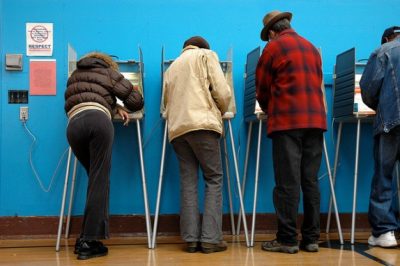
Three of the twelve states holding Republican primaries or caucuses on Super Tuesday—Georgia, Massachusetts and Virginia—show especially strong trends in the numbers of foreign-born residents who have become U.S. citizens. This trend is significant given that these new Americans are able to register and vote. Immigrant communities in each of these states are large, exceeding 800,000 persons, and make up almost 10% or more of the statewide population. In fact, these three states are home to 71% of all immigrants living in the Super Tuesday states. While we don’t yet know how many of these naturalized U.S. citizens will vote on Super Tuesday or in the general election, GOP presidential candidates—many of whom have taken a hard line on immigration—would do well to take note of this trend. Read More
Number of Potential Immigrant Voters on the Rise in Key Super Tuesday States
Three of the twelve states holding Republican primaries or caucuses on Super Tuesday—Georgia, Massachusetts and Virginia—show especially strong trends in the numbers of foreign-born residents who have become U.S. citizens. This trend is significant given that these new Americans are able to register and vote. Immigrant communities in each of these states are large, exceeding 800,000 persons, and make up almost 10% or more of the statewide population. In fact, these three states are home to 71% of all immigrants living in the Super Tuesday states. While we don’t yet know how many of these naturalized U.S. citizens will vote on Super Tuesday or in the general election, GOP presidential candidates—many of whom have taken a hard line on immigration—would do well to take note of this trend. Read More
Government Agencies and E-Verify: Erroneous Results and Misuse Cost Workers Their Jobs
Making E-Verify mandatory—even for government agencies and contractors—could threaten the jobs of U.S. citizens because there are errors in the system and because employers misuse it. E-Verify is inaccurate. According to an evaluation by Westat commissioned by the Department of Homeland Security, approximately 0.8 percent of work-authorized U.S. citizens and legal immigrants received an erroneous “tentative nonconfirmation” from E-Verify. Approximately 0.3 percent of those workers were able to successfully contest their findings and keep their jobs. The remaining 0.5 percent were not able to correct their records and received an erroneous “final nonconfirmation.” Read More

New Data Highlights Immigrant Integration and Economic Contributions
A recent analysis of data from the Census Bureau highlights the degree to which immigrants integrate into U.S. society and contribute to the U.S. economy. In its latest statistical profile of the foreign-born population, the Pew Hispanic Center presents statistics which illustrate that most immigrants have been here for more than a decade, more become homeowners the longer they are here, and growing numbers are becoming U.S. citizens. Moreover, the data show the degree to which immigrants fuel labor-force growth and fill valuable roles in the economy as workers in both high-skilled and less-skilled occupations. Read More

Retiring Baby Boom Generation Will Rely on Immigrant, Hispanic Workforce
The U.S. population is rapidly growing older, which is having a dramatic impact on the U.S. labor force. The far-reaching effects of this demographic transformation are very much apparent in the projections released in January by the Bureau of Labor Statistics (BLS). As explained by Rakesh Kochhar of the Pew Hispanic Center, the BLS numbers indicate that “the aging of the non-Hispanic white population is expected to reduce their numbers in the labor force.” At the same time, “the Hispanic population is growing rapidly due to births and immigration.” For those reasons, says Kochhar, the BLS projections indicate that Latinos “will account for three-quarters of the growth in the nation’s labor force from 2010 to 2020.” Read More
America's story is an immigrant story.