Economic Impact
Immigrants are essential to the U.S. economy, filling roles from high-skilled tech sectors to agricultural labor and driving economic growth. They also contribute to the tax base and consumer spending. We champion reform that will maximize this effect and create a more diverse and competitive workforce.

Putting the White House Immigration Reform Proposal into Perspective
Over the weekend, the press reported on a leaked draft of portions of the White House’s immigration proposal, and the coverage since then has been largely a frenzied discussion of whether the leak will kill Senate negotiations. There shouldn’t be much chance of that, given the immense pressure on the Senate to not only come up with a proposal, but actually draft legislation that can be debated and voted on this year. Now that at least some of the Administration’s ideas are out in the public eye, it’s useful to treat them as what they are: basic discussion points on what might be in an eventual bill. In the long run, the draft proposal may help to encourage the constructive conversation that the Administration has sought to have on reform. Read More

Can A Nation Have Too Many Smart People?
A February 8 op-ed in the New York Times entitled “America’s Genius Glut” argues that America already has too many high-tech workers, and thus does not need more scientists and engineers from abroad. It is a surprising claim that is at odds not only with the empirical evidence, but is out of touch with the dramatic shift in recent years towards a knowledge-based global economy. The United States is not actually suffering from a surplus of intelligent people, nor is it being economically drained by the presence of intelligent people who were born in other countries. In fact, the U.S. high-tech economy would not exist in its present form if not for the contributions of innovators and entrepreneurs from every corner of the globe. Despite arguments to the contrary, scientists and engineers who come to this country on H-1B visas are an integral part of that high-tech economy. Read More

Survey: Asian Americans Concerned with Legalization, Family Backlogs
In the current debate, immigration is often depicted as a Latino issue. This is partially because just over half of America’s foreign-born population is from Latin America and the Caribbean, and the current political climate around immigration is largely seen as being driven by Latino turnout for Democrats in the 2012 election. But this depiction glosses over the millions of immigrants – documented and undocumented – who hail from other parts of the globe. Read More
The Dividends of Citizenship: Why Legalization Must Lead to Citizenship
The most concrete proposals for immigration reform thus far in 2013 include earned legalization with a path to U.S. citizenship for unauthorized immigrants already living in the United States. This is a process that essentially permits unauthorized immigrants to come forward and receive a provisional legal status that—after paying taxes, proving they understand English and civics, passing all criminal and other background checks, and showing they are committed to the United States—allows them to become lawful permanent residents (LPRs). From there, like other LPRs before them, they will have to decide whether or not to make the final commitment to their adopted country by becoming American citizens. Some critics of the new proposals argue that citizenship is too good for unauthorized immigrants, or that legal status is really all they need to thrive in this country. But that kind of short-sighted thinking ignores some very important facts: more than half a century ago the U.S. finally abandoned the idea that there should be a second-class status for any group by denying them citizenship and, in fact, today the vast majority of Americans support a path to citizenship. The integration of the 11 million unauthorized immigrants now living in the United States into full citizenship is not only good for those individuals, but the country as a whole. Citizenship, and the quest for citizenship, facilitates integration in myriad ways that legal status alone does not. From the learning of English and U.S. civics to the earning of higher incomes, serving jury duty, and voting in elections, citizens and would-be citizens benefit from a deeper form of incorporation into U.S. society than do legal immigrants who have no hope of ever applying for naturalization. Read More

Why Should We Support a Legalization Program for Unauthorized Immigrants?
As the immigration debate heats up in Congress, the central question for much of the American public will be whether or not to create a pathway to legal status for the 11 million unauthorized immigrants now living in the United States. In formulating an answer to that question, however, it is necessary to ask two others. First, exactly who are the unauthorized immigrants who would be attaining legal status? Secondly, what would the impact be on the U.S. economy were so many unauthorized immigrants to be legalized? The answer to the first question is relatively simple: unauthorized immigrants are just like everybody else; they are adults and children, mothers and fathers, homeowners and churchgoers. The short answer to the second question is that legalization would be a stimulus to the U.S. economy. Workers with legal status earn higher wages, and these extra earnings generate more tax revenue for federal, state, and local governments, as well as more consumer spending, which sustains more jobs in U.S. businesses. Read More
Back to the Future: The Impact of Legalization Then and Now
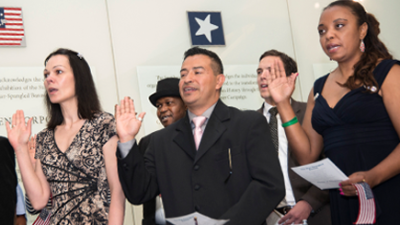
While there are many facets to an intelligent immigration reform package, one thing is clear: legalization for undocumented immigrants helps all of us. Most economists recognize that legalization has worked in the past. After a significant percentage of the undocumented population legalized under the Immigration Reform and Control Act of 1986 (IRCA), information on IRCA applicants was used to assess the legislation’s impact. My own research has shown that IRCA provided immediate direct benefits by successfully turning formerly clandestine workers into higher-paid employees. Other researchers have shown that IRCA provided unexpected indirect benefits to the communities where legalized immigrants resided. After legalization, fewer of these immigrants sent money back to their home countries, and those who sent back money sent back less. More of their earnings were spent in their communities in the United States. Research also showed that the legalized population became participating community members—nearly two out of five people who legalized under IRCA were U.S. citizens by 2001. What we learned from IRCA gives us a bird’s eye view into what we can expect to happen with a new legalization program. By examining three areas of concern: work, family, and community, we can see what economic and social benefits would be derived from a legalization program in 2013. By Sherrie A. Kossoudji, Ph.D. Read More
Economic Progress via Legalization: Lessons from the Last Legalization Program
The data analyzed in this report indicates that unauthorized immigrants who gained legal status in the 1980s through the legalization provisions of the Immigration Reform and Control Act (IRCA) experienced clear improvement in their socioeconomic situation. Between 1990 and 2006, the educational attainment of IRCA immigrants increased substantially, their poverty rates fell dramatically, and their home ownership rates improved tremendously. Moreover, their real wages rose, many of them moved into managerial positions, and the vast majority did not depend upon public assistance. The findings presented in this report support the notion that legalization of unauthorized immigrants can play a role in promoting economic growth and lessening socioeconomic disparities. Reforming our immigration system is not an obstacle to getting our economy back on track—it is part of the solution. Originally Published Nov. 5, 2009 Read More
President Lays Out His Vision For Immigration Reform
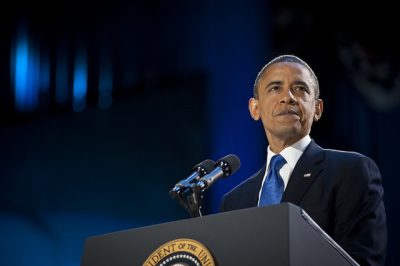
After eight Republican and Democratic senators yesterday released their framework for comprehensive immigration reform, President Obama laid out his administration’s vision today of what he thinks should be included in the bill to overhaul the nation’s immigration system. He praised the bipartisan principles, which mirror the White House’s 2011 blueprint for immigration reform. “At this moment, it looks like there’s a genuine desire to get this done soon,” he said in his speech from Nevada. “And that’s very encouraging.” Read More
Getting to a Citizenship Consensus
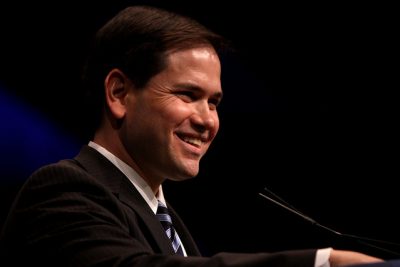
Immigration reform is enjoying a resurgence of support in both parties, with groups from a variety of backgrounds coming out in favor of a range of changes to our current system. The most striking change may be the melting of opposition to a pathway to citizenship for the 11 million undocumented immigrants in the U.S. But acceding to citizenship and creating a system that will actually allow people to get there are two different things. Read More

Business and Religious Leaders Come Together to Champion Immigration Reform
Immigration reform is an undertaking of such importance that it should transcend partisanship. That was the fundamental message of the business and religious leaders who gathered together yesterday at a press conference organized by the National Immigration Forum. The press conference was part of a campaign called Forging a New Consensus on Immigrants and America, which describes itself as “a growing and diverse constituency of conservative, moderate and progressive leaders that is determined to go beyond the rhetoric and find common ground for practical solutions.” The event comes on the heels of an announcement late last week by Thomas Donohue, President of the U.S. Chamber of Commerce, that a broad coalition of business, labor, religious, law enforcement, and ethnic organizations has coalesced around the cause of immigration reform. Read More
America's story is an immigrant story.