 The American Immigration Council is a non-profit, non-partisan organization.
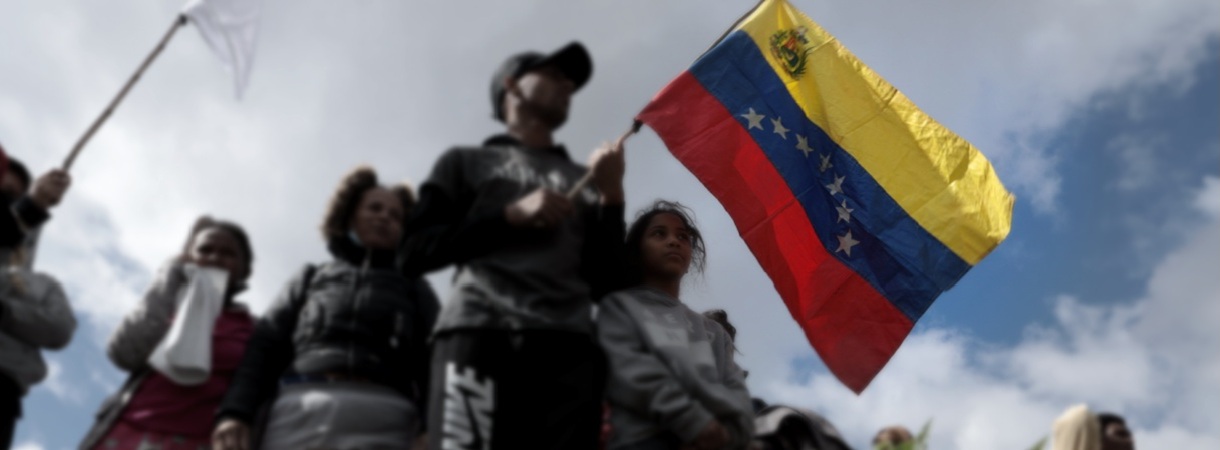
 With the capture and prosecution of Venezuela’s President Nicolas Maduro, the United States’ convoluted—and often contradictory—policies toward Venezuelan immigrants have been thrown into stark relief. And Venezuelans living in the United States continue to feel the whiplash.
Over the past five years, Venezuelans fleeing political persecution or economic chaos may have been invited to temporarily live in the U.S.; granted short-term permission to work and stay; been stripped of protections and work permits with barely any notice; and/or been subjected to swift and sudden moves to deport them. Many of them have experienced all four.
The Venezuelan refugee crisis has coincided with an American approach to asylum and border security that focuses on deterrence: stopping people from crossing into the U.S. and making asylum claims. Both Democratic and Republican presidents have put deterrence first, but the policies they’ve put in place — not to mention the rhetoric they use to justify those policies — have differed. As a result, Venezuelans living in the U.S. have been knocked back and forth between policy regimes, unable to plan the rest of their lives. And the rest of the world — including Venezuelans who might consider trying to come to the U.S. — has received an incoherent, and ultimately untrustworthy, mishmash of messages about the U.S.’ approach to immigration, democracy, and the rule of law.
Let’s look at some hypothetical examples.
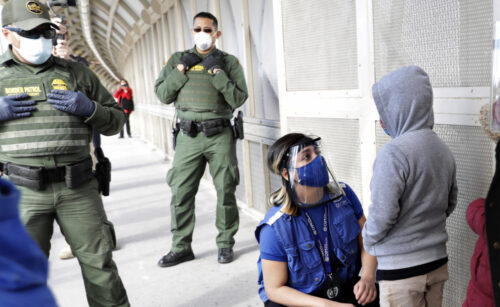
Imagine a political dissident who fled the Maduro regime because he was worried about retribution for organizing student protests. In 2023, he arrived in Mexico and waited several months for an appointment to present himself for asylum at a port of entry in El Paso, by registering with the CBP One app. (We actually met just such a person during a trip the American Immigration Council took to El Paso/Ciudad Juarez in fall 2023.) When his appointment date finally came up, he was given a court date for January 2025 to present his asylum claim and permission to apply for a work permit that would allow him to survive in the U.S. in the meantime. He has spent several months pulling together an application demonstrating that he has been persecuted on the basis of his pro-democracy political opinions — a straightforward type of asylum claim that falls squarely within the “protected grounds” laid out in the 1980 Refugee Act and the international Refugee Convention.
But in early 2025, our hypothetical dissident got a letter telling him his work permit was summarily canceled — and right before his court date, the U.S. has filed a motion saying that the judge shouldn’t consider his asylum claim at all, and should instead send him to Honduras under a “third country” deportation agreement. (This is particularly ironic because while Nicolas Maduro is being accused of narcoterrorism for trafficking cocaine, the former president of Honduras has been pardoned by the United States on cocaine-trafficking charges.) What is this person supposed to believe about the U.S.’ commitment to democracy and the rule of law? What is he supposed to do?
Alternatively, imagine someone who was paroled into the United States in fall 2022, when the Biden administration launched a parole program to allow some Venezuelans into the U.S. on two-year work permits (a program later expanded to Cubans, Haitians and Nicaraguans). In 2023, the Biden administration determined that Venezuela was too unstable to safely deport people back to, and so redesignated Venezuela for Temporary Protected Status.
This person, who had applied twice for forms of legal protection in the United States, spent 2025 having those protections stripped from her: the Trump administration moved to terminate both the parole program and the TPS designations. While both moves have been challenged in federal court, the Supreme Court has allowed the Department of Homeland Security to move forward with implementation hile the courts decide whether the law allows them to do so.
Today, the United States claims that the country that was supposedly safe enough to deport her to last year was actually being run by a dangerous narcoterrorist. However, now that the president has been removed and the current government of the country is in flux, the U.S. claims it’s still entirely safe for her to return. What should she believe awaits her if she is deported back home?
If I were in either of these situations — and we’re not even talking about the hundreds of Venezuelan men who were tortured in El Salvador for months last year on the basis of flimsy evidence of gang affiliation, then sent back to a country run by a man who the U.S. now claims was a criminal himself — I would conclude that I’d been hoodwinked by the United States’ promise of the rule of law and an impartial immigration process. I’d conclude that there wasn’t any real immigration policy, simply a set of evolving feelings toward other governments, with the people living under those governments treated as pawns.
This might be true. But it’s certainly not the way the United States immigration system is supposed to work. This isn’t just a matter of starry-eyed commitment to liberal ideals: it’s impossible to run a functioning immigration system without consistency, because people need to know what to expect when they’re making decisions about where to move and when. Ironically, while governments of both parties have remained committed to “deterrence” as the top priority of border management over the last 20 years, their actions and rhetoric have made it impossible for them to achieve that aim — because deterrence requires being able to credibly predict, with certainty, what would happen to someone if they tried to come.
We don’t know who runs Venezuela right now, or will in the future. We don’t know who, if anyone, will come out of this on top. But we know it won’t be the Venezuelans who have spent the Maduro regime being buffeted by governments throughout the hemisphere for whom they’ve been an unwanted residue of geopolitical conflict.