Visas

Why the Next Einstein Can’t Get a Visa
By Shelby Pasell. Though Einstein may be a household name in the United States, he was not born here, and he would have a hard time obtaining a visa if he were alive today. In fact, inventors behind most patents in the U.S. were born outside of the country, according to a new report by the Partnership for a New American Economy, and most face huge difficulty in obtaining visas to stay. Read More
Immigration Lessons for the U.S. from Around the World
CNN June 10, 2012 Immigrants founded America hundreds of years ago, coming to the promised land in search of freedom and opportunity, in pursuit of the American dream. Today, many Americans see immigrants as a danger to that dream. They worry that immigrants are taking their jobs, using government… Read More
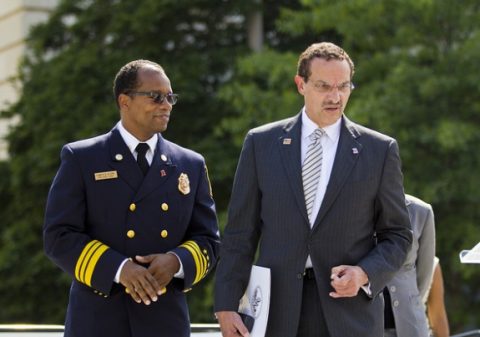
DC Passes Act Limiting District’s Response to ICE’s Immigration Detainers
Today, ICE activated the Secure Communities program in Washington, DC, sparking fear in immigrant communities that the program will result in racial profiling and the deportation of non-priority immigrants as it has in other jurisdictions. With Secure Communities active, the fingerprints of all persons booked into DC jails will be sent to the FBI and will then be forwarded to DHS to be checked against federal immigration databases. If ICE decides to take action against an immigrant identified through the program, they place a detainer on the individual—a request asking DC police to hold the person for up to 48 hours so ICE can take custody. However, in a move praised by immigration advocates, the DC Council passed an emergency act today limiting the District’s response to detainer requests. Read More

U.S. Losing High-Skilled Workers to Australia, Canada, and China, Report Says
By Shelby Pasell. “As our competitors press ahead with strategic policies suited to a global century, how much longer can America afford to drift with an immigration regime built in 1965?” This is the question addressed in recent report by the Partnership for a New American Economy and The Partnership for New York City. According to the report, as other countries simplify and expand their immigration programs to attract entrepreneurs and high-skilled workers, the U.S. maintains an old system that makes it difficult for much needed workers to secure a visa. By 2018, the U.S. will face a projected shortfall of 223,800 STEM (Science, Technology, Engineering, and Mathematics) workers, but even for graduates of these programs, visas are limited and there is no secure path towards permanent residency. Read More
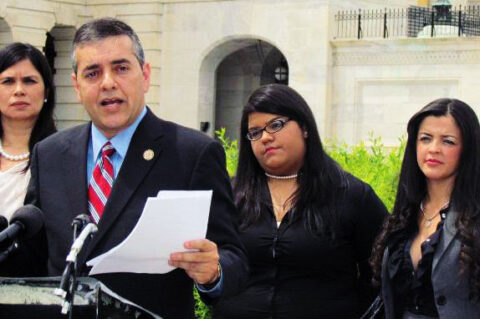
STARS Act Highlights Potential Pitfalls of Rubio DREAM Proposal
When news broke yesterday that a Florida congressman introduced an alternative version of the DREAM Act, many assumed it was Sen. Marco Rubio, who has been promising for months to introduce such legislation. In fact, the bill in question—dubbed the STARS Act—was introduced by Rep. David Rivera, a member of the House who introduced similar legislation (the ARMS Act) last January. Although Rivera’s proposals would benefit fewer people than the original DREAM Act, they would put qualified applicants on a path that would ultimately lead to permanent residency. From that perspective, they differ significantly from the proposal Senator Rubio has been discussing, which reportedly does not include a dedicated path to permanent residency. Read More

In California, Lawmakers Mount New Challenge to Secure Communities
Last year, lawmakers in California were poised to pass a bill—known as the TRUST Act—to let local jurisdictions opt out of Secure Communities, the federal program that routes fingerprints taken at local jails to federal immigration authorities. Before final passage, however, federal officials rendered the bill moot by declaring that participation in the program was mandatory. Now, lawmakers are considering a revised version of the bill that would minimize the impact of Secure Communities by limiting the ability of local governments to detain immigrants on the federal government’s behalf. Read More

Administration Takes Step to Keep Talented Foreign Students in the U.S.
BY HEATHER M. STEWART, COUNSEL AND DIRECTOR OF IMMIGRATION POLICY AT NAFSA: ASSOCIATION OF INTERNATIONAL EDUCATORS. Current U.S. immigration law provides few options for foreign graduates of U.S. universities with degrees in science, technology, engineering, and math (“STEM” degrees) who want to stay here to contribute their skills and knowledge. Not enough American students are interested in these fields, even as employers regularly cannot find enough people with the high-tech and scientific knowledge and skills they need to fill available positions. Luckily for the United States, international students seek out these majors and excel in them. But increasingly, we lose these talented graduates to other competitor countries where immigration laws are friendlier. This is, of course, an enormous loss to the U.S. economy, as international students with STEM degrees often create successful businesses and jobs in the United States. Last week, DHS took a strong step forward by expanding the list of STEM fields for foreign graduates applying to training programs after graduation. Read More

Alabama Governor Rejects Changes to State’s Extreme Immigration Law, Starts Special Legislative Session
Today, Alabama Governor Robert Bentley announced his disapproval of a bill intended to change parts of the state’s extreme immigration law (HB 56) and initiated a special legislative session to address the problems. Yesterday, on the last day of the state’s regular legislative session, the Alabama Senate… Read More
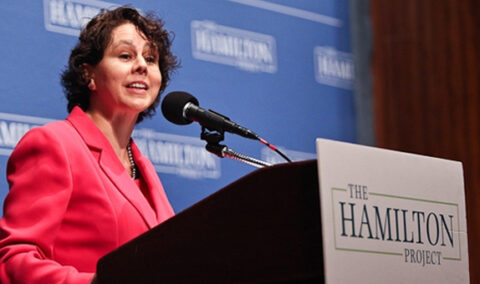
Administration Takes Step Toward More Entrepreneur-Friendly Immigration Policy
BY TEJAS SHAH*. While the U.S. economy continues to recover at a sluggish pace, the administration continues to emphasize immigration reform’s critical role in promoting innovation and entrepreneurship in the U.S. This week, Cecilia Munoz, the Domestic Policy Council Director at the White House, spoke at a forum hosted by The Hamilton Project of the Brookings Institution about the administration’s commitment to immigration reform and easing pathways for foreign investors in the United States. Sadly, however, talented and dynamic foreign entrepreneurs seeking authorization to direct, operate, manage, or work for their investment vehicles often face tedious barriers. Easing these barriers would benefit our economy and enhance our ability to out-compete other countries in the modern global economy. After all, with out foreign entrepreneurs, we wouldn’t have such U.S. companies as Yahoo, Google, and Intel. Read More

Comments Due on Proposed Rule that Will Help Keep American Families Together
The administration recently published a proposed rule that will help keep American families together. The “Proposed Rule on Provisional Unlawful Presence Waivers of Inadmissibility for Certain Immediate Relatives” is an effort to streamline the application process for many relatives of U.S. citizens currently eligible for a green card by minimizing the amount of time that applicants would have to be away from their families before being admitted into the United States. The proposed rule is currently in its “comment period,” and advocates are encouraged to submit comments in support of the rule. All comments are due on June 1, 2012. Read More
America's story is an immigrant story.