Undocumented Immigration
Restrictionists Misrepresent Data on Immigration Enforcement
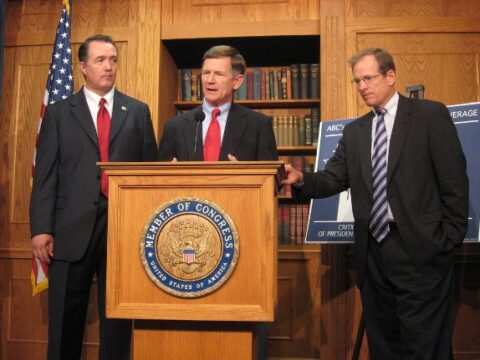
Some members of Congress are intent on portraying the Obama administration as “weak” on immigration enforcement, and they aren’t going to let facts get in their way. Yesterday, for example, the Congressional Research Service (CRS) released new data on individuals who had been identified through Secure Communities (S-Comm) but against whom ICE had not taken enforcement action. House Judiciary Chair Lamar Smith characterized the data as proof that the Obama administration has used prosecutorial discretion “recklessly and to the detriment of the American people.” However, a close look at the data reveals that Smith’s sweeping allegations do not hold water. By misusing terms like “recidivism,” and by failing to distinguish between arrests and convictions, Smith intends to paint immigrants as criminals—a link that has been disproven over and over again. Read More
Where and Who Are The Young People Eligible for the President’s “Deferred Action” Initiative
The Obama Administration’s “deferred action” initiative for unauthorized youth who were brought to this country as children has raised a number of crucial questions. How many people will be eligible? Who are they? And where do they live? A new analysis by the Immigration Policy Center (IPC), together with Rob Paral & Associates, provides some answers. While other analyses have produced national and state-level estimates of how many immigrants could benefit from the deferred action initiative, the IPC report provides a new level of detail, breaking down the eligible population by nationality and age at not only the national and state level, but the congressional district level as well. Read More

ICE Numbers on Prosecutorial Discretion Keep Sliding Downward
Since June 15, the immigration world has largely focused on the impending “deferred action” initiative for individuals who could have qualified for relief under the DREAM Act. Meanwhile, comparatively little attention has been paid to the still ongoing review of more than 300,000 pending removal cases for individuals meriting a favorable exercise of prosecutorial discretion. Although Immigration and Customs Enforcement (ICE) has not released official statistics from the review for nearly two months, figures derived from a recent media account indicate that the agency is now offering to close cases at less than half the rate as when the initiative began. Read More

New Americans Represent Team USA at the London Olympics
Today, the 2012 Olympics formally kick off in London where the best athletes from around the world are meeting to compete. The United States is well-represented, not only by our native born-athletes but by many “New Americans.” In fact, approximately 38 of those competing on Team USA are naturalized U.S. citizens. These athletes remind us that Americans come from all over the world. Read More

Immigration Court Backlog Keeps Growing (and Growing, and Growing…)
Two recent reports from the Transactional Records Access Clearinghouse (TRAC) contain discouraging news about the backlog in our nation’s immigration courts. One noted that the number of pending removal proceedings has reached a record high, while the other reported that a relatively small number of cases have been closed through the exercise of prosecutorial discretion. Although the figures provide cause for concern, it remains unclear—absent additional information from the Department of Homeland Security (DHS)—whether the backlog is growing despite the effort to close low-priority cases, or actually because of it. Read More

Don’t Jump to Conclusions About Costs of Deferred Action
The Associated Press (AP) reported yesterday that the deferred action initiative for eligible, young immigrants, which is still under development, could cost more than $585 million. While some critics immediately jumped on this as proof that taxpayers would be made to pay for the new initiative, that’s just not the way things work at USCIS. While taxpayers foot the bill for Immigration and Customs Enforcement and Custom and Border Patrol operations, (including the cost of detention and deportation of immigrants) the public doesn’t routinely foot the bill for programs administered by U.S. Citizenship and Immigration Services. In fact, it’s much more likely that the deferred action initiative will be paid for by the people who use it. Read More

New Brookings Report Examines Demand for H-1B High Skilled Worker Visas
Who uses H-1Bs and for what types of jobs is a topic of constant debate in Congress and in communities across the country. The Brookings Institute recently released a new report mapping H-1B workers in the U.S which addresses some of these questions and sheds new light on the topic. The H-1B program allows employers to hire foreign workers in specialty occupations for a temporary period of time. Currently, H-1Bs for for-profit employers are capped at 65,000 per year, with an additional 20,000 visas for workers with advanced degrees from U.S. universities. Research, non-profit, and government organizations can also request H-1B workers, and those visas are uncapped. Read More
Lieutenant Governor Makes Plea for Maryland DREAM Act
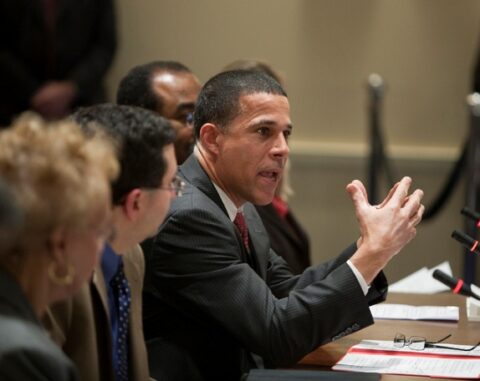
At the end of its 2011 legislative session, Maryland lawmakers passed a bill that would allow certain undocumented students to pay in-state tuition rates at Maryland community colleges, joining 12 other states with similar laws. Now, however, opponents of the law have gathered enough signatures to suspend the law and force a referendum come November. Maryland’s Lieutenant Governor Anthony Brown, an advocate for affordable higher education, responded with a plea to voters to consider the contributions of these students and the value of education for all Maryland residents. Meanwhile, lawmakers in other states like Ohio and New Jersey are considering legislation that makes higher education more affordable to all its residents. Read More

California DREAMers Exhibit High Levels of Civic Participation, Yet Face Significant Hardships
By Caitlin Patler, Ph.D. Candidate in Sociology, UCLA There are roughly 5 million undocumented children and young adults currently living in the U.S. today, 24% (or 1.1 million) of whom live in California. As in other states, California’s undocumented youth face a unique and challenging paradox. On one hand, they work hard, excel academically, participate in their communities and have high educational and career aspirations in the only country they’ve ever known. On the other hand, their immigration status severely limits their opportunities, aspirations and ability to contribute fully to U.S. society. A new research brief, co-authored by Veronica Terriquez and this author, highlights the experiences of undocumented youth in California—many of whom disproportionally experience economic and personal hardships. Read More
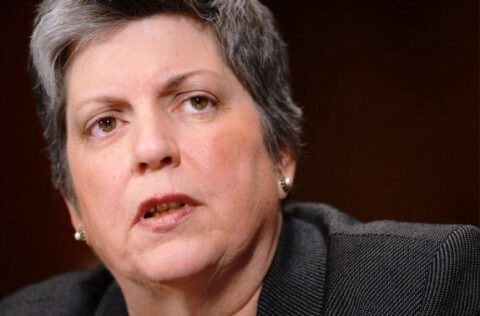
Secretary Napolitano Clarifies President’s Deferred Action Plan…Again
Today, DHS Secretary Janet Napolitano testified before the House Judiciary Committee and, as expected, defended the administration’s use of prosecutorial discretion and recently announced deferred action policies for qualified DREAMers—fielding questions and accusations from those who would rather take Napolitano to task than focus on creating smart, humane, and effective immigration policies. Read More
America's story is an immigrant story.