Undocumented Immigration

DHS Says Safety Before Enforcement in the Face of Hurricane Isaac
Today, U.S. Immigration and Customs Enforcement (ICE) and Customs and Border Protection (CBP) issued a joint letter stating that immigration enforcement actions would not take place if Hurricane Isaac puts people’s lives in danger. Read More
Why States Should Grant DACA Beneficiaries Driver’s Licenses
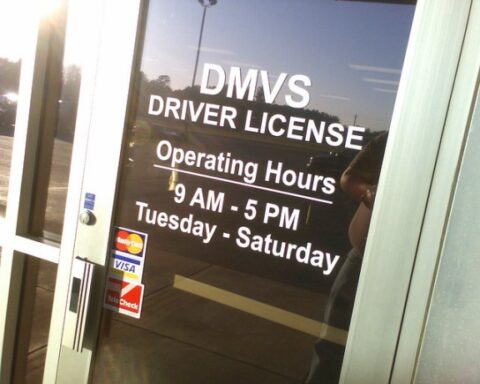
In the early 2000s, one of the ways states attempted to control unauthorized immigration was by limiting immigrant eligibility for driver’s licenses and state-issued identification documents. The arguments for and against extending eligibility for driver’s licenses to undocumented immigrants takes a new twist with the Deferred Action for Childhood Arrivals (DACA) program. Because those who receive deferred action will also receive work authorization, it seems only logical that they should have access to driver’s licenses, like many other people who have permission to remain in the country. But some are opposing extending licenses to this group, ignoring the fact that both safety and security argue in favor of generous licensing policies. Read More

Why Kobach’s Lawsuit Against Deferred Action is Unlikely to Stand Up in Court
Kris Kobach’s official job title is Kansas Secretary of State. But he is better known for drafting—and being hired to defend in court—state and local immigration laws designed to make undocumented residents “self-deport.” His two most notorious undertakings are Arizona SB 1070 and Alabama HB 56, which have largely been eviscerated by federal courts. Yesterday, Kobach embarked on a new legal escapade, filing a lawsuit to block the Obama administration from granting deferred action to so-called “DREAMERers,” undocumented immigrants who arrived in the country as children. Fortunately, although sure to generate headlines, the lawsuit has little chance of standing up in court. Read More

5 Ways DACA Renews the Conversation on Immigration Reform
There’s no doubt that recent implementation of the Deferred Action for Childhood Arrivals (DACA) initiative is the biggest thing to happen in immigration law in many years. While most of the attention is currently focused on how to make it work, how to apply and how to work out the kinks, it’s important to take a macro view at the ways this program can actually renew the entire conversation on immigration reform. Read More

Immigration Law Curbs Foreign Student Entrepreneurship
Nearly everyone agrees that the U.S. immigration system should provide visas for entrepreneurs who want to start businesses in the U.S. and employ American workers. However, convoluted immigration laws make it difficult for some entrepreneurs to launch their business while they’re in school and remain lawfully in the U.S. after they graduate in order to run them. A new report by the Kauffman Foundation entitled Reforming Immigration Law to Allow More Foreign Student Entrepreneurs to Launch Job-Creating Ventures in the United States describes the obstacles student entrepreneurs’ face. Read More

Alabama Ruling Yet Another Rebuke to State Immigration Laws
As with the Supreme Court’s recent opinion on Arizona SB 1070, initial media coverage portrayed the (technically) mixed rulings on the Alabama and Georgia immigration laws as a split decision. But do not be fooled: yesterday’s opinions from the U.S. Court of Appeals for the Eleventh Circuit represent a sweeping win for the immigrants’ rights movement and a crushing blow to the legal crusade led by Kris Kobach. While yesterday’s victory was not unqualified, the provisions struck down by the Eleventh Circuit were far more significant than those that were upheld. Read More

BREAKING: Federal Court Strikes Down Major Provisions of Alabama, Georgia Immigration Laws
In a series of decisions issued Monday afternoon, a federal appeals court in Atlanta struck down major portions of controversial immigration laws passed by Alabama and Georgia—including a provision requiring public school officials to determine the immigration status of newly enrolling students. As the first decisions to be issued… Read More

How Deportations Devastate Families and Communities
It goes without saying that unauthorized immigrants live in constant fear of deportation. After all, any chance encounter with U.S. immigration officials can leave an unauthorized immigrant behind bars and in removal proceedings. Less obvious, perhaps, is the impact that deportations have on families and communities. A mother can be left to provide for the family alone when the father is deported. U.S.-born children can wind up in foster care when their parents are deported. And the more frequently such deportations occur, the greater is the pall of fear which hangs over entire immigrant communities. Read More

Sore Loser, Jan Brewer, Continues Anti-Immigrant Crusade
Despite losing both the legal and public relations battles in the fight over SB 1070, Arizona’s Governor Jan Brewer was anxious to put Arizona back in the spotlight this week. Although she can’t prevent people from requesting or receiving deferred action, she issued an executive order that attempts to prevent Arizona recipients of Deferred Action for Childhood Arrivals (DACA) from obtaining driver’s licenses in her state. The order, which also banned access to public benefits (something DACA recipients are ineligible for, anyway) has been characterized as mean-spirited and belligerent, but it is also just wrong on the facts Read More

Busting Myths About Deferred Action
Beginning today, undocumented immigrants brought to the country as children may officially submit requests for deferred action, a form of prosecutorial discretion that protects recipients from deportation and allows them to work legally in the United States for up to two years. As might be expected, numerous inaccuracies have surfaced in media coverage and other commentary about the initiative, known formally as Deferred Action for Childhood Arrivals (DACA). Below, we address common falsehoods about deferred action in general and the Obama administration’s initiative in particular. Read More
America's story is an immigrant story.