USCIS

Anti-Immigrant Crowd Cries Wolf in Response to Administration’s Family Unity Policy
The Obama administration’s recent announcement that it intends to change regulations allowing the children and spouses of American citizens to stay together while processing applications for legal permanent resident status has the immigration restrictionists crying wolf—or more accurately “amnesty”—once again. They are characterizing the administration’s rule change, as they do any and all actions that are not enforcement related, as a “backdoor amnesty.” Some are also characterizing the change as a strategy to bypass Congress. Read More

USCIS Seeks to Unify Families Facing Separation through Revised Waiver Process
Today, the administration took another important step toward fixing one of the most notorious problems with our broken immigration system—the 3 and 10 year bars. The U.S. Citizenship and Immigration Services (USCIS) announced today that it was filing a notice of intent to change a rule which would streamline the application process for many relatives of U.S. citizens currently eligible for permanent resident status, thereby minimizing the amount of time that applicants would have to be away from their families before being admitted into the United States. Read More

Give Me Your Tired, Your Poor, Your Huddled Masses…But Don’t Let Them Work?
Every year, thousands of people flee persecution in their home countries and seek safe haven in the United States. Many of them spend their entire savings on the journey, travel under life-threatening conditions, and arrive on our shores with not much more than the clothes on their backs. Those who are lucky find long-lost relatives, compatriots, or religious communities who help them get back on their feet. Then they begin the process of applying for asylum, which often takes years. Fortunately, our laws allow asylum seekers to obtain work authorization if their cases are not decided within 180 days. The 180 days, however, are counted by an “asylum clock,” which is too often stopped for unwarranted reasons. Read More

Immigration Lawyers Clarify What DHS’s Announcement on Prosecutorial Discretion IS and IS NOT
There has been much confusion in the wake of DHS’s recent announcement about how immigration agencies will use prosecutorial discretion in determining low and high priority immigration cases. What is considered a low priority case? Who is eligible for employment authorization? How should those with pending removal cases proceed? In an effort to protect immigrants who might be taken advantage of by immigration consultants (or notarios) and to clarify the information currently available, the American Immigration Lawyers Association (AILA) recently issued a consumer advisory outlining what DHS’s announcement is and is not. Read More
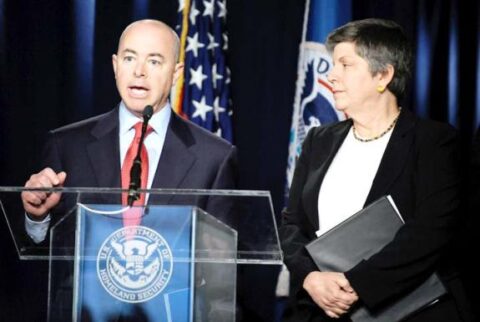
DHS Acknowledges that U.S. Immigration Policy Needs to Spark Economy and Attract Entrepreneurs
By PAUL ZULKIE, PRESIDENT OF THE AMERICAN IMMIGRATION COUNCIL Yesterday, Department of Homeland Security (DHS) Secretary Janet Napolitano and U.S. Citizenship and Immigration Services (USCIS) Director Alejandro Mayorkas announced a series of policy initiatives designed to “fuel the nation's economy and stimulate investment” by attracting foreign entrepreneurs who can invest in fields of high unemployment, create jobs, and form startup companies. It is encouraging that USCIS recognizes that immigrant entrepreneurs and innovators are a key to continued growth and to maintaining America’s competitive edge into the 21st century. It’s important that the agency keep this recognition in mind as it adjudicates visa petitions and applications. Read More

Agency Urges USCIS to Streamline “Deferred Action” Process
In a new report issued this week, the United States Citizenship and Immigration Services’s (USCIS) Ombudsman’s office called on USCIS to create a standardized procedure for accepting and tracking requests for deferred action made to the agency. The timing of this report, following ICE’s memos on prosecutorial discretion last month, further reinforces the importance of understanding and applying the tools of executive branch authority in immigration law. It also gives USCIS an excellent opportunity to build on these new developments to offer its own contribution to the discussion over deferred action, prosecutorial discretion and executive branch power. Read More

Senators Introduce Military Families Act
The week before the Memorial Day holiday, several senators honored U.S. military families caught up in our broken immigration system by introducing The Military Families Act. Senators Robert Menendez (D-NJ), Harry Reid (D-NV), Richard Durbin (D-IL), Charles Schumer (D-NY), Patrick Leahy (D-VT), Daniel Akaka (D-HI), Michael Bennet (D-CO), and Kirsten Gillibrand (D-NY) introduced the bill. Read More

CIS Report Marred by ‘Deception and Disorder’
By Anam Rahman In a report issued earlier today, the restrictionist Center for Immigration Studies (CIS) took aim at problems facing the U.S. immigration court system—a topic worthy of serious discussion. Unfortunately, as with many of CIS’ publications, today’s report combines dramatic rhetoric and unsubstantiated data with ill-conceived solutions. While it is unlikely the report will gain traction in Congress or the media, a few of its—and its author’s—shortcomings remain worth pointing out. Read More
Press Release: Utah Leaders Support Smart Immigration Reform
Utah Attorney General Mark Shurtleff, Utah Rep. Brad Daw (R-Orem), Partnership for a New American Economy representatives, and 60 business leaders and politicians discuss how to harness the job-creating power of immigrants at two events hosted by Partnership for a New American Economy members Lane Beattie, CEO of the Salt… Read More

DHS Removes Countries from Special Registration List, But Leaves Door Open for Future Placements
This week, the Department of Homeland Security (DHS) announced that it will remove all countries from the National Security Entry-Exit Registration System (NSEERS). Previously, nonimmigrant travelers from Afghanistan, Algeria, Bahrain, Bangladesh, Egypt, Eritrea, Indonesia, Iran, Iraq, Jordan, Kuwait, Lebanon, Libya, Morocco, North Korea, Oman, Pakistan, Qatar, Saudi Arabia, Somalia, Sudan, Syria, Tunisia, United Arab Emirates, and Yemen were forced to comply with special registration requirements, including providing fingerprints, a photograph, and any additional information required by DHS to DHS officials at the time the nonimmigrant applies for admission at a U.S. port of entry. Read More
America's story is an immigrant story.
