USCIS

The DACA Renewal Process: Everything You Need to Know
Today, U.S. Citizenship and Immigration Services (USCIS) announced the renewal process for hundreds of thousands of young noncitizens who received a grant of Deferred Action for Childhood Arrivals (DACA). Renewal of DACA ensures current DACA holders will continue to be safe from deportation for another two year period. … Read More

The U.S. Deportation System’s Human Toll
The injustice of the U.S. deportation machine is apparent in many ways. There are the senseless deportations of people whose worst offense was a traffic ticket. There is the tearing apart of families as wives are separated from husbands, children from parents—not to mention the impact on… Read More

Politics is Personal for Young Undocumented Immigrants
Young undocumented immigrants who came to the United States as children—often referred to as DREAMers—have grown up here, gone to school here, and formed deep roots in local communities. And while their immigration status prevents them from voting or even accessing affordable higher education in some states, DREAMers are… Read More
New Data Show More Than Half a Million Immigrants Granted DACA
U.S. Citizenship and Immigration Services (USCIS) posted new Deferred Action for Childhood Arrivals (DACA) statistics on Thursday, revealing that over 550,000 individuals have now been granted DACA. The data, which is current through March 2014, indicate that USCIS has accepted nearly 650,000 requests. Over the past six months,… Read More

Righting a Historical Wrong in Same-Sex Marriage Case
Anthony Sullivan, a native of Australia, fell in love with Richard Adams, an American, in 1971. A few years later, the couple traveled to Colorado when they learned the county clerk in Boulder was issuing marriage licenses to same-sex couples. Soon after, they filed a green-card petition based on… Read More

USCIS Releases Information About DACA Renewal Process
Yesterday, USCIS posted an update shedding light on what the renewal process for the Deferred Action for Childhood Arrivals program will look like. Though the notice is preliminary and subject to change, it offers over half a million DACA recipients vital information about what they should do… Read More

H-1B Visa Cap for Higher Skilled Workers Maxed Out in Record Time
U.S. Citizenship and Immigration Services announced Monday that the allotment of H-1B visas for the 2015 fiscal year, known as the H-1B visa cap, has been filled—a week after filing began. The principal temporary visa for skilled professionals, the H-1B allows U.S. Read More

New Report Sheds Little Light on Deportation Debate
A new report from the Center for Immigration Studies (CIS) sheds little light on the ongoing debate around who does and does not get deported from the United States. The report would have us believe that the federal government is knowingly letting tens of thousands of violent… Read More
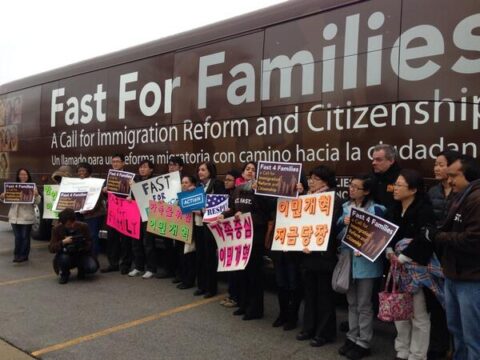
While Congress Recesses, Activists Organize for Immigration Reform
While Congress is on recess and members travel home to their districts to hear from their constituents on the issues that matter to them, immigration advocates are turning up the heat through a series of grassroots and netroots organizing events. Today, the Alliance for Citizenship is organizing… Read More

What the DACA Renewal Process Should Look Like
According to the latest government statistics, over half a million DREAMers have received two-year deportation reprieves under the Deferred Action for Childhood Arrivals (DACA) program. The first wave of these DACA recipients carry work authorization cards that are set to expire in the summer and… Read More
America's story is an immigrant story.