Supreme Court

Alabama Doubles Down, Appeals Ruling on HB 56
Late last month, after a panel of federal judges unanimously struck down major provisions of Alabama HB 56, a statement issued by Gov. Robert Bentley gave reason to hope the state would graciously concede defeat. Calling it time “to move past court battles,” Bentley said Alabama should turn its focus to the handful of provisions that the panel declined to enjoin. In legal papers filed on Monday, however, Alabama challenged the panel’s ruling and asked for a new hearing before all active judges on the federal appeals court. Although such requests are rarely granted, the filing suggests that Alabama, like Arizona, is prepared to defend its law all the way to the Supreme Court. Read More
Immigrants Keep America Young
VOXXI September 4, 2012 Japan has the oldest population in the world, with a declining labor force and shrinking economy. Is the United States going the way of Japan? As a matter of fact, the entire world population is rapidly aging, with Japan the oldest; one-fourth of its population… Read More
Economic Decline in U.S. Seen Without More Immigration
Bloomberg August 31, 2012 The U.S.’s best 250 years are behind it, Northwestern University professor Robert Gordon writes in a paper published by the National Bureau of Economic Research, saying economic growth may gradually “sputter out.” Gordon outlines how there was virtually no expansion before 1750 — before the… Read More
Twin Cities one of top metro areas hiring highly skilled foreign workers
Minnesota Public Radio August 28, 2012 The Twin Cities is one of the top U.S. metropolitan areas for highly skilled workers with the H-1B visa, according to a recent Brookings Institute Report. This is a visa allowing foreign workers who have at least a bachelors or graduate degree and… Read More

Why Kobach’s Lawsuit Against Deferred Action is Unlikely to Stand Up in Court
Kris Kobach’s official job title is Kansas Secretary of State. But he is better known for drafting—and being hired to defend in court—state and local immigration laws designed to make undocumented residents “self-deport.” His two most notorious undertakings are Arizona SB 1070 and Alabama HB 56, which have largely been eviscerated by federal courts. Yesterday, Kobach embarked on a new legal escapade, filing a lawsuit to block the Obama administration from granting deferred action to so-called “DREAMERers,” undocumented immigrants who arrived in the country as children. Fortunately, although sure to generate headlines, the lawsuit has little chance of standing up in court. Read More

Alabama Ruling Yet Another Rebuke to State Immigration Laws
As with the Supreme Court’s recent opinion on Arizona SB 1070, initial media coverage portrayed the (technically) mixed rulings on the Alabama and Georgia immigration laws as a split decision. But do not be fooled: yesterday’s opinions from the U.S. Court of Appeals for the Eleventh Circuit represent a sweeping win for the immigrants’ rights movement and a crushing blow to the legal crusade led by Kris Kobach. While yesterday’s victory was not unqualified, the provisions struck down by the Eleventh Circuit were far more significant than those that were upheld. Read More

BREAKING: Federal Court Strikes Down Major Provisions of Alabama, Georgia Immigration Laws
In a series of decisions issued Monday afternoon, a federal appeals court in Atlanta struck down major portions of controversial immigration laws passed by Alabama and Georgia—including a provision requiring public school officials to determine the immigration status of newly enrolling students. As the first decisions to be issued… Read More

Using SAVE to Verify Voter Eligibility Comes with Unexplored Risks
The lack of evidence of immigrant voter fraud hasn’t stopped some states from pushing efforts to require photo ID at the polls, purge voter rolls of ineligible voters, and other measures that may result in voter suppression and the disenfranchisement of racial and ethnic minorities or other social groups. Some states have asked the federal government for access to immigration data in order to determine whether non-citizens are on the voter registration rolls. After initial refusals, in July 2012, the Director of USCIS advised the Florida Secretary of State that states, under limited circumstances, may use the Systematic Alien Verification for Entitlements (SAVE) program for verification of the citizenship status of registered voters. Since then, other states have expressed an interest in using SAVE for this purpose. However, the status of SAVE is unclear because the Department of Justice is again challenging Florida’s efforts, claiming they violate the Voting Rights Act of 1965. Read More
Restrictionists Misrepresent Data on Immigration Enforcement
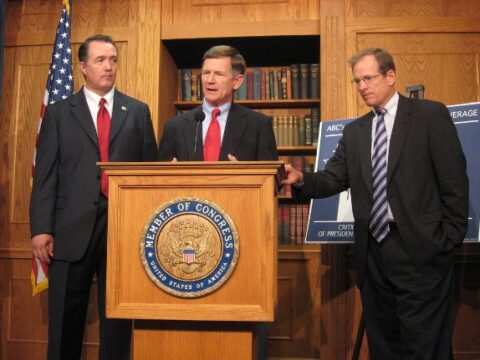
Some members of Congress are intent on portraying the Obama administration as “weak” on immigration enforcement, and they aren’t going to let facts get in their way. Yesterday, for example, the Congressional Research Service (CRS) released new data on individuals who had been identified through Secure Communities (S-Comm) but against whom ICE had not taken enforcement action. House Judiciary Chair Lamar Smith characterized the data as proof that the Obama administration has used prosecutorial discretion “recklessly and to the detriment of the American people.” However, a close look at the data reveals that Smith’s sweeping allegations do not hold water. By misusing terms like “recidivism,” and by failing to distinguish between arrests and convictions, Smith intends to paint immigrants as criminals—a link that has been disproven over and over again. Read More

Sheriff Joe Arpaio to Stand Trial on Racial Profiling Charges
Maricopa County Sheriff Joe Arpaio may finally face the music this week in a federal trial in Phoenix. The renowned anti-immigrant media glutton and self-proclaimed “America’s Toughest Sheriff” stands accused of discrimination and harassment charges in a class action lawsuit involving the ACLU and MALDEF. Arpaio has a long history of abuse and discrimination in the name of immigration enforcement—from a segregated tent city to unlawful stops and forcing inmates to wear pink underwear. In fact, Arpaio is also the subject of a lawsuit filed by the Department of Justice earlier this year alleging that Arpaio and his officers targeted Latino drivers during traffic stops and neighborhood sweeps and used ethnic slurs against Latino inmates in county jails. Read More
America's story is an immigrant story.